Lenovo is quietly expanding its presence in the custom GPU market, and its latest moves suggest that the company is getting more serious about hardware beyond laptops and desktops. 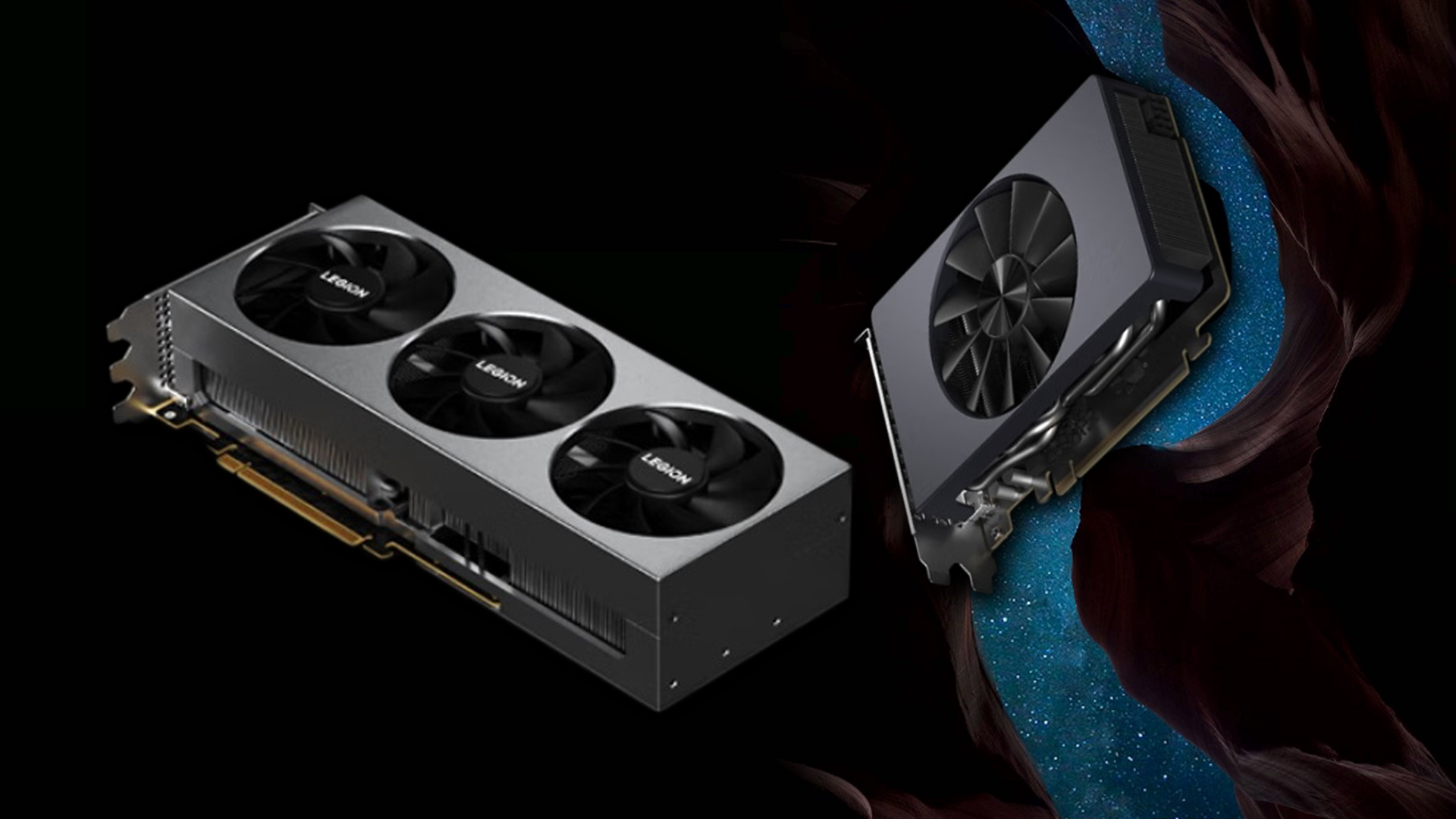
After launching the Legion RTX 5090D and RTX 5080 editions in China earlier this year, Lenovo is now preparing two more graphics cards – the Radeon RX 9070 XT and the GeForce RTX 5060 – which appear to be designed exclusively for its pre-built Legion systems.
The Lenovo Radeon RX 9070 XT stands out with its distinctive triple-fan design and minimalistic shroud that recalls AMD’s classic RX Vega aesthetic. Its overall structure seems to favor practicality over showmanship – a thick 3-slot card with robust cooling, but without the excesses of overclocking-oriented designs. Lenovo has opted for 2x 8-pin PCIe power connectors instead of the newer 16-pin standard, which many users have criticized for heat and melting issues on other high-end GPUs. This decision signals Lenovo’s cautious engineering approach, prioritizing stability and compatibility for long-term use rather than chasing extreme clock speeds.
From the side, the RGB-illuminated Radeon RX 9070 XT logo adds a touch of flair, maintaining the Legion visual identity consistent with Lenovo’s RTX 5090D and 5080D cards. It’s safe to say the RX 9070 XT belongs in the same Legion family, targeting gamers who value reliable performance and solid thermal management in pre-built configurations.
Meanwhile, the Lenovo GeForce RTX 5060 is taking a very different route. This compact, single-fan GPU is designed to balance efficiency and cost, likely catering to midrange gaming PCs or compact systems. The two-slot card lacks a backplate and exposes the PCB components, hinting at its no-frills, functional purpose. A single 8-pin connector powers the GPU – another sign of Lenovo’s restrained approach to power draw and cooling demands. While the lack of a backplate may not appeal to enthusiasts, it aligns with Lenovo’s goal of delivering practical solutions for mainstream gamers.
Unfortunately, Lenovo hasn’t yet revealed key details such as base and boost clock speeds, VRAM configurations, or pricing for either model. Given the company’s past launches, it’s likely these GPUs will remain China-exclusive and available only through pre-built Legion systems. This exclusivity strategy helps Lenovo maintain control over thermals, power delivery, and performance consistency across its lineup – a logical move as it strengthens its Legion brand as a self-contained ecosystem rather than competing head-to-head with standalone AIB vendors like Sapphire or ASUS.
With Lenovo’s growing confidence in designing and releasing custom GPUs, some enthusiasts are even suggesting that the company should become an official AMD board partner. If that ever happens, Lenovo could emerge as a serious player in the global GPU scene – not just a system builder, but a full-fledged hardware innovator.
1 comment
looks like lenovo finally serious about gaming hardware, not just laptops