Samsung's next generation flagship lineup is already shaping up to be one of the most talked-about launches of 2026, but the device that has everyone sighing over what might have been is one we may never actually see: the Galaxy S26 Edge. A newly leaked dummy unit has appeared online and, if accurate, it offers a painful glimpse at a phone that combines an almost impossibly thin profile with the familiar premium Samsung design language. 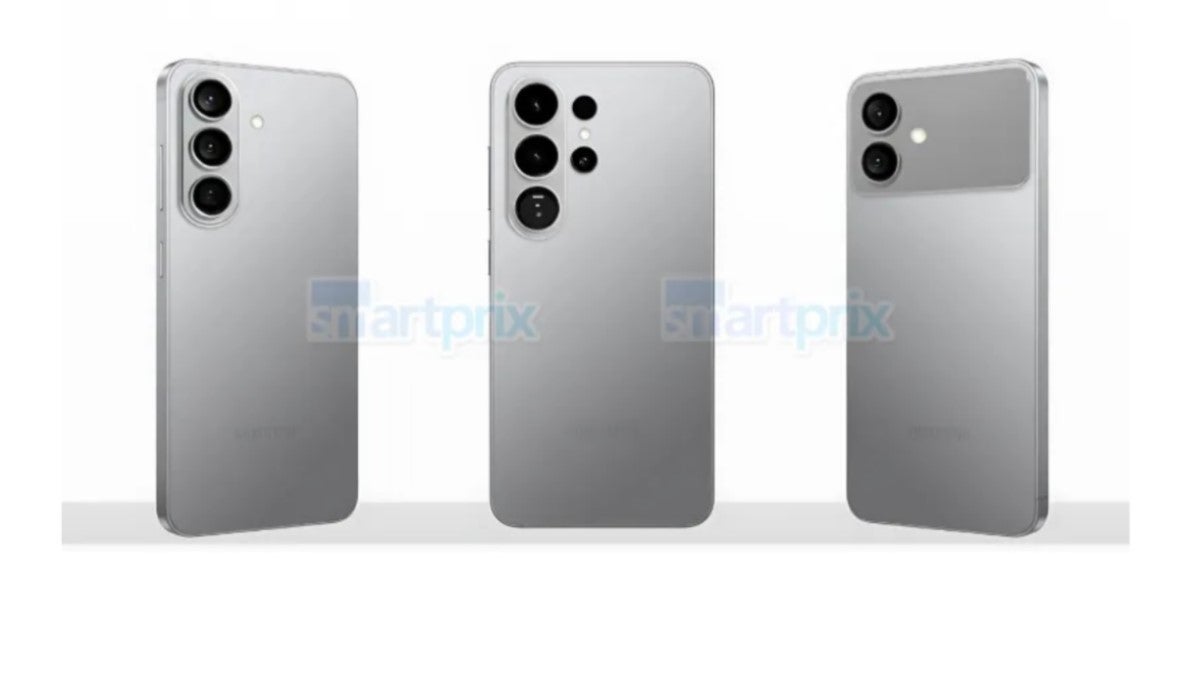
The problem? Most reliable leakers now believe Samsung has quietly shelved the project.
Instead, the company seems ready to stick with a more traditional trio for the Galaxy S26 family: a base Galaxy S26, a slightly larger Galaxy S26 Plus, and the spec-monster Galaxy S26 Ultra. On paper that sounds like a sensible, safe strategy. Yet when you look at the leaked S26 Edge dummy, you cannot help but feel that Samsung is leaving one of its most interesting ideas on the cutting room floor.
Leaked Galaxy S26 Edge dummy shows an impossibly thin frame
The dummy unit shared by well-known leaker OnLeaks is not some rough clay mockup. It looks like the kind of plastic display model you would expect to find tethered to a table in an electronics store, complete with finished lines and a painted black shell. Sitting side by side with an iPhone 16 Pro in the leak, the contrast in thickness is almost comical: the S26 Edge prototype looks like someone flattened a modern flagship with a steamroller.
According to the information accompanying the images, the Galaxy S26 Edge dummy measures just 5.5 mm at its thickest point. For context, many current premium phones hover around the 7.8–8.5 mm mark once you factor in the camera bump. Cutting that down to 5.5 mm would make the S26 Edge not just slimmer than its predecessor, the Galaxy S25 Edge, but one of the thinnest mainstream phones in recent memory.
The edges of the dummy appear subtly rounded, giving the device a sleek profile that should sit beautifully in the hand. At this thickness, the sensation of pulling it from a pocket, or feeling it disappear in a bag, would be very different from today's comparatively chunky slabs. It is the sort of form factor that turns heads in a coffee shop and instantly signals that you are holding something unusual.
Galaxy S25 Edge showed the magic and the limits of thin phones
The appeal of the Galaxy S26 Edge becomes even clearer if you remember what Samsung achieved with the S25 Edge. That phone already pushed the limits of thinness, and many reviewers noted how dramatically it changed the day-to-day experience of using a large handset. The light weight, the minimalist side profile, and the feeling that the device simply melted into your palm made it a joy to use.
However, the S25 Edge also highlighted the classic trade-off that haunts ultra-thin phones: there is only so much battery capacity you can squeeze into a chassis that slim. For a lot of users, the S25 Edge fell into the "almost perfect" category. It looked and felt fantastic, but the smaller battery meant more anxiety about making it through an intense day of travel, navigation, social media, gaming, and photography.
The S26 Edge, if the dummy is representative, would have pushed the design envelope even further. But with the thickness trimmed down to around 5.5 mm, the question becomes simple and brutal: where do you put a larger battery? Without some revolutionary battery technology, physics is not on Samsung's side.
The likely Galaxy S26 lineup: S26, S26 Plus, S26 Ultra
While the fate of the S26 Edge appears grim, the rest of the Galaxy S26 family looks much more certain. Current leaks and industry chatter suggest Samsung has ultimately chosen a more familiar three-phone strategy for early 2026: a standard Galaxy S26 as the entry flagship, a slightly stretched Galaxy S26 Plus with more screen and battery, and the feature-packed Galaxy S26 Ultra leading the charge.
Earlier whispers hinted that Samsung might rebrand the base model as a "Pro" and slot the Edge as the ultra-thin design experiment for enthusiasts. Those plans now seem to have been abandoned. Instead, attention has shifted to the hardware inside the confirmed models, especially the chipsets and memory configurations that will define their performance.
Snapdragon 8 Elite Gen 5 and Exynos 2600: regional chip split returns
Recent reports indicate that Samsung has largely finalized its chipset roadmap for the Galaxy S26 series. The Galaxy S26 Ultra is expected to ship worldwide with Qualcomm's Snapdragon 8 Elite Gen 5, effectively unifying the Ultra experience across regions. That means consistent performance, gaming, and camera processing no matter where you buy the top-tier device.
The story is more complex for the regular Galaxy S26 and S26 Plus. Depending on your region, these models are tipped to arrive with either the Snapdragon 8 Elite Gen 5 or Samsung's in-house Exynos 2600. This kind of regional split is not new for Samsung, but it always becomes a talking point among power users who closely compare benchmarks, sustained performance, and battery life between Snapdragon and Exynos variants.
Faster RAM and smarter cameras for the whole Galaxy S26 family
Beyond the processors, another rumor gaining traction is that all three Galaxy S26 phones will adopt faster RAM. That might sound like a minor spec bump on a marketing slide, but faster memory can significantly reduce delays when switching between apps, processing high-resolution photos, or capturing 8K video. Camera performance in particular benefits from higher bandwidth, as modern computational photography pipelines move huge amounts of data in fractions of a second.
If these leaks pan out, the S26, S26 Plus, and S26 Ultra could all feel snappier in everyday use compared to their S25 counterparts, even when core CPU and GPU gains are incremental. Combined with Samsung's steady software optimization, it could make the S26 generation quietly more capable in ways that are hard to capture with a single headline specification.
Expected launch window: February 2026
As things stand, industry expectations place the official unveiling of the Galaxy S26 series in February 2026, roughly in line with Samsung's usual early-year flagship rhythm. That timeline would give the company enough space to refine its final hardware choices and coordinate the global rollout while leaving plenty of room later in the year for foldables and mid-range devices.
Whether the S26 Edge remains a cancelled curiosity or is quietly revived later as a limited-run design experiment remains unknown. For now, all signs point to the main event being the trio of S26 phones, with the Edge occupying the role of "what could have been" in the background of leak culture.
Why the Galaxy S26 Edge would still have been a tough sell
As compelling as that 5.5 mm profile looks in leaked photos, an ultra-thin flagship like the S26 Edge would have had to overcome some harsh practical realities. For power users, battery life has become non-negotiable. Our phones are navigation devices, cameras, gaming consoles, workstations, wallets, and entertainment hubs all in one, and they are expected to last from morning till night without a panic charge at 5 p.m.
Anyone who ever lived with a small-battery phone knows the story: at first it seems manageable, but as the months go by and battery health naturally declines, you find yourself hunting for outlets, living on battery saver modes, and rationing screen time. The article's original author even recalls the frustration of relying on an older iPhone 8 as a daily driver, where endurance was a constant compromise. An ultra-thin S26 Edge, unless it secretly packed next-generation silicon-carbon cells, would risk repeating the same mistake in a much more demanding era.
- Ultra-thin design delivers undeniable visual wow factor and comfort in hand.
- Battery capacity in such a slender shell would almost certainly be limited.
- As batteries age, already modest endurance can quickly become unacceptable.
For many users, that trade-off is no longer worth it. A phone can be a few millimeters thicker and still feel premium, especially if it rewards you with a bigger battery, better cooling, and more robust camera hardware. In that sense, Samsung's reported decision to prioritize the mainstream S26, S26 Plus, and S26 Ultra may be less about playing it safe and more about aligning with how people actually use their phones today.
A gorgeous what if in the Galaxy timeline
In the end, the leaked Galaxy S26 Edge dummy feels like a snapshot from an alternate timeline where smartphone design swung back toward extreme thinness instead of all-day endurance. The black prototype looks elegant, almost jewelry-like, and there is no doubt it would have grabbed attention in store displays and social feeds.
Yet beneath the seduction of that 5.5 mm silhouette lies the same old question: how much are you willing to sacrifice for style? For some niche fans, the answer might still be "a lot". For most people living with one phone that has to do everything, every day, the battery simply matters more.
So as we move toward the February 2026 launch window, the Galaxy S26 Edge may remain a beautiful ghost in the leak archives, a reminder that even in a mature market, radical ideas sometimes get as far as finished dummy units before being quietly pushed aside. The good news is that the rest of the Galaxy S26 lineup looks set to double down on performance, camera improvements, and practical battery life – even if it means leaving one stunningly thin experiment behind.
3 comments
ngl that 5.5mm thing sounds sexy but i dont wanna charge 3 times a day 😂
if the Ultra gets snapdragon everywhere I already know which one I am buying
these dummy leaks always make me fall in love with phones that never exist 😭