It’s rare to see one studio head publicly grade another team’s flagship RPG, but that’s exactly what Kingdom Come: Deliverance 2 director Daniel Vávra did on X, where he gave The Outer Worlds 2 a 7/10 and, more provocatively, argued that Obsidian Entertainment hasn’t truly innovated since Fallout: New Vegas. His post wasn’t a casual drive-by. It was a thesis: modern RPGs rely on proven, decades-old loops – quest hubs, dialogue checks, corridor infiltrations, loot funnels – while ignoring the messier, systemic simulation that makes worlds feel alive.
Vávra’s core demand is straightforward: fewer theme-park rides, more living worlds. 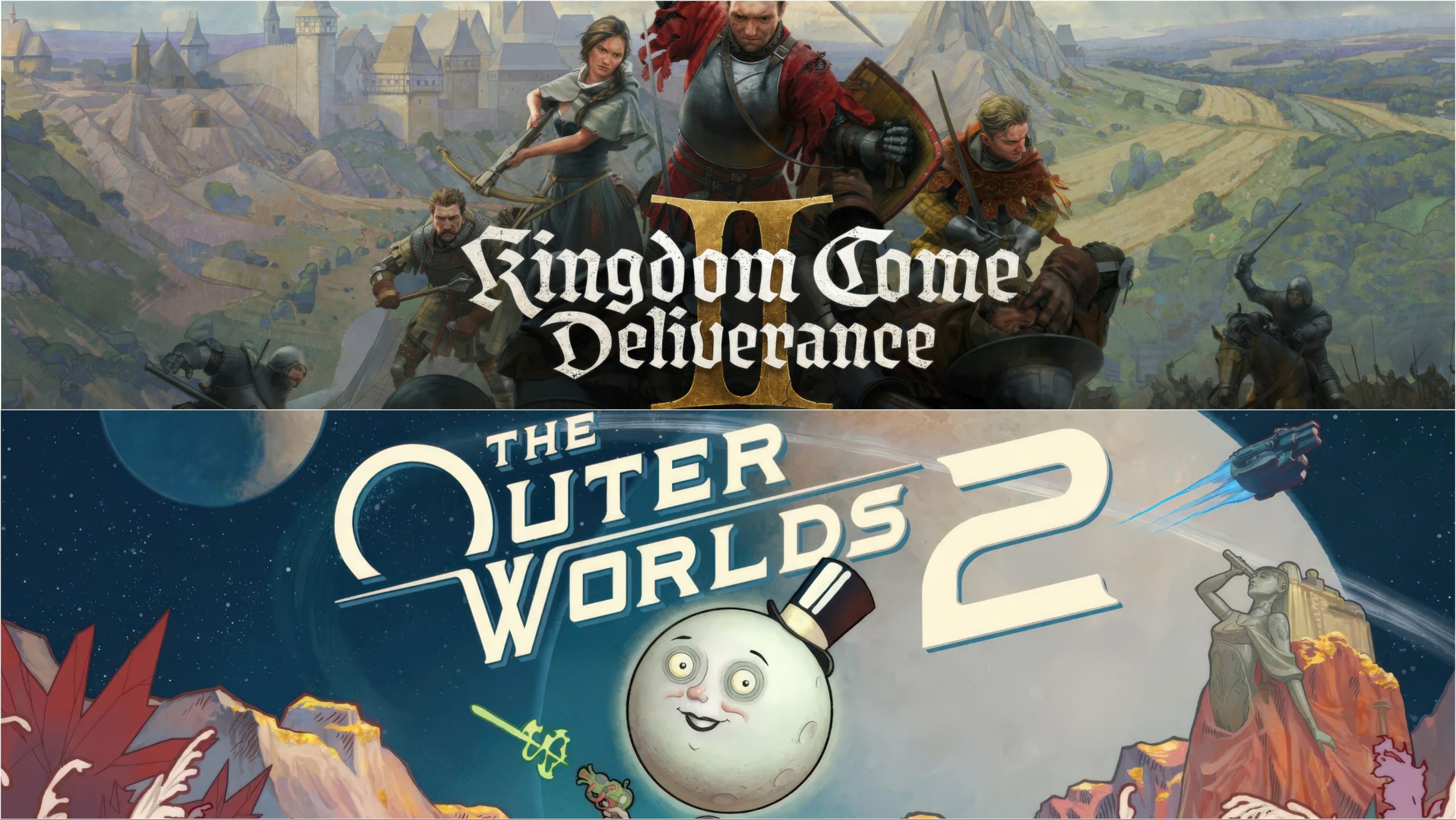
In his view, all the budget in the world – Microsoft’s, in Obsidian’s case – won’t matter if the underlying design is conservative. He name-checks “true non-linearity,” believable schedules, and emergent consequences as the missing ingredients. Whether you agree or not, it’s a shot across the industry’s bow, because it challenges a comfortable consensus: polish and scope often win out over deep systemic change.
Is The Outer Worlds 2 really light on new ideas?
Mechanically, Obsidian’s sequel doesn’t introduce a headline-grabbing system that rearranges the genre. If you comb through its toolset – branching quests, companion perks, stealth, hacking, conversational checks – you’ll recognize most of it from earlier touchstones like Deus Ex and classic Fallout. NPCs may fine you for theft, and factions will remember your antics, but routines are largely stage dressing rather than clockwork AI. That said, the sequel meaningfully expands player choice compared to the first game. Questlines accommodate more approaches, outcomes reflect more of your build and temperament, and narrative reactivity nudges replayability upward. In other words: not revolutionary, but clearly evolved.
Innovation is hard – and sometimes overrated
There’s a reason so many RPGs iterate instead of rupture. Large, voice-acted, cinematic role-playing games are high-risk machines where a single brittle system can collapse hours of authored content. When studios do experiment, results vary. Clair Obscur: Expedition 33 shook up turn-based rhythm with real-time flourishes; meanwhile, last year’s mega-hit Baldur’s Gate 3 didn’t reinvent the wheel so much as deliver a generationally polished rendition of a classic CRPG playbook. Execution, not invention, turned it into a phenomenon.
What about Vávra’s own yard: the KCD2 simulation claim
When a follower suggested KCD2 also leans on familiar mechanics, Vávra countered that his team simulates thousands of NPCs and their daily routines. That’s a meaningful differentiator – few AAA RPGs attempt wide-scale schedule simulation with robust systemic interlocks. Still, let’s keep perspective: from Oblivion onward, Bethesda popularized visible NPC routines, even if results often felt like clockwork mannequins. The difference in KCD2 is emphasis and density. Warhorse pushes routine fidelity, scarcity, and survival frictions (food, kit, reputation) until they inform moment-to-moment storytelling. It’s not the first to try, but it does make simulation the point rather than the garnish.
The discourse: talent churn, corporate caution, and culture-war fatigue
Strip away the console-war noise and a few grounded themes emerge from the community. Long-time fans note that the New Vegas team is not today’s Obsidian; people move on, studios evolve, pipelines are rebuilt. Others argue the Microsoft acquisition traded existential risk for creative caution; staying alive in AAA means mitigating failure, not courting it. A spicier cohort frames the problem through culture-war lenses – claiming priorities have shifted toward signaling over systems. That’s an oversimplification, and often unfair to hundreds of developers doing the unglamorous work of shipping a massive RPG. But the perception exists, and perception shapes reception.
Calling out peers: gutsy, risky, sometimes useful
Public criticism between developers is a social grenade. It rallies partisans and irks peers, but it can also spark productive debate. Vávra’s provocation lands not because it’s cruel but because it pokes at a genuine anxiety: have big RPGs hit a design plateau? If so, the next frontier likely isn’t another loot tier or dialogue camera trick – it’s deeper systemic simulation: schedules that matter, ecologies with teeth, crimes that ripple, AI that remembers more than a meter’s worth of stealth.
Where the two series stand today
The Outer Worlds 2 is, by most accounts, a sharper, more flexible sequel that plays to Obsidian’s strengths – witty quest writing, elastic builds, and consequence-tracking narratives. It’s safe but satisfying. Kingdom Come: Deliverance 2, meanwhile, doubles down on its medieval sim ethos. For fans, there’s fresh reason to jump back in: Warhorse is rolling out its final DLC, Mysteria Ecclesiae, and a free-to-play weekend on PC and Xbox (as of publication) puts the experience within easy reach for the curious.
The bottom line
Vávra’s charge – that Obsidian hasn’t innovated in 15 years – overstates the case but surfaces a real creative fork. One path iterates story-driven, authored play with more choices and better production; the other embraces messy systemic worlds where rules collide and surprising outcomes emerge. The sweet spot isn’t either/or. RPGs need both: bold systemic experiments that make virtual societies feel alive, and impeccable craft that turns choices into stories worth retelling. If Obsidian continues refining reactive narratives while Warhorse turns the screws on simulation, the genre benefits either way. The rest is noise – and, of course, fuel for another week of discourse.
2 comments
Tbh the real innovation at Obsidian is still being open in 2025. Survival build unlocked 😂
Temu Bethesda line had me lol but yeah, I’m worried Obsidian might be next on the chopping block…