Ghost Story Games has resurfaced with a new developer blog for Judas, and it feels less like a quick check in and more like a thoughtful behind the scenes tour. 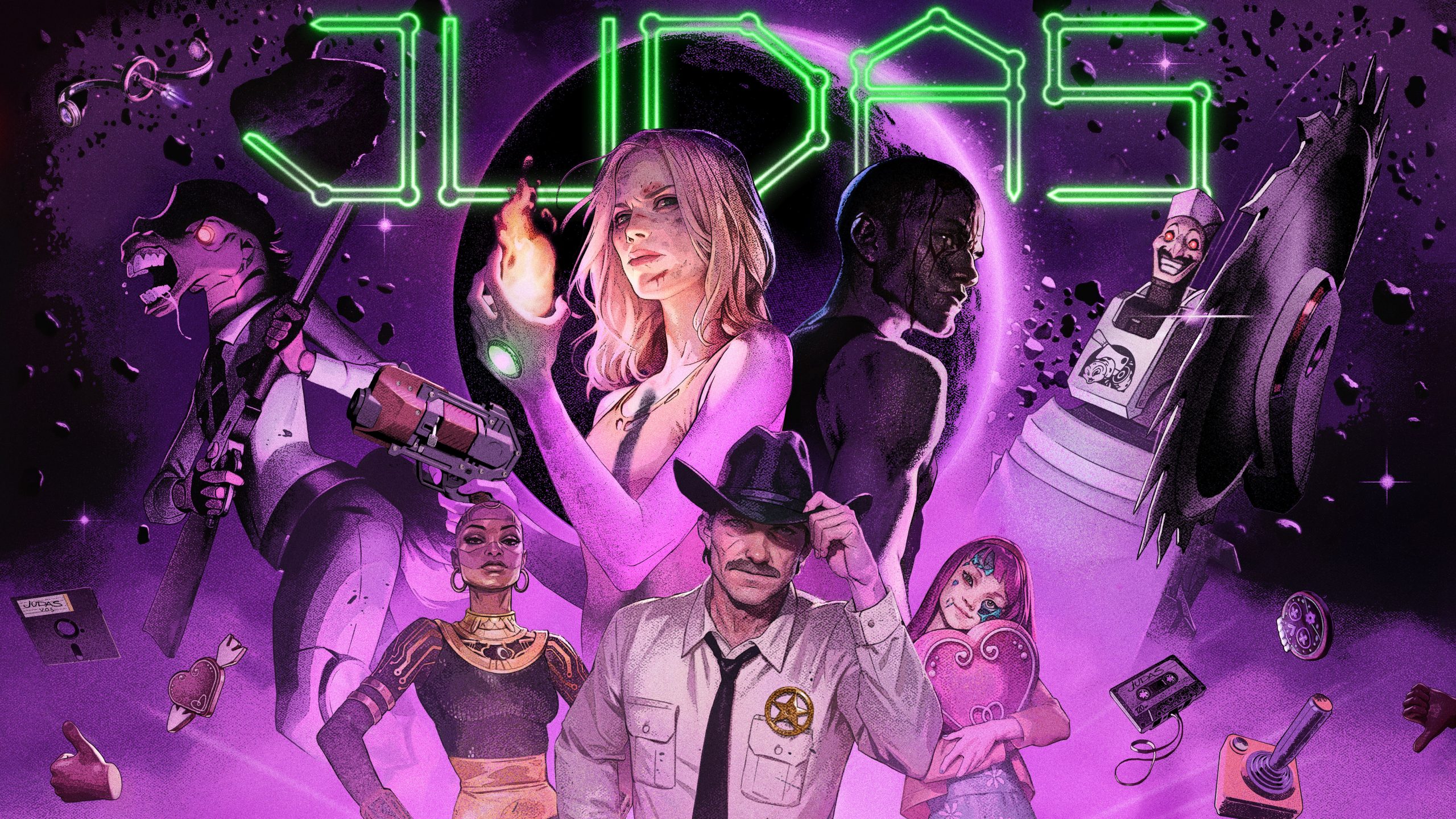
The studio dives into fresh concept art of the title character, new glimpses of in game environments aboard the Mayflower starship, and candid reflections from key team members who have been quietly building Ken Levine’s next big spiritual successor to BioShock. Instead of another mysterious teaser, this update finally gives shape to how Judas as a character and the Mayflower as a setting have evolved over years of iteration.
For anyone who has spent the last few years wondering whether Judas is still alive behind closed doors, the blog offers a reassuring answer. Development is ongoing, the team is hiring, art is being polished, story foundations are being refined, and systems are still being tuned. What it does not offer, however, is the one thing many fans are desperate to see: a release date. Ghost Story Games still refuses to pin down even a broad launch window, leaving speculation about reveals at showcases like The Game Awards to run wild while also preparing players for the possibility that the wait might continue.
In place of a calendar milestone, the studio offers something arguably more substantial: a clearer understanding of how the project has changed from its earliest prototypes. The new blog shines a spotlight not only on creative director Ken Levine but also on lead narrative designer Drew Mitchell, lead artist Karen Segars, and studio art director Nathan Phail Liff. Together, they sketch out how Judas transformed from an abstract idea into a defined protagonist, how the Mayflower matured from a utilitarian spaceship into a dense, layered generational starship, and how systems were built to support a less linear, more reactive kind of storytelling.
From blank cipher to a reluctant, pressured protagonist
One of the most intriguing details in the blog is that Judas herself did not exist in a concrete form when the project began. Mitchell explains that the team initially focused on structure rather than personality. Their priority was to design a narrative framework that could truly respond to player decisions, stepping away from strictly linear plotting in favour of stories that branch, reconfigure, and recombine based on what players choose to do.
To support that ambition, the writers started by building a cast of characters with strong, clashing agendas. Every major figure in Judas’s world needed a clear stake in the player’s actions, a reason to care deeply about every betrayal, change of allegiance, or unexpected alliance. At that stage, the player character was essentially an empty space, a placeholder that allowed the team to stress test their systems without locking themselves into a fixed personality or backstory too early.
Only once that reactive framework began to feel solid did the question of identity move to the centre of the conversation. Who would suffer the most by being thrown into this volatile environment? Which kind of person would be uniquely badly equipped to navigate tangled politics, fragile loyalties, and a starship carved up by ideological conflict? The team wanted a protagonist who would be emotionally cornered from the very start, forced into the last place they would ever willingly choose to be.
Out of that search emerged Judas, not as a blank pair of hands but as a fully fledged person. Mitchell describes a turning point when Levine wrote a key monologue that crystallised who Judas is, what she regrets, and what she is trying desperately to avoid becoming. That piece of writing gave the narrative team a touchstone for her voice and mindset. From there they could weave her fears, past mistakes, and complicated relationships into the branching story structure, so that choices feel like extensions of her personality rather than detached menu selections.
The result, if Ghost Story can deliver on the pitch, is a game where Judas is always under pressure from old ties and new obligations, juggling demands from powerful factions as she tries to survive aboard the Mayflower. Your decisions are meant to be grounded in how she responds to those pressures, giving the story a more personal flavour than a simple morality meter ever could.
Reimagining the Mayflower as a layered generational starship
While the narrative team was shaping Judas as a person, the art team was transforming the Mayflower from a functional vessel into a world with its own archaeology. Phail Liff reveals that the ship originally looked far more conventional, closer to a modular industrial craft you might see in straight faced science fiction. It was practical, believable, and somewhat anonymous.
As the story leaned harder into ideological conflict and competing visions for society, that early design no longer felt sufficient. The Mayflower needed to do more than simply host the action; it had to reflect decades of arguments, coups, failed experiments, and fragile truces. Gradually, the team began to treat the starship like a city in space, a place that has been repeatedly rebuilt by groups with radically different values and aesthetics.
Phail Liff compares it to digging into the streets of an old metropolis. Beneath the modern surface, you find older roads, foundations, and forgotten structures, each one a trace of a different era. In the same way, different layers of the Mayflower carry the imprint of the people who controlled it at the time. Ornate halls might sit awkwardly atop stern, utilitarian corridors. Polished propaganda statues might loom over patched bulkheads that speak of earlier crises. Nothing is completely erased; it is only buried, built over, or repurposed.
This approach dovetails neatly with the idea of a generational starship. The Mayflower is not just a vehicle; it is a travelling civilisation that has lived through its own historical periods. There have been optimistic beginnings, brutal crackdowns, ideological schisms, and uneasy renewals. The art direction, lighting, and layout of spaces are all consciously crafted to hint at those phases, showing who held power, who was pushed out, and what compromises were made to keep the mission alive.
Segars and the art team focus on conveying this history through environmental storytelling rather than exposition dumps. Players are meant to sense that something went wrong in a given area long before anyone explains it. Peeling paint, mismatched signage, emergency rebuilds, and decorative excess all work together to tell you which faction last left its mark on a corridor and what that might say about their priorities.
Exploration as investigation and informed choice
All that layered design work feeds directly into Judas’s core promise: that exploring the Mayflower is as much about understanding people and politics as it is about combat. Ghost Story wants players to feel like investigators, historians, and reluctant mediators. As you move through the ship, you are constantly invited to read the environment, to treat every room as a fragment of the ship’s biography.
The more attention you pay to architecture, clutter, and visual motifs, the better prepared you should be to interpret the motives of the characters you meet. When a charismatic leader pleads for your support, their territory may already reveal whether they favour rigid control, desperate improvisation, or self indulgent spectacle. That background colour can then influence your decisions about who to trust, whose offers to decline, and where to push for leverage.
In theory, this makes major choices feel less like blind jumps between labelled endings and more like reasoned responses to a world you have actively studied. Your knowledge of how sections of the Mayflower changed hands, which ideals they were built around, and how often they have been torn apart becomes part of your toolkit. Judas is positioned as a game where story, setting, and player agency are tightly interwoven, echoing the immersive sim tradition while pushing toward even more reactive storytelling.
The development team emphasises that this is not just about visual spectacle. The layered environments, shifting alliances, and systemic narrative design are all meant to feed back into how the story branches and loops. As you uncover more of the ship’s buried history, your perspective on earlier choices may shift, encouraging different approaches in later playthroughs and reinforcing the sense that Judas is genuinely responsive rather than merely rearranging a few dialogue lines.
Slowly opening up after years of silence
Beyond the specific details about characters and setting, the new blog hints at a change in how Ghost Story Games wants to communicate with its audience. The studio has long had a reputation for long stretches of silence, punctuated only by enigmatic trailers. Allowing multiple leads to speak openly about the challenges and goals behind Judas suggests a willingness to be slightly more transparent about the journey.
That said, the biggest uncertainties remain. There is still no public development timeline, no deep dive gameplay presentation, and no clear sense of when players will be able to step aboard the Mayflower for themselves. The studio is clearly choosing to talk about philosophy and process rather than promises of release dates, a cautious approach that makes sense for a project aiming so high but that can also test the patience of curious fans.
Even so, this latest blog accomplishes something important. It reminds the community that Judas is not a ghost project but a game steadily accruing history, personality, and scars. Every new piece of concept art, every glimpse of a reworked hallway, and every anecdote about Judas as a reluctant protagonist reinforces the idea that the team is layering meaning into almost every inch of the starship. Until the next major reveal, the Mayflower will continue to drift just out of reach, but at least now we have a much clearer picture of what is taking shape inside its contested corridors.
2 comments
Article is great but I still do not trust this game till I see a full mission raw, no jump cuts, zero marketing magic
Your article helped me a lot, is there any more related content? Thanks!