James Cameron has never been shy about revisiting his own work, but his latest reflection takes aim at one of the most beloved moments in film history: the Titanic bow scene. Leonardo DiCaprio’s Jack and Kate Winslet’s Rose leaning into each other against the vast ocean sky has become the very definition of cinematic romance. 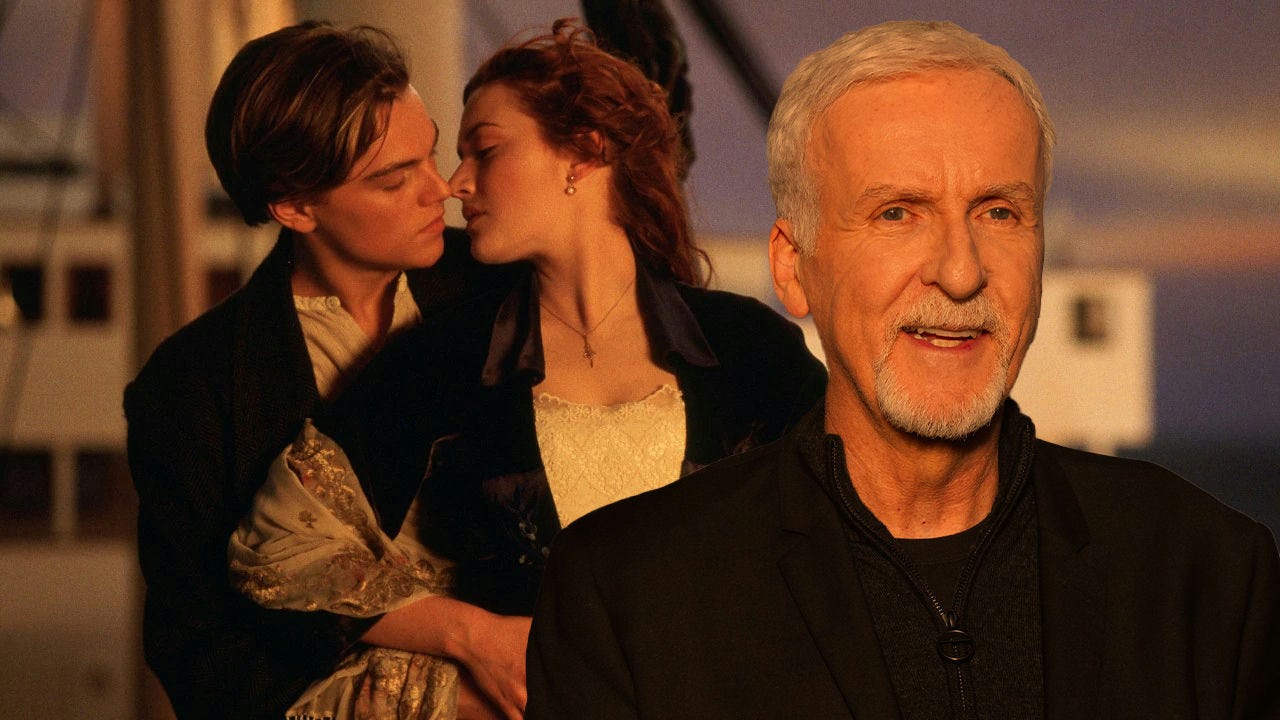
Yet Cameron admits that if he had the tools available today, he might have done things differently – and perhaps even gone bigger.
Speaking with IGN during promotions for the re-release of Avatar: The Way of Water, Cameron was asked which shot from his long career best defines him as a filmmaker. Without hesitation, he pointed to Titanic’s iconic kiss. But rather than celebrating it as perfect, he dwelled on its imperfections. “Back then we had no choice. We had to build the ship, find the sunset, and hope it worked. Now, with CG, you can make the sky burn in any color you want,” he explained. The original sunset, a moody mix of purple clouds and streaks of orange, wasn’t exactly what Cameron would have chosen. “If I designed it digitally, I probably would have picked something more splendid, more universally pleasing.”
That honesty is disarming. Titanic, released in 1997, not only swept 11 Academy Awards but also embedded itself into popular culture forever. Fans still recall the sense of authenticity – the way the natural horizon and shifting light gave the kiss an unpolished beauty. For many, that realism is precisely what makes the moment powerful. And therein lies the tension. Cameron wonders if digital skies could have made the shot more perfect, but audiences often see perfection in the raw flaws that slipped into the frame.
Production challenges certainly colored his perspective. According to Cameron, DiCaprio and Winslet had only four minutes of light to pull off the scene. Two takes were all they managed, one entirely unusable, the other only partially in focus. That second take is what made it to the final cut, camera shifting slightly blurry before finding its clarity as the kiss lands. The director admits it was far from technically flawless, but sometimes accidents become cinematic magic. What could have been a discarded reel instead became legend.
This reflection also exposes a deeper anxiety in modern filmmaking: the temptation to overcorrect reality. Cameron notes that we’ve evolved into an era where any imagined image can be built in post-production. But does the ability to alter nature’s imperfections risk stripping away the very qualities that resonate with audiences? It’s a question being asked far beyond Titanic, touching every major blockbuster laden with digital skies and CG-enhanced landscapes. Many viewers have voiced frustration that modern effects-heavy films feel sterile and oddly artificial, with their skies and sunsets falling into the uncanny valley rather than inspiring awe.
Still, Cameron’s point is not without merit. Cinema has always been a balance of vision and limitation. An artist might prefer to wait for the perfect shade of paint, but filmmaking rarely allows such luxury. Budgets, actors’ schedules, and fleeting natural conditions force compromises. If technology can help align a filmmaker’s vision with what’s on screen, perhaps it should be embraced – at least carefully. Cameron himself has proven with Avatar that digital landscapes, when handled with precision, can transport audiences like no physical set ever could.
But Titanic’s bow scene is sacred ground for many, and the idea of altering its essence invites passionate debate. Some argue that even entertaining such thoughts shows Cameron missing the point: what makes that kiss eternal isn’t the technical mastery but the raw, unrepeatable alignment of performance, light, and human vulnerability. For all of its partial focus and rushed execution, the moment feels alive in a way no computer-generated perfection could replicate.
As Titanic’s legacy continues and Avatar expands Cameron’s world-building ambitions, the discussion reveals something larger about film itself: should we chase flawless imagery, or cherish the happy accidents that give movies their soul? Cameron seems caught between both worlds – fascinated by the precision that technology offers, yet haunted by the possibility that the imperfect beauty of that 1997 sunset might have been irreplaceable after all.
1 comment
Honestly that out of focus moment made it feel real, not staged