James Cameron vs. AI-Generated Actors: Why ‘Fake’ Performances Terrify Him
James Cameron has spent decades pushing digital technology to its limits, but the creator of Avatar is drawing a hard line at one rapidly growing trend: fully AI-generated performances. Speaking on CBS while promoting Avatar: Fire and Ash, the director said the idea of typing a text prompt into a model and receiving a complete “performance” back – an invented actor, an invented face, an invented interpretation – is “horrifying” to him. For a filmmaker whose career helped define modern visual effects, that reaction might sound ironic, but Cameron insists the difference is simple: his films are built around human performances, not shortcuts that erase them.
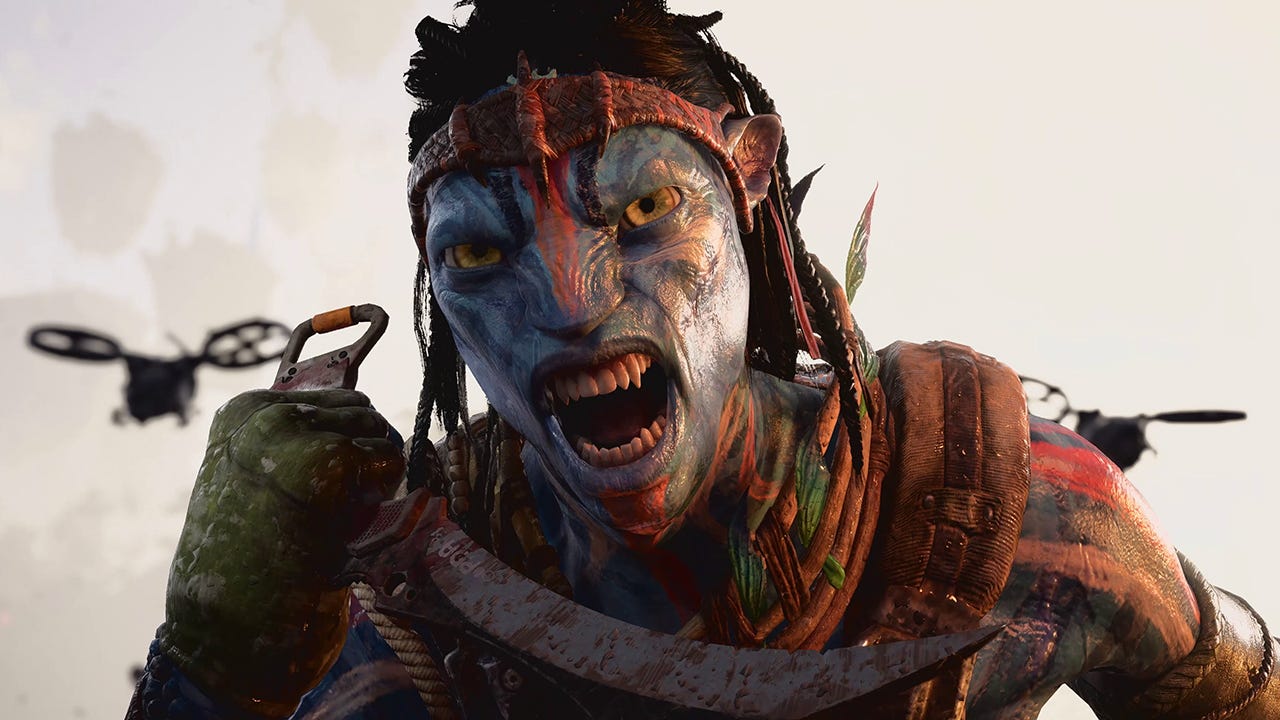
For years, he notes, people assumed that the performance-capture process used on the Avatar films was some kind of plot to replace actors with blue digital puppets. In reality, the workflow is designed to preserve every nuance of the performer. Motion capture rigs, facial cameras, and vast banks of computers exist, in Cameron’s view, to magnify what happens between actor and director on set. The Na’vi may be nine feet tall and bioluminescent, but there is still a human being underneath every raised eyebrow and broken whisper. That human core, he argues, is exactly what generative AI threatens to hollow out.
From Performance Capture to Prompted Performances
Generative AI offers something very different from what Cameron is doing in his jungle of cameras and markers. With the right training data and a written prompt, today’s systems can conjure a “new” performer out of thin air – an invented face that never signed a contract, a synthetic voice that never rehearsed a line, a body that never felt the weight of the scene. To Cameron, that is not a celebration of actors; it is the erasure of them. Instead of a collaboration between a director and a performer, you get a plausible imitation assembled from probabilities.
This isn’t just theoretical. At the Zurich Film Festival, audiences recently met “Tilly Norwood,” an AI-generated actress created by Eline Van der Velden and her company Particle 6 Productions. Tilly has no childhood, no rent to pay, no union to join – which is exactly why SAG-AFTRA members saw her as a warning sign. If studios can spin up a digital performer that never needs a day off, what happens to the thousands of working actors who already struggle to make a living? Online, some people dismiss these concerns as fear of change, but others echo Cameron’s unease and go further, arguing that AI “art” isn’t really art at all, just a clever remix of other people’s labour.
The “Sacred Creative Act” vs. Algorithmic Convenience
Cameron is not a technophobe. He has used cutting-edge tools in almost every era of his career, from the liquid metal T-1000 in Terminator 2 to the ocean-splitting spectacle of Titanic and the lush biomes of Pandora. He freely admits that generative AI could become a powerful tool in certain corners of filmmaking, especially the most expensive one: visual effects. If an AI-assisted pipeline can help create mountains, forests, or crowd shots faster and cheaper – while still being shaped and approved by human artists – he is willing to explore it. The director knows better than anyone that studios are terrified to greenlight huge-budget films in a world where a single flop can sink a franchise.
But for him there is a bright red boundary he refuses to cross. Writing, shaping characters, directing actors, and guiding them through a story is what he calls the “Sacred Creative Act.” That process comes from lived experience, point of view, and messy human instincts – not from a model scraping patterns off the internet. He has been blunt about it: he doesn’t want an AI model writing his scripts. A machine can imitate tone, structure, even quirks of dialogue; what it cannot do is live a life, get bruised by it, and then turn that into something honest on the page or in front of the camera.
This is why he bristles when people assume that, because he embraces technology in one part of the pipeline, he must secretly be fine with replacing actors and writers, too. There is a cynical take floating around online that directors only care about protecting the work they personally do – story and characters – and are perfectly happy to see AI chew through the jobs of VFX artists, animators, and compositors in the name of “budget efficiencies.” Cameron, at least publicly, pushes back on that view, arguing that the goal is not to replace crews but to make it slightly less terrifying to produce ambitious films in the first place.
Hollywood’s AI Anxiety
Cameron’s comments arrive during a period of intense anxiety in Hollywood. The writers’ and actors’ strikes put AI at the centre of public debate: how much of your face, your voice, your likeness can a studio own and reuse? For how long? Tilly Norwood was a flashy proof-of-concept, but behind her are countless smaller experiments – voice clones for replacement dialogue, AI crowd-fillers, digital extras scanned for a one-day shoot and then warehoused in a database forever. Some filmmakers are excited by the new tools; others feel like the industry is sleepwalking into the sci-fi future Cameron has been warning about since the first Terminator.
The director has already voiced concerns about AI far beyond film sets, especially in military applications. He has talked about the risk of an arms race in autonomous weapons systems, where the logic of “if we don’t build it, someone else will” pushes nations toward increasingly unaccountable machines. It’s not hard to see the parallel in entertainment: if one studio chooses not to exploit AI-generated performers, another might, and the pressure to compete could drag everyone along.
Avatar, Gigantic Budgets, and the Lure of Cheaper VFX
There is another layer to Cameron’s position: economics. The Avatar films are famously expensive to make, with vast teams of artists and technicians crafting every frame. So far, the bet has paid off. The original Avatar still holds the title of highest-grossing film in history, with around $2.9 billion in global box office. Its sequel, Avatar: The Way of Water, added another $2.3 billion, quietly sliding past Titanic and nearly everything else ever released. Cameron likes to remind people that these films were made with zero generative AI; every shot came from human-driven tools, not a text engine dreaming in the background.
The upcoming Avatar: Fire and Ash, due in December, is under enormous pressure to repeat that success. If it stumbles, Cameron has openly acknowledged he might not get to make Avatar 4 and 5 at all, despite years of planning. Those sequels are currently slated for 2029 and 2031, which would put the director in his late seventies by the time the saga wraps – assuming it ever does. In that context, it’s easy to see why any tool that could shave millions off the VFX bill, without betraying the heart of the story, starts to look attractive.
Some critics sneer that it’s only a matter of time before even Cameron caves and lets AI re-render his jungles and alien oceans to keep up with the next wave of technology. Others argue the opposite, that his stubborn insistence on working with human performers – even when they’re covered in dots and translated into ten-foot blue aliens – is exactly what keeps the films from becoming hollow tech demos.
Where Do We Draw the Line?
Underneath all the noise, Cameron’s position crystallises a broader question for the rest of us: what do we actually value in movies, and in art more generally? If you believe that art is fundamentally an expression of human experience, then the idea of a model inventing an actor and a performance from nothing really does feel like a horror story, no matter how impressive the pixels look. If you see art as primarily a product – something to be optimised for speed, cost, and content volume – then AI might look less like a threat and more like an inevitability.
The reality, at least for now, will probably live in the messy middle. AI will sneak further into the toolkit of filmmakers, from pre-visualisation to editing to VFX clean-up, often in ways audiences never notice. At the same time, voices like Cameron’s will keep insisting that there is a line we should not cross: the moment when the living, breathing, vulnerable human on set is replaced by something that never existed at all. Whether Hollywood listens to that warning, or treats it like just another elderly auteur grumbling at the future, will help define what movies look and feel like in the decades to come.