Apple’s long rumored first foldable iPhone is already stirring up debate, and it has not even been announced. 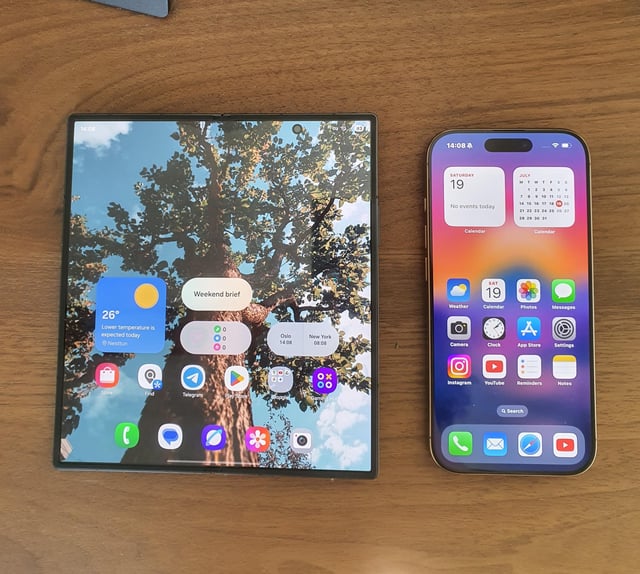
A fresh report from Fubon Research, drawing on supply chain data and Apple’s traditional appetite for strong margins, suggests that the device widely nicknamed the iPhone Fold could arrive next year with a starting price of about 2,399 dollars.
That figure makes it one of the most expensive mainstream phones ever discussed and puts it clearly above Samsung’s Galaxy Z Fold7, which starts at around 1,999 dollars. Apple appears to be positioning its debut foldable not as a rival in the same price lane, but as a more luxurious step up, similar to how its top tier Pro Max models sit above regular iPhones.
According to the analyst, the biggest drivers of this eye watering price are the core components of the folding design. The inner 7.58 inch flexible panel is rumored to be virtually crease free, a challenge that has bothered early foldable phones. Pair that with a complex hinge mechanism engineered to survive countless opens and closes while remaining thin and light, plus the use of lightweight structural materials to avoid a brick like feel in the hand, and the bill of materials quickly climbs.
The iPhone Fold is also said to feature a 5.8 inch outer display, letting users handle quick tasks without flipping the device open every time. Under the hood, the phone is expected to pack Apple’s latest custom silicon, advanced cameras, and all the usual premium extras such as fast storage and sophisticated connectivity. On top of that, leaks suggest a battery larger than the one in the iPhone 17 Pro Max, which already sits near the top of Apple’s lineup in both performance and price.
In other words, Apple is seemingly building a halo product, a showcase for its hardware engineering rather than a mass market bestseller. Yet Fubon Research is surprisingly optimistic about demand. The firm forecasts total sales of around 15.4 million units for the foldable iPhone, with roughly 5.4 million of those expected in 2026 alone as production scales up and early adopters rush in.
Still, the rumored price is causing sticker shock among many fans. In online discussions, plenty of people admit they were hoping for something closer to 1,700 dollars as a starting point, which is already far from affordable. To them, 2,399 dollars feels like a luxury gadget aimed at collectors, influencers, and the most dedicated Apple loyalists rather than regular iPhone upgraders.
At the same time, some Android users are watching the rumors with a mix of amusement and curiosity. On tech forums, you can already find posts joking that no sane person will pay that much for a phone, or teasing that high pricing means fewer iPhone owners to argue with in the comments. Others counter that Apple has repeatedly proven that if it delivers a polished experience with strong software support, there is a sizable audience ready to pay a premium.
Historically, the company has not been afraid to test the upper limits of what the market will accept. The iPhone X once seemed shockingly expensive, and now Pro Max models with generous storage routinely sell for well over 1,300 euro or the equivalent in other currencies. A 2,399 dollar foldable would be a big step beyond even that, but it fits a familiar pattern of Apple turning high price tags into status symbols.
In practice, much will depend on how convincing the final product is. If the iPhone Fold truly offers a crease free main screen, a robust hinge that does not loosen over time, a big battery that outlasts the iPhone 17 Pro Max, and cameras and performance on par with Apple’s best, then early adopters may see the price as the cost of joining the next generation of iPhone design.
For now, everything remains in the realm of leaks and analyst forecasts, and Apple has not said a word officially. But one thing is already clear from the numbers being thrown around: if the iPhone Fold arrives anywhere near 2,399 dollars, it will redefine not just what an iPhone can do, but what people expect to pay for one.