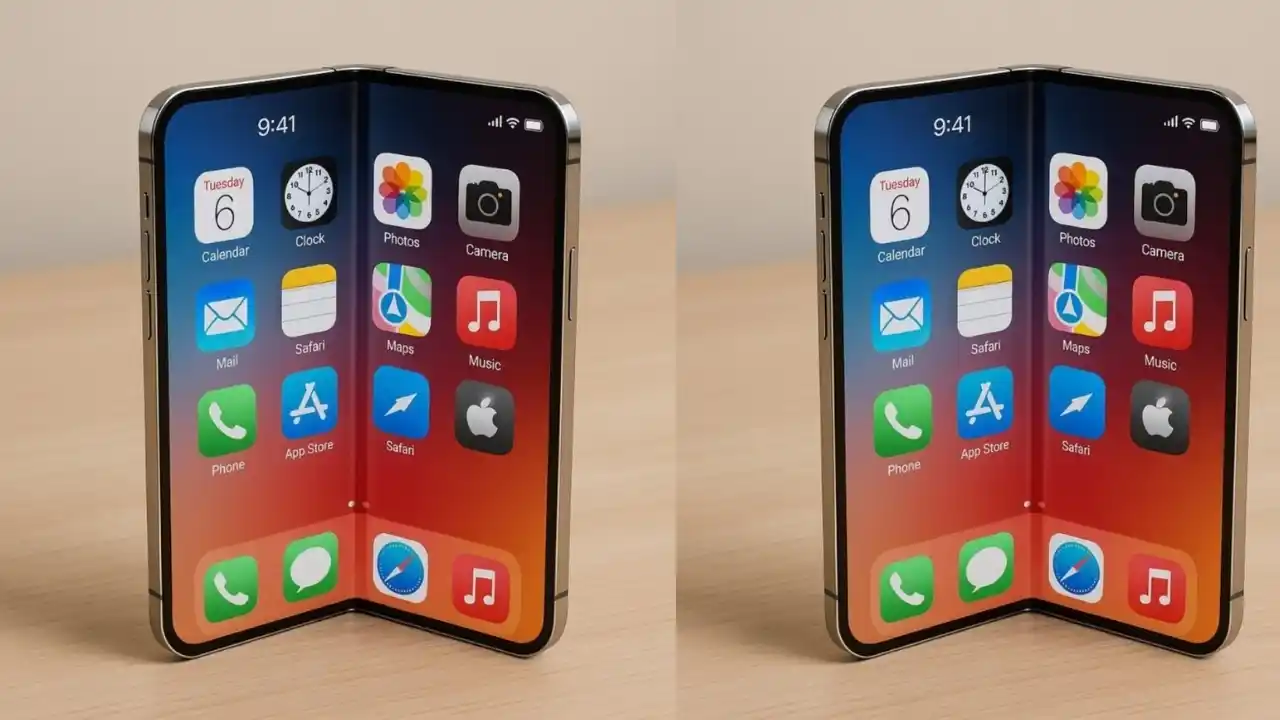
iPhone Fold Rumors Point to Apple’s First eSIM-Only Foldable
Apple’s long-rumored foldable iPhone, widely dubbed the “iPhone Fold,” is starting to look less like a futuristic concept and more like a carefully planned future flagship. The latest wave of leaks coming out of China suggests that Apple is not only finalizing the physical design, but also preparing a bold connectivity move: the first foldable iPhone is expected to ship without a physical SIM tray, relying entirely on eSIM technology.
According to Chinese tipster Instant Digital, Apple is preparing to launch the iPhone Fold as an eSIM-only device, echoing earlier reports from Bloomberg’s Mark Gurman and well-known Apple analyst Ming-Chi Kuo. Their combined track records lend serious weight to the idea that Apple’s first foldable will push even further into the SIM-less future that started when Apple removed the SIM tray from certain iPhone models in select markets.
From a rumor-analysis perspective, this is not just wild speculation. On a structured rumor barometer, the iPhone Fold’s eSIM-only design would currently sit in the “probable” zone at roughly 75%. That confidence level comes from four main pillars: the credibility of the original leaker, independent corroboration from multiple Apple-focused sources, the technical feasibility of an eSIM-only foldable, and how well the suggested launch window lines up with Apple’s usual product cadence. Across all four categories, the rumor scores solidly above average.
One of the strongest arguments for an eSIM-only iPhone Fold is internal space. Foldable hardware is notoriously cramped inside, as hinges, extra display layers, complex wiring, and reinforced frames all fight for room. Apple is reportedly pursuing an ultra-thin chassis for its first foldable, and in that kind of design every cubic millimeter counts. Removing a mechanical SIM tray frees up precious volume for larger batteries, more advanced cooling solutions, and additional antennas, while also simplifying waterproofing and improving structural rigidity. Ming-Chi Kuo has previously noted that the ultra-slim profile under discussion leaves very little spare volume for legacy components like a nano-SIM slot, a point that Instant Digital now appears to reinforce.
There is, however, an important regulatory angle. When Apple launched the eSIM-only iPhone Air in China, the company collided with a long-standing skepticism toward virtual SIM technology. Chinese regulators and carriers had been cautious about eSIMs for years, and Apple had to work through a series of hurdles before attitudes began to soften. That experience highlighted how aggressive moves toward eSIM can complicate launches in key regions. If the iPhone Fold arrives as a high-profile, eSIM-only flagship, Apple will need to ensure that regulators and carriers in China and other eSIM-shy markets are fully aligned in advance.
On the hardware front, the rumored specifications sketch a no-compromise foldable designed to challenge the most premium devices in the market. The iPhone Fold is expected to adopt a book-style form factor, with a main folding OLED panel that reportedly measures 7.74 inches when opened. A 5.49-inch outer cover display is said to handle day-to-day interactions like notifications, quick replies, and basic app use. Resolution for the primary screen is tipped at 2,713 x 1,920 with a 4:3 aspect ratio, paired with a crease-less folding implementation that aims to sidestep one of the biggest visual drawbacks of current foldables, where the hinge line remains conspicuously visible.
Thermal management is rumored to rely on a dedicated vapor chamber, an increasingly common solution in slim, powerful devices that need to sustain high performance without throttling. Under the hood, Apple is expected to equip the iPhone Fold with an A20 Pro system-on-chip, 12GB of RAM, and an in-house C2 5G modem. That combination would underline Apple’s push for tight vertical integration, improved power efficiency, and fine-tuned performance specifically optimized for the dual-display form factor.
Biometrics may also take a different direction compared to recent mainstream iPhones. Leaks suggest that Apple could favor Touch ID over Face ID on the iPhone Fold, potentially embedding the fingerprint reader in the power button or even beneath the display. A fingerprint-based solution would avoid complicated Face ID sensor layouts in a device that already has to contend with hinges, ultra-thin bezels, and flexible OLED panels.
The camera system is expected to center on a dual-lens rear setup with a 48MP main sensor, aiming to deliver the image quality users now associate with flagship iPhones while balancing the limited internal space of a foldable chassis. On the front, rumors point to an in-display camera with a resolution of up to 24MP, allowing for video calls and selfies without a punch-hole or notch interrupting the main folding display. This approach would help preserve the immersive feel of the larger screen when watching content, gaming, or multitasking.
Keeping that hardware running is said to be a substantial battery in the 5,400mAh to 5,800mAh range, significantly larger than what current non-foldable iPhones offer. Such capacity would be necessary to drive a big, bright foldable display, a secondary outer screen, next-generation 5G connectivity, and a powerful A-series chip, all while still delivering the all-day endurance that buyers expect from a device at this price point.
Apple’s first foldable is not expected to arrive in the immediate future. The present consensus among leakers and analysts points to a launch window in the second half of 2026. That timeline would give Apple ample opportunity to refine the hardware, adapt iOS and key apps for a foldable canvas, and ensure that the supply chain is ready for new display sizes, hinge components, and specialized testing. Early shipment projections suggest between 7 million and 9 million units in the first year, indicating that Apple sees the iPhone Fold as a carefully ramped ultra-premium product rather than a direct replacement for the standard iPhone lineup.
Pricing expectations fit that positioning. Current rumors point to a starting price in the neighborhood of $2,399, firmly placing the iPhone Fold in the ultra-high-end tier, even compared with existing foldables from rivals. At that level, Apple would be targeting early adopters, professionals, and enthusiasts who want the most advanced expression of both Apple’s ecosystem and foldable hardware, rather than casual upgraders coming from older devices.
If these reports prove accurate, the iPhone Fold will not only be Apple’s first foldable but also one of the company’s boldest steps toward a fully eSIM-driven future. For frequent travelers who rely on physical SIM cards, multi-SIM power users, and regions where eSIM adoption still lags, the move could feel controversial and potentially inconvenient. Yet for Apple, the trade-off may be worth it: ditching the SIM tray enables cleaner industrial design, more robust water resistance, more internal space for performance and battery life, and a smoother long-term transition to digital connectivity. As carrier support for eSIM continues to widen globally, an eSIM-only iPhone Fold looks less like a risky bet and more like the next logical step in Apple’s evolving vision of the smartphone.