The smartphone industry has entered a new era, and the driving forces behind this transformation are, once again, Apple and Samsung. Both companies have consistently dictated the rhythm of technological evolution, and their latest releases – the iPhone Air and the Galaxy S25 Edge – prove that the direction of the market is firmly in their hands. What was once a rumor or a prototype is now reality, and the trend is undeniable: ultra-thin smartphones are the future, whether consumers fully embrace the change or not.
It wasn’t so long ago that enthusiasts were still debating whether slimmer phones made sense. 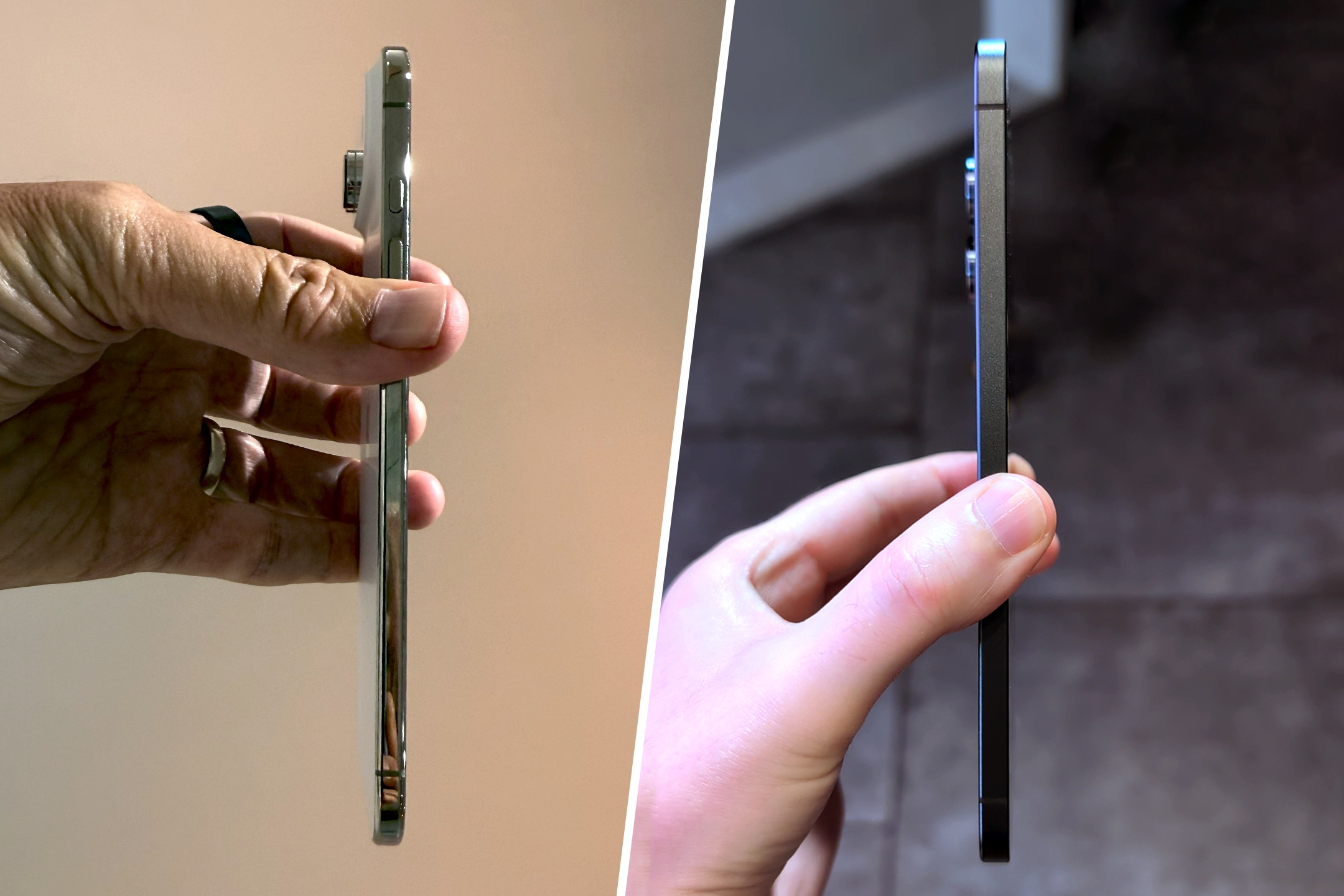
Early leaks and whispers about an iPhone Air drew skepticism, while Samsung’s announcement of the Galaxy S25 Edge faced a storm of criticism. Many fans, journalists, and even power users argued that battery life should be prioritized over achieving millimeter-thin form factors. Yet, despite these concerns, Apple and Samsung have doubled down on the ultra-slim design philosophy – and now their competitors are following. Motorola with its X70 Air and Tecno with the aptly named Tecno Slim are lining up to continue the movement.
Criticism has been loud and clear: consumers want practical improvements such as larger batteries, not thinner devices. Yet industry history shows that when Apple or Samsung commit to a design direction, the rest of the smartphone market falls into place. From removing headphone jacks to pushing edge-to-edge displays, the giants set trends that later become unavoidable standards. Ultra-thin phones appear destined to follow the same trajectory.
The new philosophy: smartphones built on vibes
Initial reactions to Samsung’s Galaxy S25 Edge were filled with doubt. A slimmer phone paired with a smaller battery seemed like an obvious misstep. But Samsung’s executives made an intriguing promise: hold the device in your hand, and all complaints would vanish. Surprisingly, they weren’t wrong. Many consumers who initially scoffed at the concept changed their tune once they experienced the phone in person. Apple’s iPhone Air doubled down on this principle, with forums and communities full of early adopters praising the feel and elegance of the device. In their words, these phones are less about specs and more about how they make you feel – a product category built around ‘vibes.’
While it might sound frivolous, the emotional connection users have with their smartphones is real. Consumers who once feared compromised battery life are finding themselves seduced by sleek design, feather-light weight, and sheer elegance. The shift illustrates a truth Apple has long understood: experience sometimes outweighs raw numbers.
Battery life: the next big breakthrough
Despite complaints, the battery issue may not haunt these ultra-thin devices for long. A revolution is quietly unfolding in battery technology, particularly with the rise of silicon-based batteries. Chinese manufacturers have been early adopters, producing prototypes and even commercial devices with capacities that dwarf current lithium-ion options. Next year, we may see smartphones shipping with batteries rated at 10,000 mAh – a figure once considered fantasy. If this technology matures and becomes mainstream, today’s criticisms about Apple and Samsung’s slim phones could look outdated very quickly.
Already, some challengers like the Tecno Slim have shown that thinness doesn’t have to equal weak battery performance. Remarkably, it manages to include a larger power pack than Samsung’s Galaxy S25 Ultra while barely adding a fraction of a millimeter in thickness. For now, it’s only Apple and Samsung clinging to smaller cells, but once they integrate silicon batteries into their flagships, battery anxiety may vanish almost overnight.
A predictable path forward
In hindsight, this shift feels inevitable. For years, Apple and Samsung have shaved fractions of millimeters off their flagship devices in a race to be the slimmest. Consumers scoffed, but sales numbers proved the allure of thinner phones was real. The release of the iPhone Air as a mainstream ‘everyday’ device, alongside the iPhone 17 Pro positioned as the thicker, professional powerhouse, represents Apple’s clearest signal yet: slim is for the masses, thicker Pro models are for specialists.
Samsung’s strategy aligns in similar fashion. Both companies understand that eventually, once silicon battery technology is ready, the slim form factor will no longer demand trade-offs. At that point, choosing an ultra-thin phone will be as natural as picking a MacBook Air for portability. The Pro tier will remain for professionals who want uncompromising power, but the Airs and Edges will dominate mainstream shelves.
What lies beyond?
The dominance of ultra-thin phones may only last a decade before the next paradigm shift. Already, whispers about consumer-grade smart glasses and augmented reality devices hint at a future where the smartphone itself becomes less central. Still, until that transition arrives, the reign of thin devices seems unavoidable. In just a few years, today’s thicker models may look as dated as the chunky designs of early smartphones.
For now, Apple and Samsung have declared that slim is in, and the industry is obeying. Whether consumers fully agree or not, the tide has turned. A new age of ultra-thin smartphones is here, and this time, resistance may truly be futile.
1 comment
samsung copying apple again smh