The smartphone industry has always thrived on new form factors, whether it was the jump from physical keyboards to full touchscreens or the rise of foldables that promised to transform our devices into tablets on demand. Now, another chapter is unfolding: the age of ultra-thin phones. This year, Apple and Samsung have both doubled down on the idea, bringing us the iPhone Air at just 5.6 mm thick and the Galaxy S25 Edge at 5.8 mm. These numbers would’ve seemed impossible just a few years ago, and yet, they’re here. But one notable name is missing from this ultra-thin lineup – Google’s Pixel series. The Pixel 10, as capable as it is in photography and AI features, hasn’t spawned a thin variant, and there are reasons for that.
The seeds of this trend were first planted at MWC in Barcelona earlier this year, when Tecno unveiled the Spark Slim prototype measuring an almost unbelievable 5.75 mm. 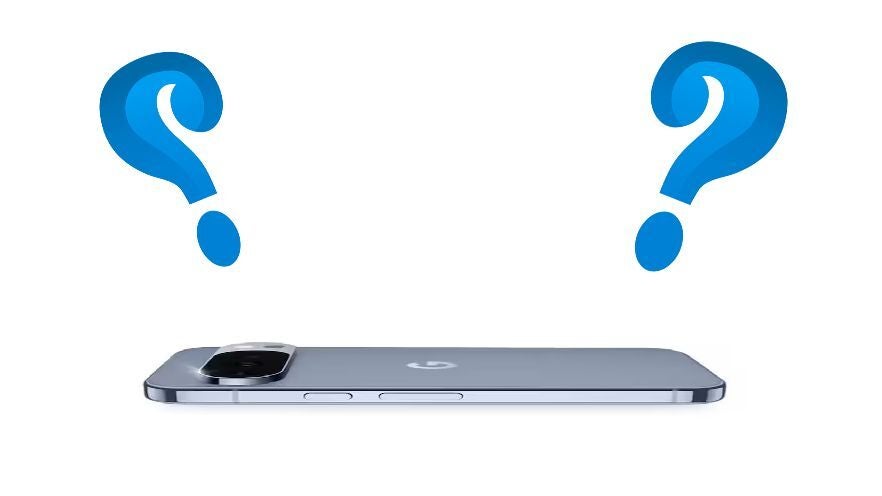
At the time, many dismissed it as little more than a flashy concept, something to draw attention but unlikely to ever ship in large numbers. Yet fast forward to today, and Samsung and Apple have shown that ultra-thin devices can leave the prototype stage and hit mass production. Their launches suggest that thin is no longer just an engineering stunt – it’s a possible new design direction. Still, Google has been hesitant to leap into this emerging category, and its caution is worth examining.
Why Google is sitting out the thin wars
One of the clearest reasons lies in Google’s historical pattern. The company is famously cautious with hardware. It took four years to release its first foldable – the Pixel Fold – long after Samsung had iterated multiple generations of its Galaxy Fold series. For a company that once experimented with daring ideas like Project Ara’s modular phone, the modern Google has become conservative with hardware gambles. Many of its past innovations now sit in the so-called Google Graveyard, abandoned despite their promise. Against that backdrop, the reluctance to push out a Pixel 10 Slim makes sense: Google doesn’t want to risk resources on a niche experiment that might flop.
The Pixel’s design philosophy: Cameras first
Another major obstacle is Google’s design priorities. Every recent Pixel phone carries a prominent camera bar or housing, starting with the Pixel 6’s bold horizontal camera bar and evolving into the oval-shaped camera design of the Pixel 9 and Pixel 10 series. The message has been clear: photography is the Pixel’s defining feature, and Google won’t compromise image quality for the sake of trimming down thickness. Claude Zellweger, Google’s design director, has defended the choice, emphasizing that camera performance takes precedence over aesthetics. The result is that even the slimmest Pixel, the Pixel 10 Pro, measures 8.5 mm at its thinnest point – but closer to 11 mm once you account for the camera bump. Such dimensions are fundamentally at odds with the ultra-thin philosophy pursued by Apple and Samsung.
The single-camera advantage
Apple’s iPhone Air has benefitted from another strategic choice: the willingness to ship a single-camera phone in 2025. This is a throwback to the iPhone SE and more recently the iPhone 16e, and it allows Apple to cut thickness without losing too much consumer goodwill. Google, on the other hand, abandoned single-camera smartphones back in 2018 with the Pixel 3. Since then, every Pixel has shipped with multiple lenses, and the company has leaned heavily into computational photography. While Samsung managed to squeeze two cameras into the slim Galaxy S25 Edge, Google’s habit of multi-sensor camera arrays makes designing a 5–6 mm Pixel considerably more difficult.
Market demand is lukewarm
Even if Google could design an ultra-thin Pixel, the question remains: would it sell? Samsung’s numbers suggest the answer is complicated. The Galaxy S25 Edge sold roughly 650,000 units in its first month and hit about 1 million in total. That’s a respectable figure on its own, but when compared with the more than 20 million units the Galaxy S25 family moved overall, the Edge’s performance is underwhelming. Reports indicate Samsung has even scaled back production in some regions due to weaker-than-expected demand. Consumers may be intrigued by the thinness factor, but the compromises – smaller batteries, weaker cooling systems, and durability concerns – hold many back.
Apple’s iPhone Air is still too new to judge, but expectations aren’t sky-high. Early feedback points to compromises around battery life that Apple is already trying to patch with the return of its MagSafe battery accessory, a reminder of the challenges of slimming phones too aggressively. It’s likely that while enthusiasts will buy the Air for its novelty, mainstream users will stick with the more balanced iPhone 16 series.
Will Google ever go thin?
Given these factors, the lack of a Pixel 10 Slim isn’t necessarily a mistake. Google may be waiting to see if this trend takes off in a meaningful way before investing in its own ultra-thin entry. If the iPhone Air and Galaxy S25 Edge suddenly surge in popularity, perhaps we’ll see a Pixel 11 Slim. But if sales remain middling, Google’s cautious approach will have saved it from chasing a fad. Until then, the company seems content to continue prioritizing photography, AI integration, and software experiences over shaving off a few millimeters.
So for now, Pixel owners are left with slightly thicker but highly capable devices. The absence of a super-thin Pixel isn’t so much a shortcoming as it is a reflection of Google’s current identity: a smartphone maker more interested in computational excellence than in setting records for dimensions. Still, it raises the question – when you hold your phone, do you wish it were slimmer, or do you value the extra space that ensures better cameras, larger batteries, and improved performance?
1 comment
apple fans will buy the Air even if it lasts 3 hours lol