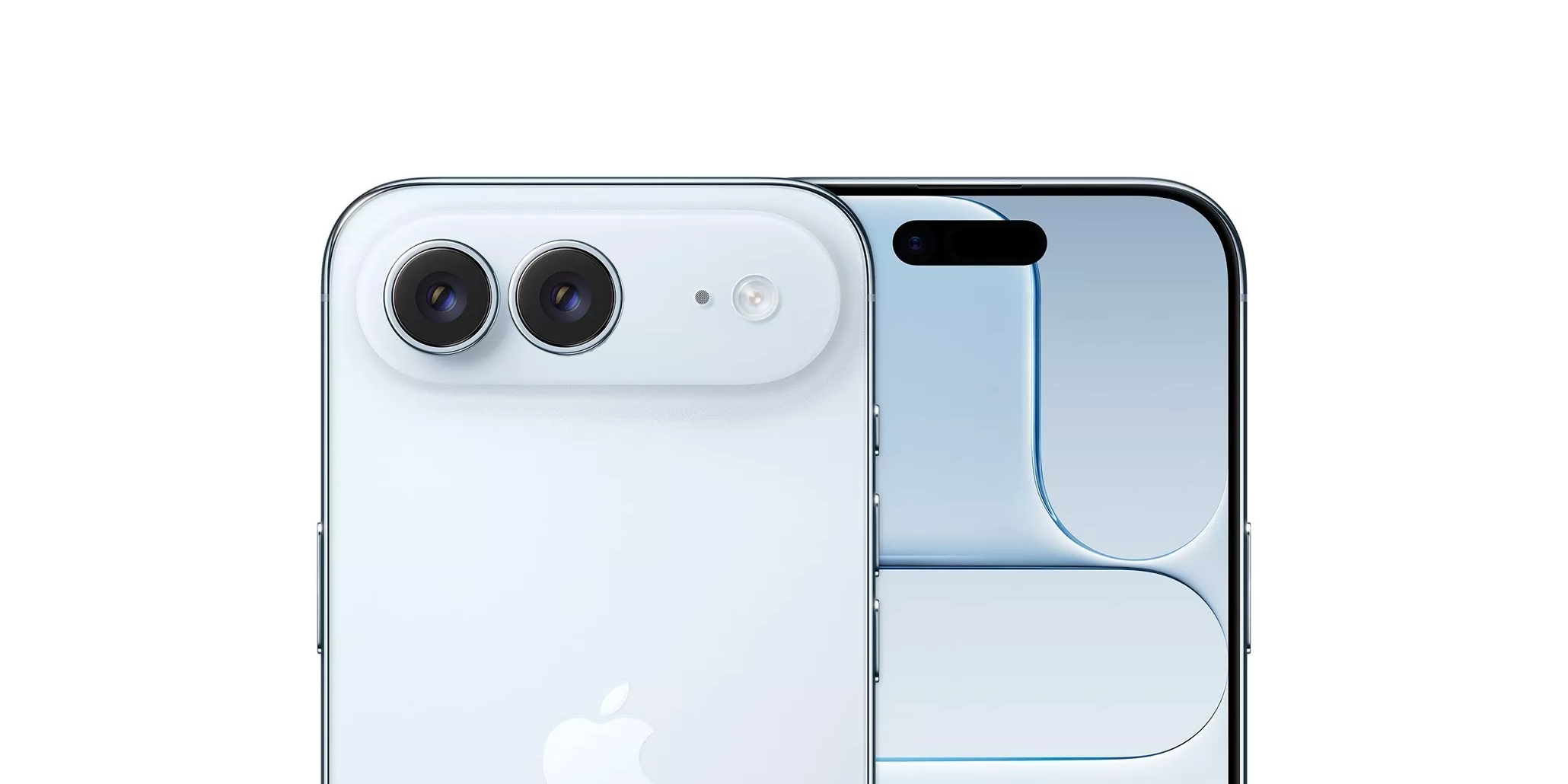
iPhone Air 2 delay, redesign whispers, and the camera question Apple can’t dodge
Apple’s ultra-thin iPhone Air made a statement: engineering bravado can be stunning. It also made a compromise that irritated power users – one rear camera on a $999 phone. Now, with reports pointing to a spring 2027 window for the second-generation model, the conversation has shifted from when it will ship to whether Apple will fix the most obvious omission. Multiple leaks and industry chatter point in different directions, but the most credible signals suggest Apple is actively weighing a redesigned iPhone Air 2 with two rear cameras. That alone won’t make the phone a hit – but it would remove the simplest reason many shoppers dismissed the first Air.
Why the camera count matters more than it should
A camera system isn’t just a spec line; it defines what you can capture without friction. The first iPhone Air pursued breathtaking thinness – around 5.6mm – and paired it with a single rear shooter. Beautiful, yes, but limiting. Meanwhile, Apple’s mainstream line set expectations: the iPhone 17 launched with a dual setup at a lower starting price, and the next standard model – the iPhone 18 – is widely expected to continue the two-camera baseline. That places the Air in a weird spot: the pricier, more design-forward model doing less with photography than the “vanilla” iPhone. That contradiction is exactly what a dual-lens Air 2 would correct.
Conflicting leaks, credible maybes
Recent reporting has ping-ponged among no, yes, and – most plausibly – maybe regarding a second camera on the Air 2. The “maybe” feels credible not because it’s noncommittal, but because it reflects how Apple actually works this far from launch. If the target slipped from late 2026 to early 2027, the company is still evaluating multiple hardware paths. Design freezes happen surprisingly late when a product sits on a knife’s edge between form and function. In other words: Apple hasn’t etched the rear camera count in stone because it’s still balancing industrial design, cost, thermal headroom, and the overall story the Air 2 needs to tell.
What a dual-camera Air 2 could look like
Don’t expect Apple to slap on extra glass just to pad a spec sheet. If the Air 2 adds a second lens, the most logical pairing is a wide + ultrawide combo, matching the baseline iPhone’s versatility without the size and heat penalties of a periscope or long telephoto. That approach preserves the Air’s thin identity, keeps the camera bump sane, and gives users the everyday flexibility they’ve asked for. The trick is maintaining structural rigidity and battery capacity. Every gram and cubic millimeter matter in a chassis this slim. A bigger camera module usually forces a taller bump, which in turn drives trade-offs in battery volume and antenna routing. Apple’s answer will likely be computational: lean harder on image processing to squeeze premium results from modest optics.
The pricing puzzle – and why it may sting
The first Air launched at $999, a price that dared fans to choose elegance over breadth. Add a second camera, upgrade the processing pipeline, and maybe tweak materials, and the bill of materials climbs. Will Apple push past $999, or reshuffle storage tiers to hold the line? Neither option is painless. A higher price risks turning the Air into a showpiece rather than a volume driver; holding the price might require savings elsewhere. Battery life, historically the first casualty of extreme thinness, cannot be the compromise again in 2027 – not when rivals are squeezing bigger cells and faster charging into svelte frames.
Context: the competition isn’t standing still
On the Android side, thin-and-premium is no longer a novelty. Samsung’s Galaxy S25 Edge embraced slim design yet still shipped a dual-camera system anchored by a high-resolution primary sensor, while drawing a clean line from the feature-packed Ultra. By the time the Air 2 lands, talk will have moved on to the Galaxy S26 Edge and beyond, making a one-camera Air 2 untenable. Consumers don’t compare spec tables in isolation; they compare stories. “Ultra-thin but capable” can beat “thin at any cost.”
What Apple must get right besides the camera
- Battery and thermals: A thin chassis magnifies heat and endurance challenges. Apple needs smart thermal dissipation and efficiency gains that don’t sacrifice performance bursts for photography and gaming.
- Durability: Thin phones test torsional rigidity. Reinforcement strategies, recycled alloys, and smarter internal layouts should keep the Air 2 from feeling fragile.
- Computational photography: If the optics are conservative, the image pipeline must be anything but. Low-light performance, portrait edge detection, and video stabilization will define the Air 2’s reputation.
- Value clarity: With the iPhone 18 and rumored iPhone 18e occupying lower price bands, the Air 2 needs a clear pitch: the most elegant iPhone that still captures the shot you want – no compromises on the basics.
- Accessory ecosystem: A thin device changes cases, battery packs, and lens protectors. Launch-day accessories that respect the Air’s silhouette will matter more than usual.
Too little, too late – or exactly on time?
Is 2027 too late to fix the Air’s camera narrative? Not necessarily. The Air line isn’t about yearly iteration; it’s about a vision of “design-first iPhone.” If Apple brings a thoughtfully executed dual-camera setup, strengthens battery life, and keeps the price from creeping into halo-phone territory, the Air 2 could turn skepticism into demand. If it repeats the one-camera gamble while competitors keep raising the baseline, it risks becoming a concept phone you admire in a store but never buy.
The bottom line
The most believable outlook right now is that the iPhone Air 2 remains in flux, with a dual-camera redesign on the table as Apple reconciles ambition with practicality. That’s a good thing. A delayed product should earn its delay by making the right trade-offs, not by doubling down on the wrong ones. In 2027, thin won’t be enough. Thin and complete will be.
1 comment
If it’s $999 again with meh battery, hard pass tbh