Choosing a new phone in 2026 is weirdly difficult
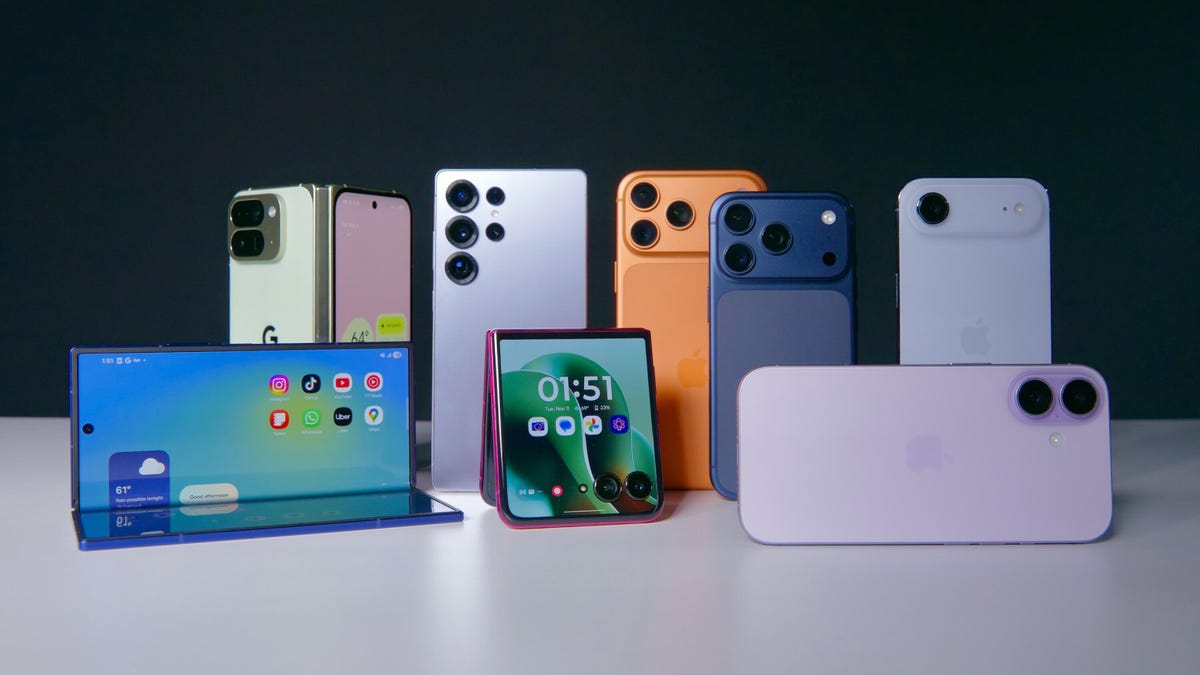
Not so long ago, buying a new phone felt straightforward. You checked your wallet, picked a size that did not look ridiculous in your hand, and walked out of the store. In 2026, that simple ritual has turned into a trek through a dense gadget jungle. There are foldables that unfold into near tablets, ultra wide phablets that barely fit into a jacket pocket, gaming bricks with aggressive styling, and premium slabs that all seem to chase the same gigantic display. Somewhere inside that jungle, a whole species is quietly dying out: the genuinely compact smartphone.
If you dust off an old iPhone 6s from 2015, its four point seven inch screen looks almost dainty by modern standards. Back then, that size felt perfectly normal; today it feels like a prop from a museum. Fast forward to the current generation and things look very different. The standard iPhone seventeen is expected to reach around six point three inches, while the new iPhone Air hovers near six point five. Many Android rivals stretch even further. For anyone who still wants a phone that does not feel like carrying a thin tablet everywhere, every new announcement can feel like another nail in the compact phone coffin.
The slow extinction of the compact phone
Compact phones are not disappearing because people stopped loving them. They are disappearing because bigger is easier to sell. A larger display gives marketing teams more screen to show flashy games and cinematic videos. Engineers enjoy more internal space for batteries and components. And in spec sheets, big numbers simply look better. Screen diagonal goes up, battery capacity goes up, and prices follow along.
Yet a stubborn crowd of users refuses to move on. They want something that does not stretch their grip to the limit and does not poke out of a pocket like a metal notebook. Picture busy commuters on crowded buses trying to reply to messages with one hand while gripping the rail with the other. Think of people with smaller hands who have to shimmy a giant phone up their palm just to reach the back gesture. Consider anyone who has ever watched their oversized device slide out of shallow jeans pockets the moment they sit down. For these people, compact is not nostalgia; it is comfort and basic practicality.
For years, buying guides proudly maintained a section for the best compact phones. Recently, those lists have taken on a melancholy tone. Many Android brands quietly retired their smaller models. Even Apple, after keeping the tiny iPhone SE line alive for a surprisingly long time, gradually shifted its mainstream catalogue toward larger diagonals. That is why the chatter around the iPhone seventeen e feels different. On paper, it does not look like a token budget model. It looks like Apple’s most serious attempt in years to keep a truly manageable size alive in a world that has mostly abandoned it.
iPhone 17e: the smallest modern iPhone that still feels modern
According to early rumours, the iPhone seventeen e will stick to a six point one inch display, the same diagonal as the current sixteen e. There is nothing tiny about six point one inches, but context matters. Within the broader iPhone seventeen family, the regular model is tipped to grow, the Air and large screen variants push higher, and the Pro devices continue to be big, heavy slabs aimed at spec chasers. That leaves the seventeen e as the smallest mainstream iPhone that ordinary buyers can get without digging into the back catalogue or paying flagship prices.
Crucially, this phone is not being framed as a retro throwback. The seventeen e is widely expected to serve as the entry door to Apple’s ecosystem for the next several years. That means a device that slides into smaller bags and pockets, yet does not feel sluggish or dated after the first software update. Analysts expect it to ship with Apple’s A nineteen chip, a piece of silicon designed to keep up with demanding apps and new iOS features for many cycles. Rumours also point to a C one modem, Apple’s in house connectivity hardware that aims to improve signal stability and efficiency, particularly in dense city centres where networks are congested. For buyers who keep their phone for four or five years, that mix of processor and modem matters more than any one flashy gimmick.
Put simply, the seventeen e is shaping up not as a compromise box but as the smallest modern iPhone that still feels unapologetically current. That alone could make it the default choice for a huge group of people who want Apple’s ecosystem without carrying a near tablet everywhere.
A smarter selfie camera that understands how people really shoot
One of the more intriguing rumours around the iPhone seventeen e concerns the front camera. Reports suggest an eighteen megapixel selfie sensor that supports Center Stage, Apple’s intelligent framing feature that tracks faces and keeps them neatly centred. On the iPad, Center Stage has already proved how much smarter video calls can feel when the camera gently follows you instead of locking you into a rigid frame.
On the seventeen e, the twist could be how that technology is used for photos as well as video. Early whispers suggest that the phone will handle landscape style selfies even when you hold the device vertically. Imagine quickly lifting your phone in portrait orientation, as almost everyone does by default, and ending up with a framing that looks like you shot in landscape from the start. You and your friends fit into the scene on a crowded street, the horizon stays level, and you do not have to twist your wrist or rotate the phone at the last second.
This behaviour would also shine in everyday video calls. People rarely think about orientation when answering; they just tap accept. A front camera that adapts to groups, reframes as people move around the room, and keeps everyone in view would make the seventeen e feel much more premium than its positioning in the range suggests. For casual vloggers and social media creators, that reliable selfie system becomes the primary lens, not an afterthought. In that sense, a humble e model suddenly starts to look like a very capable pocket content studio.
Design, display debates, and the notch that refuses to die
Design wise, the iPhone sixteen e reused the familiar, slightly boxy shape last seen on the iPhone fourteen. The seventeen e is rumoured to move forward, borrowing the softer, more comfortable contours from the iPhone fifteen family. That means gently tapered edges instead of sharp rails, a change that sounds minor on paper but can radically improve daily comfort. Rounded sides dig less into your palm during long reading sessions, and the phone slips into a pocket without catching on fabric.
The front of the device is where speculation diverges. Some early leaks claimed that Apple would finally bring the Dynamic Island cut out to the budget friendly line, unifying the look across the entire seventeen family. Later reports, however, suggest that Apple might stick with the classic notch and reuse the existing display panel to keep costs under control. On the surface, that sounds like a slight letdown for design purists.
In practice, though, this might not matter as much as social media reactions suggest. Whether notifications and live activities flow around a pill shaped Dynamic Island or sit neatly below a notch, the experience still lives or dies on brightness, colour accuracy, and smooth animations. Most users will care far more about whether the screen is readable in harsh sunlight, whether touch input feels instant, and whether the panel remains durable in daily use. The seventeen e is expected to perform solidly on those fronts, even if its face looks a bit more old school than its Pro siblings.
Battery, charging, and the quiet importance of endurance
Battery rumours for the iPhone seventeen e are still vague, but most industry watchers expect a capacity in the same ballpark as the sixteen e, roughly four thousand milliamp hours. Numbers alone do not tell the full story on an iPhone, because Apple tightly controls both hardware and software. With an efficient A series chip, a well tuned modem, and iOS optimisations, that capacity can translate into very real all day endurance.
Think about a typical day. The alarm rings in the morning, you check messages and headlines, stream music on the commute, juggle work chats and email, snap a few photos during lunch, navigate to an evening meet up, and wind down with some video before bed. On a compact device, that blend of tasks needs to be covered without dropping you into battery anxiety by mid afternoon. Early expectations suggest the seventeen e will comfortably deliver that kind of day, especially for people who are not constantly gaming or shooting long 4K video clips.
Charging speeds are unlikely to break any records. Apple traditionally moves slowly in this area, and the seventeen e is expected to stay around twenty watt wired charging, accompanied by familiar MagSafe style wireless options. The marketing line will once again focus on going from near empty to about half in roughly half an hour. On paper, that looks tame compared to the ultra fast charging figures some Android manufacturers advertise. In practice, it is enough to top up during a shower, while making breakfast, or in the gap between meetings. For most owners, consistency and battery health over years matter more than shaving a few extra minutes off the charge time.
Why a smaller iPhone still matters more than people think
It is easy to dismiss the whole compact phone discussion as a niche debate for tech enthusiasts. Yet the benefits of a slightly smaller device are surprisingly down to earth. A lighter, narrower phone means less strain on wrists and fingers, especially for people who spend long evenings messaging or reading. One handed use on a busy street feels safer when you can maintain a firm grip instead of balancing a wide slab on your fingertips. Even basic tasks, like slipping the phone into the pocket of fitted jeans or a small crossbody bag, become less of a daily irritation.
There is also a subtle psychological effect. Huge displays quietly encourage huge usage. When your phone feels like a portable television, it becomes natural to treat every idle minute as an invitation to watch yet another video or scroll yet another infinite feed. A six point one inch screen will not magically cure doomscrolling, but it does draw a slightly firmer line between a phone and a mini cinema. The iPhone seventeen e, if it stays true to its compact promise, could hit a sweet spot: big enough for maps, games, and media, yet still small enough to disappear into your hand when you only need to fire off a quick message and get back to real life.
The royal flush: when restraint becomes Apple’s biggest feature
Put all these pieces together and the iPhone seventeen e begins to look like Apple’s quiet royal flush for 2026. It does not compete with the Pro models on giant cameras, exotic materials, or bleeding edge displays. Instead, it leans on a different formula: a still compact six point one inch body, a modern A nineteen processor, an in house C one modem, a smarter selfie system with Center Stage, a more comfortable chassis borrowed from the iPhone fifteen line, and battery life that should get most people through the day. All of this arrives in a package that sits below the flagship price tier.
In a market obsessed with making everything bigger, the boldest move may be to stop chasing size at all costs. By choosing to hold the line on dimensions while quietly upgrading the internals, Apple could turn the seventeen e into the go to recommendation for anyone who wants an iPhone that fits normal human hands. It gives newcomers an approachable, less intimidating entrance into the ecosystem and offers long time fans a much needed refuge from the relentless march of ever expanding screens.
The iPhone seventeen e probably will not dominate keynote slides or advertising campaigns the way the Pro devices will. But if the rumours are even roughly accurate, it could become the sleeper hit of the 2026 lineup: the smallest iPhone in the family, and for many people, the one that actually makes the most sense.
2 comments
finally a small iphone again, my tiny hands are happy 😂
if apple keeps the price sane this might be my first new iphone in years