Apple has long prided itself on charting its own course in smartphone design, but with the upcoming iPhone 17 Pro, the company appears to be embracing a rare strategy: borrowing openly from one of its rivals. The striking renders surfacing online reveal that Apple’s flagship may arrive with a Pixel-inspired aesthetic, echoing design cues from Google’s Pixel 10. 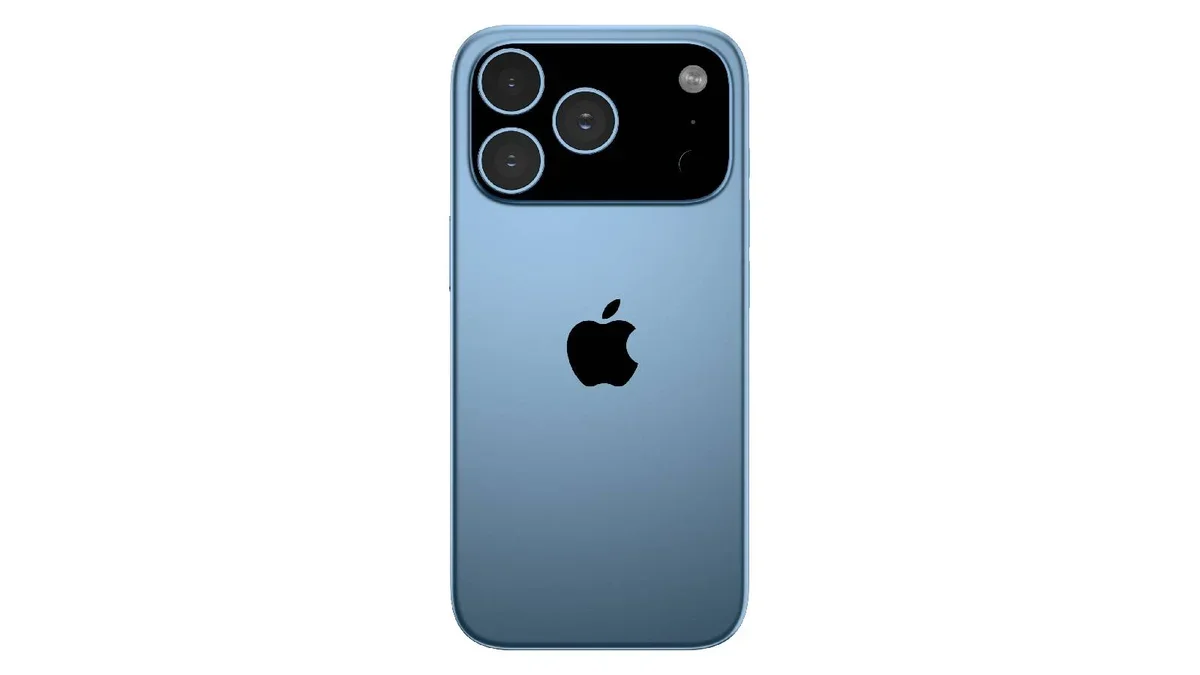
For Apple, a company often accused of design stagnation, this marks a bold if somewhat uncharacteristic decision – and potentially one of its smartest in years.
For context, the iPhone has not experienced a sweeping redesign since 2017. Year after year, critics and fans alike joke about Apple’s incremental changes, pointing out that the devices feel visually unchanged despite their hefty price tags. In contrast, Google’s Pixel line has, for all its flaws, carved out an identity based on experimentation. While the Pixel doesn’t dominate in sales, its bold designs and rapid software innovations make it stand out in a sea of lookalike Android devices. Now, Apple appears ready to leverage some of that momentum by adopting a design language that has given Pixel phones a distinct edge in consumer perception.
Apple’s decision comes after a difficult year. The iPhone 16 launch was heavily marketed around next-generation AI features, but many of those capabilities failed to arrive on time. What should have been marquee selling points became a source of frustration, and Apple had to pivot attention toward other developments such as the Liquid Glass language for iOS. The delay didn’t necessarily destroy confidence, but it did fuel skepticism. Apple, a company famous for releasing only polished features, found itself associated with overpromising – an uncharacteristic misstep.
Meanwhile, Google continued pushing AI to the forefront with its Pixel phones. Features like on-device translation, real-time transcription, and AI-powered photo editing gave the impression of a phone that feels ahead of the curve. Even though these tools don’t always work flawlessly, they showcase ambition. For consumers, particularly younger ones, the Pixel brand has become synonymous with “trying new things.” Apple, perhaps recognizing the need for a fresh angle, seems ready to counter by taking Google’s visual boldness and pairing it with Apple’s legendary polish in hardware and software integration.
There’s also a fascinating irony here. For years, the Pixel was dubbed the “iPhone of Android” because Google controls both the hardware and software, ensuring smoother updates and longer support than many Android competitors. Now, Apple’s redesign suggests a reverse scenario: the iPhone of tomorrow will borrow its outward appearance from the Pixel. This cross-pollination underscores how influence in the smartphone industry isn’t a one-way street. Apple may dominate in market share, but it doesn’t exist in a vacuum. Even Cupertino must acknowledge when rivals strike upon something appealing.
Critically, this redesign is more than aesthetic mimicry – it’s a strategic counter to user migration. Reports indicate that a notable percentage of Pixel buyers are former iPhone users. These defections are still small compared to Apple’s massive base, but they hint at an erosion of loyalty. By aligning its design with what makes the Pixel stand out, Apple could plug that leak and even attract Android users intrigued by the Pixel’s look but unconvinced by its performance. In this way, the iPhone 17 Pro could be marketed as the best of both worlds: the modern Pixel-like style, combined with Apple’s superior build quality, performance, and ecosystem.
Of course, Pixel’s weaknesses remain ripe for exploitation. Google’s custom chips, while innovative, haven’t consistently matched the power or efficiency of Apple’s silicon. Software gimmicks, no matter how headline-grabbing, cannot mask performance hiccups. Apple’s hardware-first philosophy could resonate with buyers weary of the AI hype cycle, particularly as analysts already whisper about a looming “AI bubble.” If Google bets everything on artificial intelligence, Apple could quietly court buyers who crave innovation without the baggage of unfinished experiments.
That doesn’t mean Apple will abandon AI. On the contrary, the company continues investing heavily in machine learning, but its approach is typically more understated. Apple may not shout about AI, but when its features arrive, they tend to feel seamless and integrated. By keeping the spotlight on tangible hardware improvements while continuing to refine AI in the background, Apple could strike a balance that reaffirms its reputation for reliability.
Ultimately, the iPhone 17 Pro represents a moment of renewal for Apple. The combination of a fresh design, powerful hardware, and a cautious approach to AI could reinvigorate excitement among longtime fans and generate buzz among Android users. It may not be the revolution some demand, but it is certainly the kind of evolution the iPhone desperately needs. After nearly a decade of predictable iterations, Apple’s willingness to learn from its rivals – particularly Google – may prove to be its smartest move yet.
As the smartphone industry struggles with stagnation and rising skepticism toward AI promises, Apple has found an opportunity to position itself differently. If the company executes this pivot effectively, the iPhone 17 Pro could signal not just a return to form, but also a redefinition of what the iPhone stands for in an era of fierce competition.
4 comments
apple fans will say its ‘innovation’ 😂
tbh pixel ai features r cool but buggy, apple will prob do it better
AI bubble bursting is so real, sick of half baked features
not paying 1200$ for pixel clone no matter what