When two tech giants clash on camera quality, the result is a debate that shakes the smartphone world. The iPhone 17 Pro Max and the Pixel 10 Pro XL stand at the very top of this battle, each boasting innovations that attempt to redefine mobile photography. 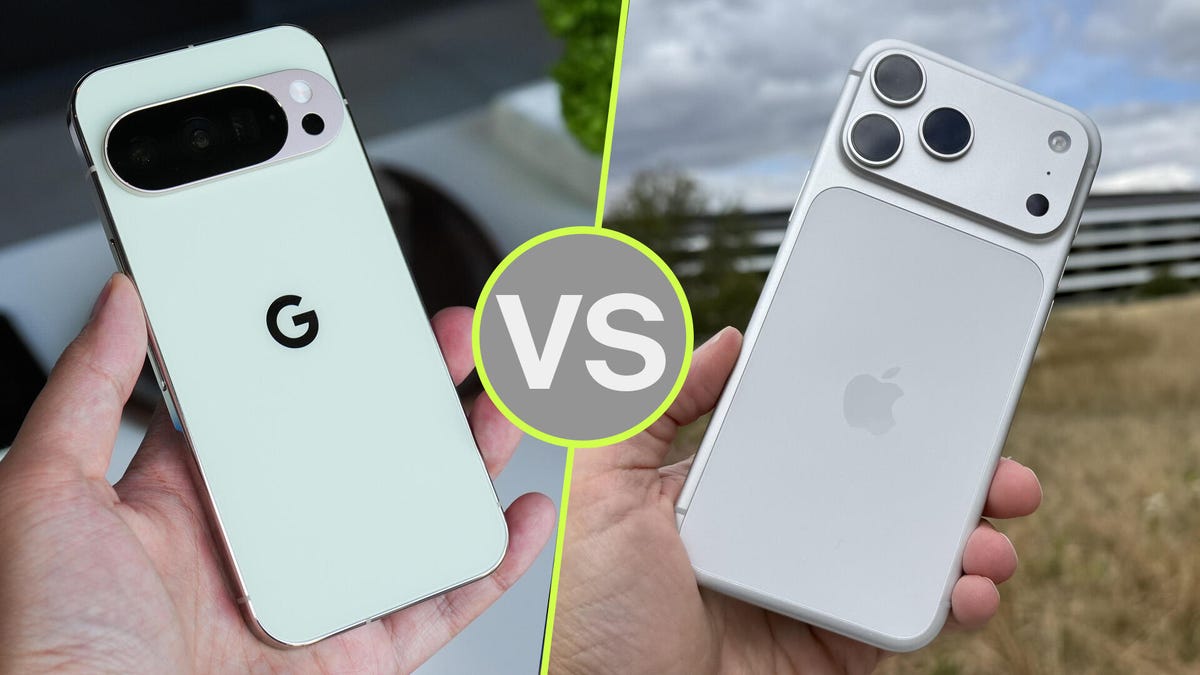
We tested them extensively in real-world conditions – from daytime portraits to low-light city streets – to see how they truly compare.
The iPhone 17 Pro Max introduces a fresh tetra-prism telephoto lens and a clever square-shaped sensor for its front camera. This new setup allows for wider capture angles in video calls, more natural background separation in selfies, and the kind of fine detail retention that Apple has traditionally struggled with at higher zoom levels. Apple clearly invested in hardware upgrades this generation, positioning the 17 Pro Max as more than just an iterative step forward.
The Pixel 10 Pro XL, in contrast, makes its case almost entirely on the software side. Google’s hardware remains nearly unchanged from last year’s Pixel 9 Pro XL: a 50MP main shooter, 48MP ultra-wide, and a 5X telephoto lens. On paper, nothing groundbreaking. But Google’s strength has always been computational photography, and the 10 Pro XL doubles down with AI-powered enhancements like ProRes Zoom, refined night sight, and smarter skin-tone mapping. The result? Photos that often look more balanced and cinematic straight out of the gallery.
Looking at specs, the differences are subtle. The iPhone’s 48MP main shooter runs slightly wider at 24mm, while the Pixel’s 50MP sits at 25mm. Both use a 1/1.3-inch sensor, which means their low-light potential is similar. The ultra-wide match is tighter, though the Pixel’s slightly larger aperture (f/1.7 vs f/2.2) gives it an edge in darker settings. In telephoto, Apple opts for 4X (100mm) while Google stretches to 5X (128mm), and that extra reach is noticeable when zooming into cityscapes or sporting events.
Daylight comparisons showed Apple delivering consistently natural tones and slightly warmer color science, while Google’s shots leaned more contrasty with dramatic shadows. In night photography, however, the Pixel often walked away with the crown: its AI-based long-exposure processing retained more detail in shadowy corners, though sometimes at the expense of realism. Apple’s night shots were more faithful but occasionally underwhelming when compared side by side.
Portraits highlighted another philosophical difference. Apple’s Center Stage–powered 18MP front camera produced sharp, life-like selfies with convincing depth blur. The Pixel’s massive 42MP selfie camera, however, made group shots shine, pulling out remarkable clarity even in uneven lighting. Yet, some users felt Google’s processing occasionally smoothed skin tones too aggressively.
In zoom battles, Apple’s 4X still offered sharper intermediate levels (like 8X digital), while Google’s 5X lens brought better results at maximum reach. For night zoom, Google again benefited from AI trickery, delivering surprisingly usable images where Apple’s output looked a bit noisy.
So which phone wins? The truth depends on your style. If you want consistency, realism, and versatile hardware upgrades, the iPhone 17 Pro Max is the safer bet. But if you crave dramatic AI-enhanced visuals and don’t mind a few software quirks, the Pixel 10 Pro XL arguably feels like the more exciting camera to use. Either way, smartphone photography in 2025 proves there’s no single winner – just two very different visions of what the perfect picture should look like.
1 comment
Am I crazy or pixel pics just look way more natural??