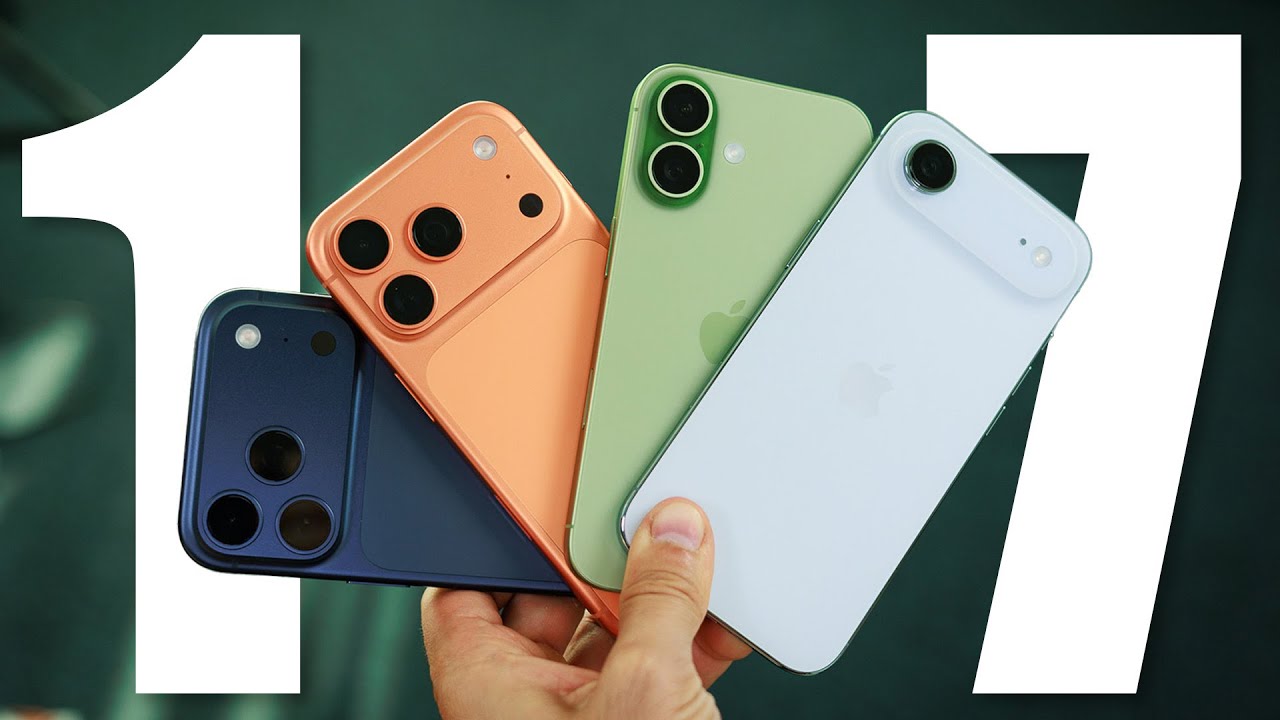
iPhone 17 Charging Speed Tested: Apple Finally Joins the Fast-Charging Race
For years, Apple users have watched competitors like Xiaomi, OnePlus, and Samsung brag about charging their phones at blazing-fast speeds, while the iPhone remained stuck in the slow lane. Officially, Apple listed support for just 20W wired charging across its iPhone lineup. That number looked almost prehistoric in an era where some Android phones promised to go from zero to full in under 30 minutes. But with the launch of the iPhone 17 series, Apple has finally broken tradition: the new models can now charge at up to 40W over a cable. And yes, this upgrade isn’t just limited to the Pro models – regular iPhone 17 users get the same benefit. The one exception is the slim iPhone Air, which still tops out at 20W.
Here’s the official breakdown of Apple’s new charging tiers:
- iPhone 17 Pro / Pro Max: up to 40W wired charging
- iPhone 17: up to 40W wired charging
- iPhone Air: capped at 20W wired charging
Importantly, Apple continues to rely on the widely supported USB-C PD (Power Delivery) standard rather than proprietary technologies. This means iPhone 17 users don’t need to hunt for special Apple-only adapters. Third-party chargers from brands like Anker, Ugreen, Spigen, and Samsung will generally work seamlessly, often better than the proprietary chargers tied to certain Android devices.
Real-World Charging Test Results
Specifications on paper are one thing, but how do these iPhones charge in the real world? We put the iPhone 17 lineup through extensive tests, measuring how quickly each model charged over time.
| Device | 15 mins | 30 mins | 45 mins | Full Charge |
|---|---|---|---|---|
| iPhone 17 | 38% | 67% | 82% | 1h 16m |
| iPhone Air | 31% | 54% | 71% | 1h 36m |
| iPhone 17 Pro | 39% | 67% | 82% | 1h 16m |
| iPhone 17 Pro Max | 38% | 64% | 81% | 1h 16m |
Across the board, the new models demonstrate a noticeable leap forward compared to the iPhone 16 generation. For example, the iPhone 17 Pro reached 67% in just half an hour, whereas last year’s iPhone 16 Pro only managed 58% in the same time frame. Similarly, full charges that previously took 1h 40m now complete in about 1h 15m. That’s a significant cut in waiting time – especially for power users.
Comparison with iPhone 16 Lineup
Let’s zoom in on the numbers:
- iPhone 17 Pro: 67% in 30 minutes, full charge in 1h 16m (vs iPhone 16 Pro: 58% in 30 minutes, full in 1h 34m).
- iPhone 17 Pro Max: 64% in 30 minutes, full in 1h 16m (vs iPhone 16 Pro Max: 57% in 30 minutes, full in 1h 42m).
- iPhone 17: 67% in 30 minutes, full in 1h 16m (vs iPhone 16: 59% in 30 minutes, full in 1h 42m).
Clearly, Apple has narrowed the charging gap with competitors. No, this isn’t Xiaomi’s 120W rocket fuel, but Apple’s consistency, safety features, and broad compatibility through USB-C PD make this a more practical and reliable upgrade for everyday use.
Do You Need Apple’s New Dynamic Power Adapter?
Alongside the new iPhones, Apple introduced a $40 40W Dynamic Power Adapter with a maximum burst of 60W. This compact charger is currently sold only in select markets like the US. What’s unusual here is Apple’s transparent labeling: instead of branding it as a 60W charger outright, Apple acknowledges that the adapter can only sustain 60W for a short duration – roughly 18 minutes – before dropping back to 40W.
Do you need this adapter to unlock the fastest charging on iPhone 17? Not really. Our testing showed that high-quality USB-C PD chargers from Samsung, Spigen, Baseus, and Asus all delivered near-identical performance, averaging about 36–38W. The Apple adapter does offer a slightly more stable power curve, but the difference is marginal for everyday users.
The Technical Side: USB-C PPS vs AVS
Most Android flagships rely on PPS (Programmable Power Supply) within the USB PD 3.0 framework. PPS allows ultra-fine, real-time voltage adjustments optimized for rapid charging smaller devices. Apple, however, has taken a different path. The iPhone 17 series exclusively supports AVS (Adjustable Voltage Supply), which is part of the newer USB PD 3.2 standard and is mandatory for compliance.
What’s the difference? PPS is great for speed bursts, but AVS prioritizes stability, safety, and longevity. It minimizes corrosion and heat build-up by using smoother voltage transitions. That means the iPhone 17 won’t negotiate with PPS-enabled chargers at their full potential, but it will still fast charge by falling back to standard PD levels. In practice, you lose some dynamic voltage flexibility but gain a safer, more predictable charging experience – typical of Apple’s philosophy.
Final Thoughts
Apple may still trail behind the fastest-charging Android devices, but the leap from 20W to 40W marks a turning point. For the first time, iPhones can recharge most of their battery in under half an hour and hit full in nearly half the time compared to last year. Combine that with universal USB-C PD support, and you finally have an iPhone that feels modern in its charging game. For users who have long mocked Apple’s slow pace in adopting industry standards, the iPhone 17 series finally puts those jokes to rest – or at least makes them a little harder to justify.
1 comment
Finally Apple moves past 20w… took em long enough