Intel’s next major mobile CPU family, codenamed Panther Lake, has surfaced again in fresh leaks, giving us the clearest picture yet of what to expect from the upcoming Core Ultra 300 lineup. 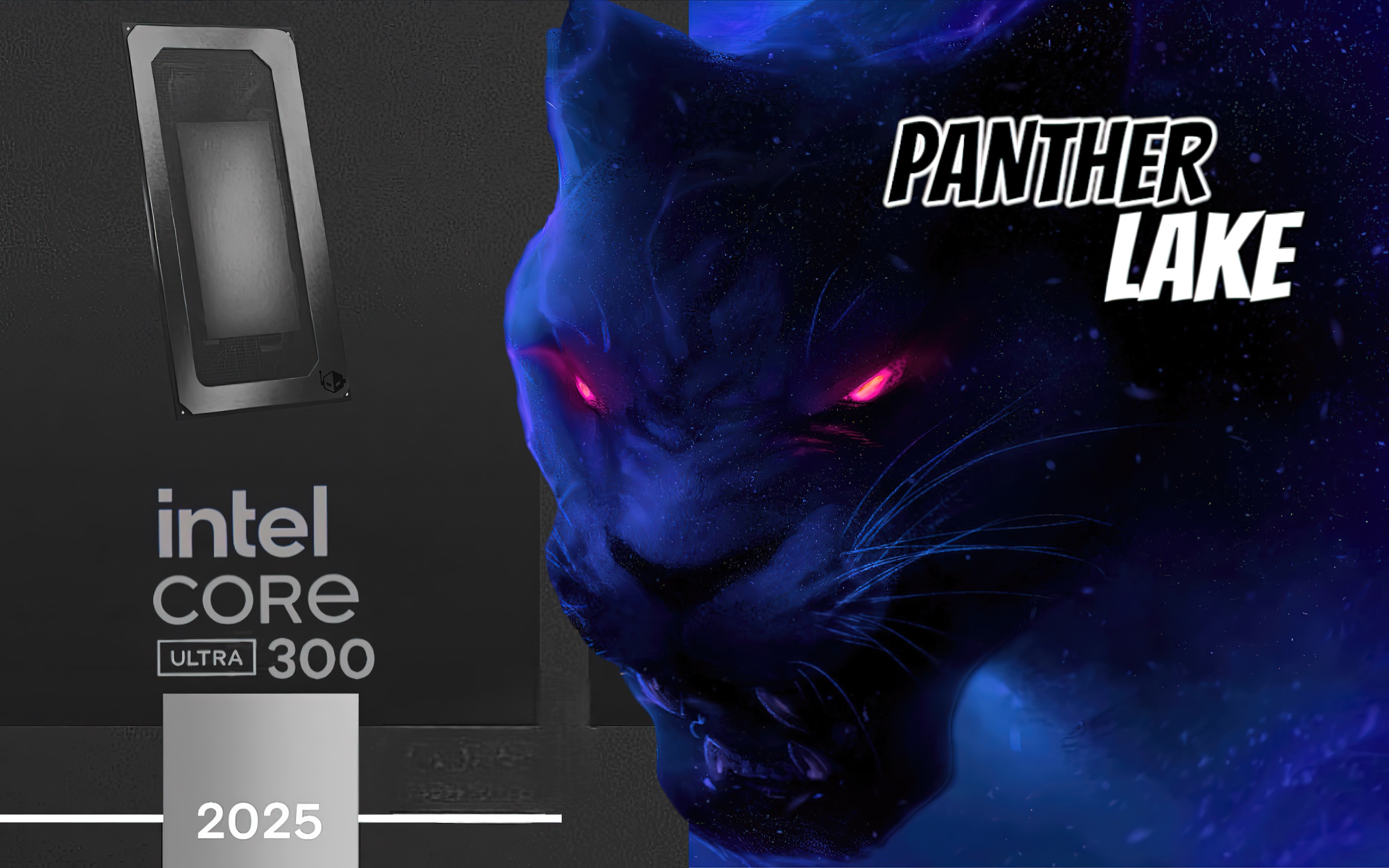
With a launch window targeted for late 2025, these processors are shaping up to be a critical step forward from the recently unveiled Lunar Lake series, introducing higher power envelopes, revamped graphics cores, and multiple product tiers designed to cover everything from ultraportables to handheld gaming devices.
Spotted within the CoreBoot repository by hardware enthusiast @InstLatX64, the leaks point to a diverse portfolio of Panther Lake-H and Panther Lake-U processors. Intel appears to be positioning this family into four distinct classes: a Standard variant, a Base model, a Premium tier, and a top-tier SuperSKU. Each tier differs not just in CPU core counts but also in the integrated graphics muscle, which is becoming increasingly central to Intel’s mobile roadmap.
The headline configuration is the 4+8+12Xe model, combining four high-performance Cougar Cove cores (P-Cores), eight Darkmont efficiency cores (E-Cores), and a striking 12 Xe3 GPU cores based on the Celestial architecture. For context, the current Lunar Lake iGPUs are limited to Xe2 cores, making this a generational leap in visual performance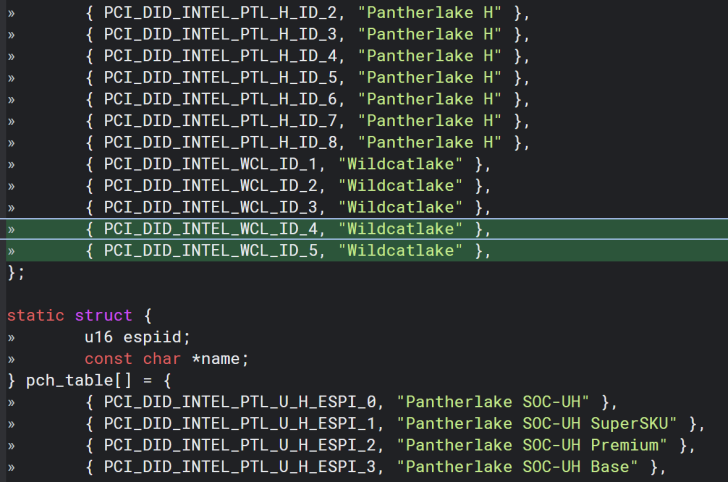
. Other notable configurations include a 4+8+4Xe, a 4+0+4Xe, and an ultra-efficient 2+0+4Xe, clearly catering to different power and mobility envelopes.
For those new to Intel’s nomenclature, a “4+8+12Xe” layout means four performance-oriented cores, eight efficiency-oriented cores, and twelve integrated GPU units. The inclusion of 12 Xe3 cores is particularly exciting for gaming laptops and portable devices, as this could dramatically improve integrated graphics capability – potentially rivaling entry-level discrete GPUs for light gaming and creative workloads.
One of the most surprising changes is in power scaling. Initial expectations suggested Panther Lake-H CPUs would cap out at around 45 watts. However, updated documentation lists PL2 (maximum turbo power) reaching up to 64W, while baseline PL1 power states start at 15W for U-series and 25W for H-series. 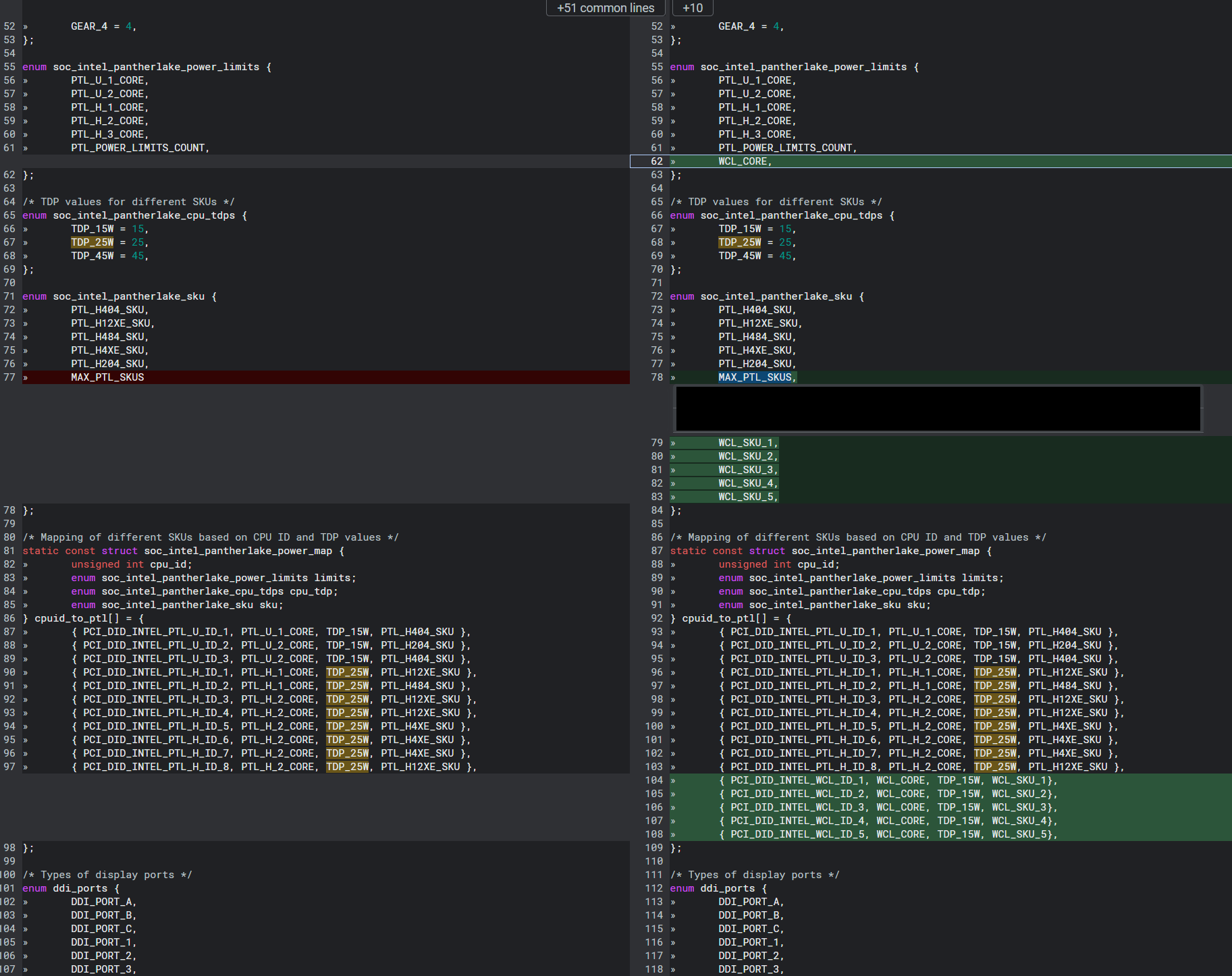
This means performance-focused laptops could see considerably higher boost frequencies than previously anticipated, but also raises questions about heat management and battery efficiency.
In comparison, the outgoing Lunar Lake chips operate between 17W and 30W, underscoring how Panther Lake-H in particular is being designed for more demanding platforms. Intel appears to be giving OEMs greater flexibility: devices can scale power upwards for peak performance or dial it back for energy efficiency, depending on chassis design and thermal budgets. This versatility is particularly relevant for the gaming handheld segment, where balancing power, heat, and battery life is crucial.
The leaked tables also reference multiple PL states – PL1, PL2, PL3, and PL4 – indicating that Panther Lake will support temporary power surges beyond standard boost clocks. While not all laptops will exploit PL3 and PL4 due to thermal constraints, higher-end designs may tap into these extra modes for short bursts of performance, potentially useful in burst-heavy gaming or rendering scenarios.
Architecturally, the chips are said to utilize Cougar Cove cores for performance, Darkmont for efficiency, and possibly Skymont for low-power LP-E cores, paired with the next-generation Celestial Xe3 GPU. This multi-tiered CPU and GPU design reinforces Intel’s hybrid architecture approach while setting the stage for stronger integrated graphics performance.
It’s worth noting that, as with all leaks, these details may evolve before Intel’s official announcement. Still, the repeated appearance of consistent specs across repositories and events like Computex 2025 suggests that most of these configurations are close to final. What’s clear is that Panther Lake is not just a routine refresh but a strategic step forward, aiming to bridge the gap between efficiency-driven ultraportables and performance-demanding gaming devices without requiring a discrete GPU in every configuration.
With mobile computing increasingly demanding more from integrated solutions – whether for gaming, streaming, or content creation – Intel’s Panther Lake could mark a pivotal shift in the market. By boosting both CPU and GPU power envelopes, the company seems intent on ensuring its next-generation Core Ultra 300 lineup remains competitive not just with AMD’s upcoming offerings but also with Apple’s silicon, which continues to dominate the thin-and-light laptop segment.
As the launch window nears, all eyes will be on Intel to see how Panther Lake delivers in real-world performance, efficiency, and thermals. For now, the leaked specs hint at an ambitious update that could significantly expand the horizons of mobile computing power in 2025 and beyond.
3 comments
hope battery life doesnt suck tho
amd still gonna smoke em in real world perf tbh
If this leaks true my next gaming handheld upgrade is sorted