Intel is finally putting its boldest manufacturing bet in years on stage. On 5 January 2026, right as the CES show floor opens in Las Vegas, the company will officially unveil Panther Lake – its first consumer CPU lineup built on the new 18A process. After years of roadmaps, delays, memes about “next year” products and endless forum wars between blue and red camps, this launch is more than just another mobile refresh. Panther Lake is positioned as a proof-of-life moment for Intel’s foundry ambitions and the clearest signal yet of what the next generation of AI-centric PCs will look like.
The event will be fronted by Jim Johnson, Senior VP and GM of Intel’s Client Computing Group, who is set to walk through the new Intel Core Ultra Series 3 processors and the PCs, edge devices and AI experiences they’re designed to power. 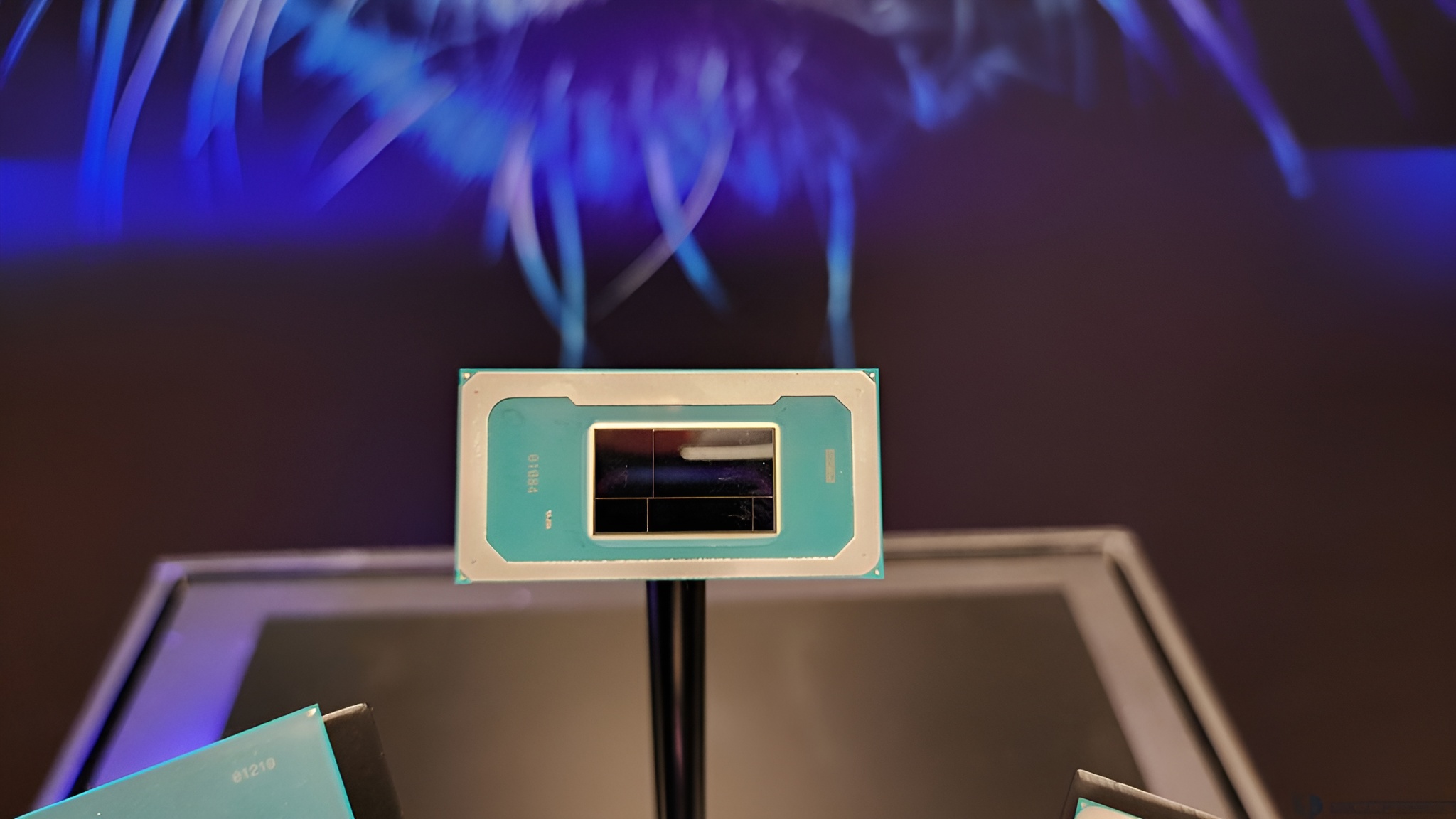
Intel’s own marketing leans heavily on AI, but underneath that buzzword sits something more tangible: 18A promises a genuine architectural reset, not just another polish of the old 14 nm and 10 nm era. For a lot of skeptical enthusiasts who watched the company slip schedules and rename nodes, CES 2026 is the moment where Intel has to prove that 18A is a shipping product, not just slideware.
So what is 18A, and why are people making so much noise about it? In simple terms, it is the first mass-market Intel node to fully embrace gate-all-around transistors (RibbonFET) and advanced backside power delivery. That combination should allow higher clock speeds, better efficiency and more consistent performance under sustained loads compared to Intel’s older FinFET designs. For thin-and-light laptops and handheld gaming devices, that matters more than headline boost clocks: if 18A does what Intel promises, we should see CPUs that hold their top performance longer while sipping less power and generating less heat.
Panther Lake leans into this with a rebalanced hybrid architecture. On the performance side we get new Cougar Cove P-cores, tuned for high IPC and bursty workloads like gaming, code compilation and heavy content creation. Alongside them sit Darkmont E-cores, optimized for background tasks and multi-threaded workloads that scale well across many smaller cores. Intel is also quietly making low-power work a first-class citizen by adding Skymont LP-E cores, designed to handle ultra-light tasks and background services while the rest of the chip drops into a deep power-saving state. In everyday use, that should translate into longer battery life when you’re just browsing, chatting or streaming, without sacrificing the snappy feel when you suddenly fire up a game or a big dataset.
Graphics and AI acceleration are the other big pillars of Panther Lake. The lineup introduces the new Xe3 ‘Celestial’ integrated GPU architecture, which in its top configuration offers up to a dozen Xe3 cores. That’s not meant to replace a high-end discrete GPU, but it could be a big deal for thin laptops, handheld PCs and small form factor rigs where every watt and cubic centimeter counts. Intel is promising higher gaming framerates at 1080p, smoother creator workflows and better media capabilities, but just as importantly, Xe3 is designed with modern upscaling, encode/decoding and AI-assisted features in mind. Paired with a 5th-generation NPU, Panther Lake should be far more comfortable running local AI workloads – from Windows “AI PC” features and background transcription to small language models and upscalers – without constantly waking up the power-hungry CPU or GPU.
One of the most visible changes for consumers is branding. Panther Lake introduces the ‘Core Ultra X’ naming scheme, which sits at the top of Intel’s mobile stack. You’ll see models like Core Ultra X9, X7 and X5, each targeting a different tier of performance and form factor. At the very high end, chips such as the Core Ultra X9 388H combine a cluster of Cougar Cove P-cores with a larger pool of Darkmont E-cores and several Skymont LP-E cores, boosting up to around 5.1 GHz and pairing that with a 12-core Xe3 GPU configuration. Slightly lower-tier parts, like the Core Ultra X7 358H or 356H, trim either clocks or GPU resources but keep the hybrid core layout and 25 W base TDP with turbo envelopes that can climb into the 65–80 W range in performance modes.
Further down the stack, more mainstream Core Ultra X7 and Core Ultra 5 models target thinner laptops and longer battery life, often with fewer Xe3 cores and slightly lower boost clocks. You’ll also see non-X branding in the form of Core Ultra 7 and Core Ultra 5 H-series parts with 25 W base TDP and more moderate turbo ceilings around 55 W. These are the chips likely to land in the bulk of mid-range ultrabooks and productivity machines, where silent operation and battery life sit higher on the spec sheet than chasing every last frame in demanding games. The overall message of the lineup is clear: Intel wants Panther Lake to span everything from premium creator laptops and enthusiast handhelds down to affordable, thin workhorses.
That broad coverage is exactly what worries some enthusiasts. Intel has a long history of dominating OEM design wins, and critics argue that the company leans heavily on those relationships to keep rivals at bay. Expect the big laptop brands at CES 2026 to showcase lots of configurations plastered with “Core Ultra X” badges. Whether that dominance is earned through better silicon or just better deals is part of the ongoing community argument, especially among AMD fans who feel their favorite chips get locked out of attractive designs. If Panther Lake delivers in real-world tests, this OEM wave might be deserved; if it doesn’t, the backlash will be loud.
Community reaction ahead of launch is already split. On one side are users joking that they’ll “believe 18A when it’s in a shipping laptop,” posting screenshots of old roadmaps and poking fun at the slipping “2025 product” promise. For them, Panther Lake is the moment where Intel either breaks the cycle of over-promising and under-delivering or confirms their worst suspicions. On the other side are people genuinely excited to see Intel finally take a big manufacturing leap instead of relying on marketing tweaks. They’re hoping for quieter gaming notebooks, handheld PCs that don’t throttle after five minutes and AI features that actually run locally without murdering battery life.
Layered on top of the tech details is the corporate drama of the last decade. Intel has cycled leadership, written down failed bets, watched competitors surge ahead and seen its once unshakeable x86 dominance seriously challenged. That history fuels some of the more conspiratorial chatter online – memes about the company being “almost dismantled,” secretly bought by other tech giants or saved at the last second by government pressure. None of that is grounded in reality, but it captures the mood: people see Panther Lake and 18A as a make-or-break moment. If these chips are genuinely good, they could mark the start of a real comeback. If they disappoint, many will assume the rot goes deeper than one or two bad process nodes.
There is also a growing interest in what comes after the launch event. Enthusiasts want to see more APU-like designs from Intel – chips where strong integrated graphics and capable NPUs make it possible to game, create and run AI locally without needing a discrete GPU at all. Panther Lake already leans in that direction for mobile, especially in handhelds and small rigs where the Xe3 iGPU could be the only GPU in the system. If Intel really doubles down on that idea, we could see a new wave of compact gaming and creator machines that don’t feel as compromised as past “iGPU only” laptops.
Ultimately, CES 2026 is just the opening act. Specs, marketing slides and polished demos are one thing; independent reviews and day-to-day user experience are another. What we do know is that Panther Lake and the Core Ultra X series will be the first real-world test of Intel’s 18A process, its hybrid core refinements and its vision for AI-first PCs. For some readers, this is a long-overdue, exciting reset. For others, it’s “more of the same” until proven otherwise. But whether you’re yawning or refreshing benchmark pages, one thing is certain: everyone in the PC space will be watching Panther Lake very closely when those first laptops and handhelds hit shelves after CES.
1 comment
Some of you yelling “moar yawn” are wild, this is literally the first proper process jump from Intel in ages, at least wait for real reviews lol