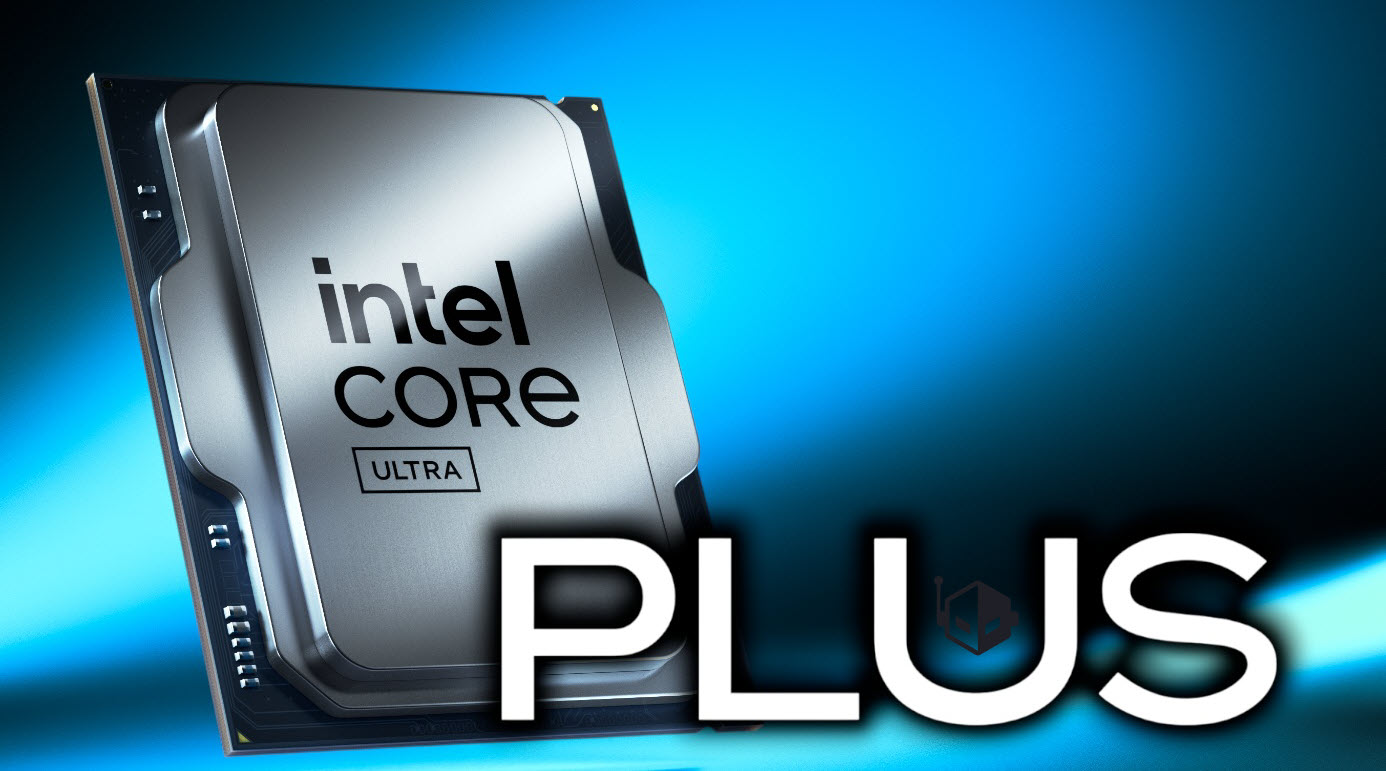
Intel’s Core Ultra 200S Plus “Arrow Lake Refresh”: What We Know So Far
In a world where desktop CPU competition continues to heat up, the Intel “Arrow Lake Refresh” era is quietly gearing up. The upcoming family, designated as the Core Ultra 200S Plus series, appears to be Intel’s attempt to give the existing Arrow Lake-S desktop line a performance boost before the more radical next-gen platform lands.
Recent leaks suggest flagship SKUs like the Intel Core Ultra 9 290K Plus and Intel Core Ultra 7 270K Plus are already appearing in benchmarking databases – and the evidence points to something more than a mere name change. According to reports, the 270K Plus surfaces with 24 cores (8 performance + 16 efficiency cores), 24 threads, a 5.5 GHz boost clock, and a multi-core Geekbench result of 22,206 points. :contentReference[oaicite:3]{index=3}
What is the Arrow Lake Refresh?
The Arrow Lake architecture (codename) was the desktop follow-up to Meteor Lake, built on the LGA 1851 socket and supporting DDR5 memory. :contentReference[oaicite:4]{index=4} Intel has publicly acknowledged that a refresh of Arrow Lake for the desktop is coming in 2026 – and that after the refresh, its next true generational leap, codenamed Nova Lake, will follow. :contentReference[oaicite:5]{index=5}
This refresh isn’t expected to radically alter the architecture – rather, it seems geared toward higher clock speeds, improved memory support, and possible refinements in power delivery and binning. In effect, it’s a stop-gap move to keep Arrow Lake relevant while Intel ramps up for Nova Lake.
Top SKUs: Deep Dive
Core Ultra 7 270K Plus
This chip appears to be the first real glimpse at the refresh. Compared to its predecessor (the Core Ultra 7 265K), the 270K Plus reportedly steps up from 20 cores to 24 cores, retains the 5.5 GHz boost clock, and increases L3 cache from 30 MB to 36 MB. :contentReference[oaicite:6]{index=6} The test system: a Lenovo OEM rig with 48 GB DDR5-7200 and an NVIDIA GeForce RTX 5090D GPU. The single-core Geekbench 6 score: around 3,205. Multi-core: ~22,206. :contentReference[oaicite:7]{index=7}
For context, that multi-core score puts it nearly level with the higher-end Core Ultra 9 285K, indicating Intel’s refresh is not trivial. :contentReference[oaicite:8]{index=8}
Core Ultra 9 290K Plus
The flagship refresh candidate appears to be the Core Ultra 9 290K Plus. While specifics are still vague, it is widely assumed to maintain the 24-core (8P + 16E) configuration and simply bump clocks and power limits, though Intel could surprise with a slightly higher TDP. Spec lists show 36 MB L3 / 40 MB L2 cache for this SKU. :contentReference[oaicite:9]{index=9}
Platform & Support: What’s Staying, What’s Changing
Intel’s refresh appears to remain compatible with the LGA 1851 socket and the existing desktop platform – so current Arrow Lake-S motherboards (800-series chipset) may still be usable, though BIOS updates will likely be required. :contentReference[oaicite:10]{index=10} Memory support is another area of improvement: ASUS has confirmed its 800-series motherboards now support DDR5-7200 speeds (without XMP overclocking), hinting that Intel may officially support higher memory frequencies in the refresh. :contentReference[oaicite:11]{index=11}
That said, the broader architectural uplift appears limited: Intel’s own statements concede the refresh will fix “holes” in the desktop offering rather than delivering a full generational leap. :contentReference[oaicite:12]{index=12} By comparison, the upcoming Nova Lake platform promises more substantial changes – including new socket (LGA 1954), new cores, and more significant AI/processing enhancements.
Why Does This Matter?
For gamers, content creators, and enthusiasts, the refresh offers a possible performance lift at a time when Intel’s Arrow Lake lineup has struggled. Although Arrow Lake was launched in October 2024, it under-performed compared to expectations and even lagged behind previous Intel gen chips in some gaming workloads. :contentReference[oaicite:13]{index=13}
By introducing 24-core variants (previous gen maxed at 20 cores in this line) and enabling faster memory, Intel may be trying to close the gap with AMD’s Zen-based Ryzen CPUs, especially as AMD’s Zen 5 and upcoming Zen 6 architectures push forward aggressively. The refresh could also improve productivity workloads (multi-core heavy) where Intel can regain ground.
But there’s a caution: If the refresh only brings minor boosts, then buyers may prefer to wait for the full generational leap in Nova Lake (likely late 2026/early 2027). Pricing will matter significantly: Intel may need aggressive SKUs to entice buyers before Nova Lake launches.
What Are the Risks and Unknowns?
Firstly, the existence of the refresh leaks doesn’t guarantee huge performance swings. Some leaked benchmarks (like a mid-range 365K variant) showed only modest improvements. :contentReference[oaicite:15]{index=15} Additionally the boost in memory frequency (DDR5-7200) may not yield meaningful gaming gains if underlying memory latency issues remain – hardware reviewers flagged latency as a key problem with the original Arrow Lake. :contentReference[oaicite:16]{index=16}
Also, timing is a risk: Because the refresh is slated for 2026, by then the chips will already be aging, and AMD may be far ahead. Intel’s admission of “holes on the desktop side” underscores the challenge. :contentReference[oaicite:17]{index=17}
What Should Enthusiasts Do?
If you are building a new high-end desktop now and are considering waiting: If your current system is 2-3 generations old, the refresh may be a solid upgrade – especially if you can move to a 24-core SKUs and faster memory. On the other hand, if you already have an Arrow Lake-S system or Raptor Lake-K, you might want to evaluate your use case. If you’re mostly gaming, the uplift may be modest; productivity users may benefit more.
For buyers willing to wait, it may make sense to hold off for Nova Lake. For now, keep an eye on pricing of existing Arrow Lake SKUs – they might drop ahead of the refresh, presenting value opportunities.
Final Thoughts
The Core Ultra 200S Plus Arrow Lake Refresh represents Intel’s intermediary solution – a chance to rejuvenate its desktop offering and buy some runway before the next big leap. With 24-core SKUs, higher boost clocks, and faster memory support, it shows promise. But whether it delivers enough to decisively wrest performance leadership back from AMD – or simply serves as a stop-gap – is still to be seen. We’ll be watching closely as more benchmarks, spec details, and pricing information leak out in the months ahead.
Stay tuned: the desktop CPU space is far from settled.
1 comment
NNN pretending to be impartial, when he literally upvotes every single intard here talking shit about AMD, and even he himself talks shit even when he owns AMD just like the rest of intards, their hypocrisy is through the roof