Intel and AMD are doubling down on the x86 architecture, celebrating one year since forming the x86 Ecosystem Advisory Group (EAG) – a collaboration aimed at ensuring that the decades-old foundation of modern computing continues to thrive in an era increasingly defined by ARM and RISC-based rivals. 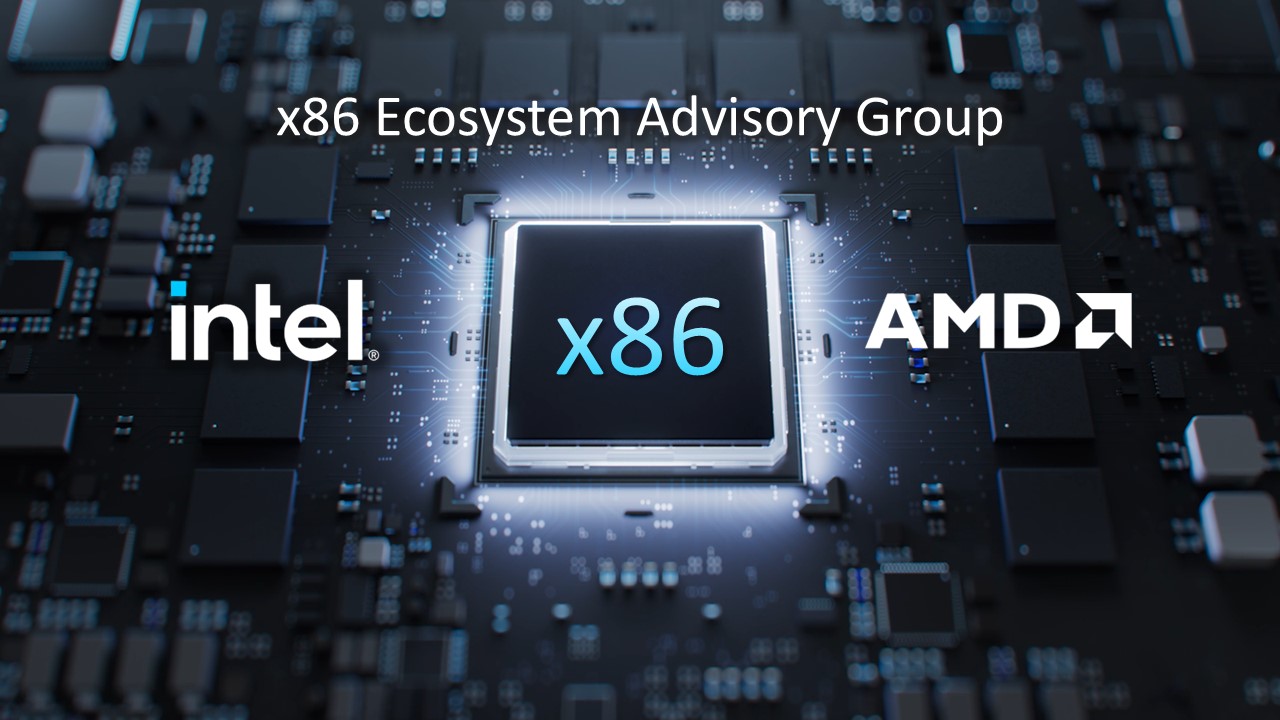
With a renewed focus on compatibility, performance, and developer accessibility, both companies are ushering in a new generation of standardized x86 features that bridge performance with predictability.
The EAG, established in October 2024, was conceived as a unifying platform where Intel, AMD, and key industry partners could coordinate innovations rather than compete in silos. Their shared goal: to make x86 architectures more consistent across devices, whether they power data center supercomputers, gaming rigs, or portable handhelds. Over the past year, the group has aligned on major technical priorities that now materialize in a suite of cross-platform standards, including AVX10, FRED, ChkTag, and ACE.
Modernizing the x86 Core
At the forefront is FRED (Flexible Return and Event Delivery), a modernization of the interrupt model that drastically reduces system latency and increases reliability for software environments. Developers can expect fewer context-switching penalties and smoother real-time responsiveness – critical in applications like high-frequency trading and immersive gaming.
Next comes AVX10, the successor to AVX512, which unifies vector and general-purpose instruction sets into a scalable standard that works seamlessly across client PCs, workstations, and servers. While AVX512 once divided ecosystems between Intel and AMD implementations, AVX10 promises true cross-compatibility. However, developers are already asking whether AMD’s Zen-based AVX512 support will remain fully compatible with Intel’s interpretation. While timelines remain unannounced, the general push toward AVX10 suggests that both companies want to standardize future workloads rather than perpetuate architectural rifts.
Securing the Future with Memory Tagging
Among the most anticipated advancements is ChkTag, a hardware-backed memory tagging mechanism designed to counteract memory safety threats like buffer overflows and use-after-free exploits. By introducing new hardware instructions to detect violations, ChkTag enhances the reliability of everything from firmware to operating systems. Its flexible design also ensures that software built with ChkTag can still run on older processors, maintaining the open compatibility developers depend on.
This approach aligns with broader security trends seen across the industry – where memory safety is now as essential as performance optimization. ChkTag sits alongside complementary defenses such as shadow stacks and confidential computing, further reinforcing the resilience of the x86 ecosystem.
AI and Matrix Acceleration Across Platforms
Finally, ACE (Advanced Matrix Extensions) brings a unified framework for matrix multiplications, a cornerstone of AI and machine learning workloads. With ACE implemented across both consumer and enterprise CPUs, developers can now write AI-driven code that scales from laptops to massive cloud servers without rewriting performance-critical sections for each chip family. It’s a standardization milestone that reflects a larger industry pivot toward hardware-accelerated intelligence.
Looking Ahead
As the EAG moves into its second year, Intel and AMD are preparing to invite more independent software vendors and hardware collaborators into the fold. Future objectives include exploring new instruction set extensions that deliver measurable benefits to customers while maintaining the hallmark backward compatibility that x86 users rely on. Both companies emphasize that this isn’t just about adding features – it’s about securing the longevity and predictability of the world’s most widespread computing architecture.
Despite the growing popularity of ARM-based chips in mobile and energy-efficient devices, x86 remains the workhorse of the modern digital world. Through standardization and collaboration, Intel and AMD are ensuring that it not only survives but evolves – streamlined, secure, and ready for the next generation of computing demands.
1 comment
So what’s happening to AVX512? Like will Zen’s version still work or nah? 🤔