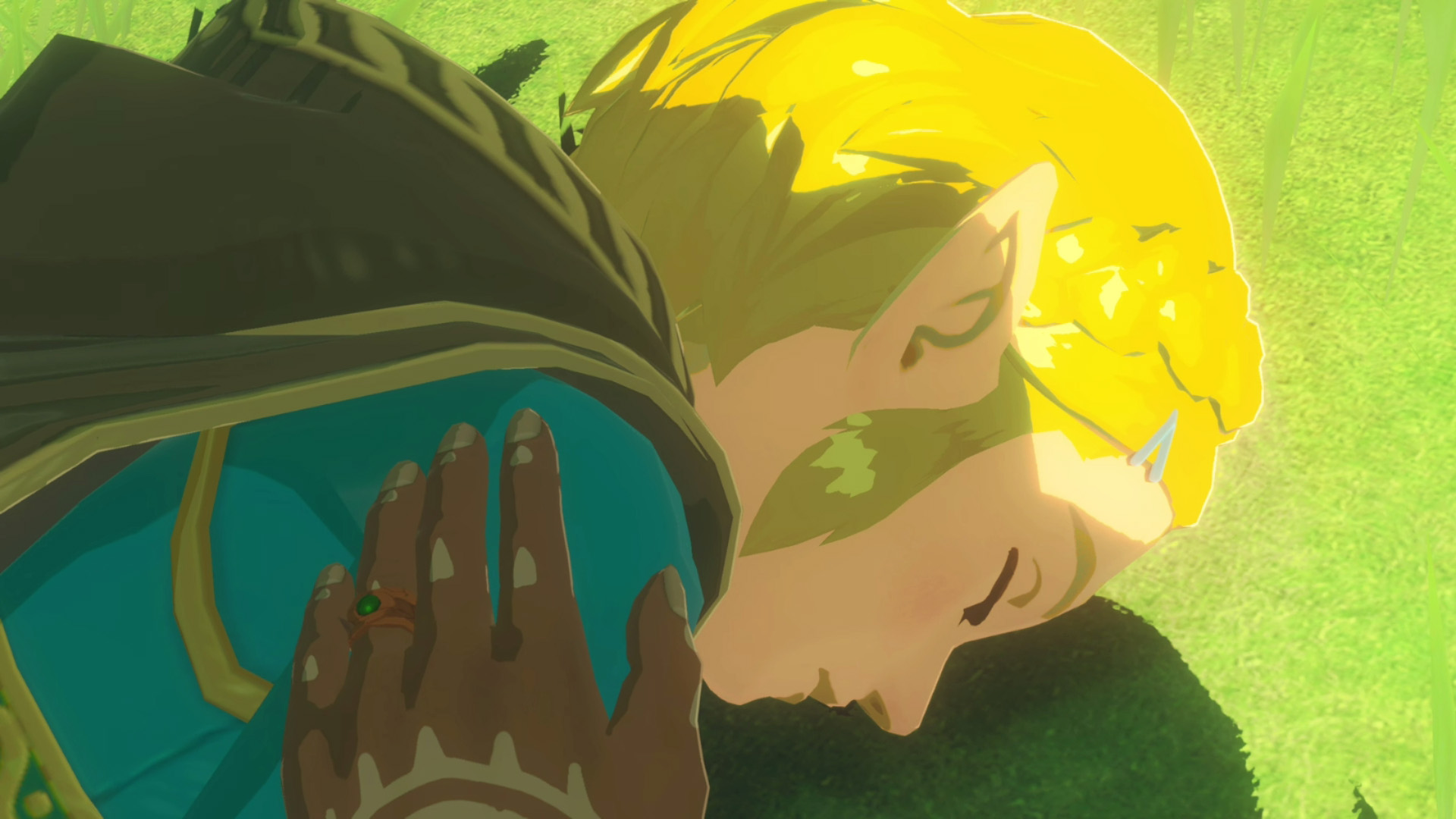
Hyrule Warriors: Age of Imprisonment Review – Zelda canon meets big-crew beatdowns on Nintendo Switch 2
Hyrule Warriors has traveled a long road from curious spinoff to pillar of Nintendo’s action slate, and Hyrule Warriors: Age of Imprisonment arrives with a double burden: be a satisfying Musou and meaningfully stitch together parts of The Legend of Zelda: Tears of the Kingdom that still live in players’ heads rent-free. It’s a tall order. The previous entry, Age of Calamity, promised the missing pages of Breath of the Wild and delivered something else entirely – an energetic, multiverse-flavored remix that many enjoyed but some resented for sidestepping a straightforward prequel. Age of Imprisonment consciously does the opposite. It narrows its focus, locks into the timeline, and rebuilds momentum around a tightly told chapter with clearer stakes, better technology, and combat tweaks that reward teamwork over lone-wolf mashing.
| Game | Hyrule Warriors: Age of Imprisonment |
|---|---|
| Release | November 6, 2025 |
| Platform | Nintendo Switch 2 (local co-op compatible with Switch 1 via GameShare) |
| Publisher | Nintendo |
| Developers | Koei Tecmo, AAA Games Studio |
A real prequel, not a puzzle box
The premise clicks in immediately if you’ve finished Tears of the Kingdom. The moment Zelda is flung into the past, Age of Imprisonment picks up the thread. She’s discovered by Rauru and Sonia, the ancient King and Queen of Hyrule, who treat her not as a prop for prophecy but as a person who aches, doubts, and learns. Their kindness meets the blunt reality of Ganondorf’s rise, and while Zelda warns what he will become, Rauru’s pride becomes a tragic hinge. The consequence – well flagged in Tears – lands here with rawer emotion, not because we don’t know the destination, but because the road is finally lit. The script grants the trio room to argue, to be wrong, and to pay for it.
Layered into that familiar skeleton is a smartly handled wildcard: a Mysterious Construct who reads as a Link-shaped echo without trespassing on the timeline. He’s paired with Calamo, a Korok companion whose comic relief never curdles into noise. Their presence could have been a mere mechanical excuse for a sword-and-shield archetype; instead, the game threads a small mystery about identity and purpose that pays off with satisfying clarity. It’s the rare Musou whose cutscenes aren’t coffee-break filler. They’re character drama – long (often ten minutes plus), well staged, and unafraid to sit with grief or anger before hurling you back into the fray.
Ganondorf gets to be a villain again
One of the subtler accomplishments is how it restores Ganondorf to the center as more than an elemental noun. In Breath he was a stain; in Tears a buried secret. Here he is personified – vain, magnetic, and pitiless. Not every scene swings for profundity, but the game remembers that a great Zelda villain is not only an obstacle but a mirror. Zelda’s faith in institutions, Rauru’s faith in himself, and Sonia’s faith in love all collide with Ganondorf’s faith in domination. Musou storytelling rarely has time for that kind of thematic friction. Age of Imprisonment makes time, and it’s stronger for it.
Musou with a team sport twist
Moment to moment, this is still a Warriors game. You will mulch tl;dr legions of Moblins and Lizalfos, pop minibosses, and occasionally square off with marquee monsters that demand a sliver of patience. Combos follow the familiar light-and-heavy cadence, but two additions modernize the rhythm. First are Unique Skills (mapped to R plus a face button), which give every character a fast, situational toolset – anti-air, anti-rush, or a shield-buster – that cuts through the chaos and nudges you toward match-up thinking. Cooldowns mean you’re constantly weighing whether to commit or swap.
Second, and more transformative, are Sync Strikes. Rather than super-moves that exist in parallel, these are explicit cooperative detonations. Triggering them with different partners yields distinct animations and properties, and the roster – nearly thirty deep – supports a surprising number of unique pairings. Mechanically, they’re high-damage punctuation. Psychologically, they make the battle feel like a band rather than a solo. The design practically begs you to jump between characters, chasing cooldowns and lining up tag-in windows for bonus damage. It’s the rare Musou that treats switching as a primary verb instead of a menu chore.
Zonai devices: spice, not the main course
The other big tweak borrows from Hyrule’s newest toy box. Zonai devices show up as modular, shareable tools laced with elemental effects – fire, frost, shock, gust – that combine with each other and with character kits. A shot of wind can whip an electrical arc into a roving thunderhead; ice can set up shatter windows; lightning staggers shielded elites. You don’t need to juggle them to crush most encounters, but they broaden your options and encourage low-effort cleverness. Crucially, the interface is snappy: trigger, place, go. It never devolves into crafting homework.
Co-op that actually holds frame
Local co-op returns and, thanks to Switch 2 muscle and some sensible optimizations, behaves. Using GameShare, a friend can drop in on a second system (even a legacy Switch 1) and the performance remains more consistent than Age of Calamity ever managed. Solo or split, the target is a largely steady 60fps during gameplay. Effects-heavy pileups can still pinch a few frames, but hiccups are the exception rather than the rule. The visual art direction won’t convert skeptics – it’s serviceable, not painterly – but the engine moves a small army without wheezing, and that matters more in a Musou. The irony is that the lavish, pre-rendered story scenes land at 30fps, which makes the switch back to 60 look extra buttery but also highlights the cutscene cap. It’s not a deal-breaker; it is noticeable.
Level design: straight lines to good fights
If there’s a structural weak spot, it’s the maps. Age of Imprisonment trims most of the exploration and light puzzle connective tissue that Age of Calamity flirted with. Stages now resemble strings of corridors linking arenas, with objectives rotating through a reliable loop: capture outposts, plant a base, stabilize the line, push to a boss. The designers inject heat with miniboss variants and periodic set-pieces – most notably on-rails aerial sorties that wink at Star Fox – but the backbone remains workmanlike. The pacing is sharp (you’re never lost), and the fights are fun, yet there are stretches where you feel the genre’s one-note grind. If you come to Musou for mazes, this isn’t that. If you come for highlight-reel crowd control, you’ll eat well.
Roster depth and progression
The joy of a Warriors title often lives in the bench, and the roster here is generous without being redundant. Fighters are distinct in more than costume silhouette: their Unique Skills, combo endpoints, and Sync behavior carve out roles you can feel. Some are vertical launchers who trivialize aerial crowds; others melt elites; a few are zoners that set up team detonations. Progression spreads across weapon refinement, Zonai unlocks, and a web of optional sorties and requests that litter the campaign map with enough icons to make a cartographer blush. It’s catnip for completionists, and a manageable skim for everyone else. Expect 12–15 hours for the mainline story and multiples of that if you intend to gold-medal the lot.
Music, VO, and the feel of a big-budget side story
Audio lifts more than its share. The score riffs on familiar Zelda motifs without feeling canned, and the mix gives impact back to impacts; your blade play sounds like it means business. Voice work has grown into itself since the series tentatively adopted VO years ago. Zelda, Rauru, and Sonia sell their contradictions, Ganondorf purrs with menace, and even side characters avoid Saturday-morning flatness. The net effect is that the story sequences feel like chapters rather than interstitials. That, in turn, makes the struggle to reclaim Hyrule feel like an arc with consequential beats instead of dots on a route.
Canon talk: how it complements Tears of the Kingdom
The question Zelda fans carry into any spinoff is simple: does it matter? Age of Imprisonment can’t be the missing Zelda game – nor should it try – but it does make the events of Tears of the Kingdom read warmer and sharper. Rauru is less a statue, more a leader whose flaw is as operational as it is mythic. Sonia is not merely a name on a tapestry; she is a partner whose choices carry weight. Ganondorf’s cruelty gains context. And Zelda’s long walk through time, sacrifice, and return lands with more ache. If you felt Age of Calamity wrote around its promise, this one writes into it.
Release cadence and the Switch 2 moment
Outside the game, there’s a meta-conversation humming in comment sections: Nintendo “went from zero to too many,” backlog whiplash, memories of the Wii U drought versus today’s packed calendar, and the gravitational pull of Switch 2 even when backward compatibility keeps older hardware in play. Age of Imprisonment slides neatly into that moment. It’s tuned for the new box, generous to the old via co-op, and sits comfortably alongside tentpoles like Metroid Prime 4 in the “finally, a pipeline” narrative. If you’re the type who only cares about what truly sings on Switch 2, this clears the bar on performance and features. If you’re clinging to Switch 1, you can still join a friend and get a stable ride, which softens upgrade FOMO.
Difficulty, accessibility, and who this is for
Musou skeptics often bounce for the same reasons: perceived button-mashing, repetitive loops, and noise. Age of Imprisonment won’t convert everyone, but the team-centric design nudges you toward more mindful play. Learning which partner’s Unique Skills answer which threat, planning Sync Strikes to delete priority targets, and sprinkling Zonai effects to flip resistances makes the sandbox more than a blender. Difficulty sliders are fair, with higher settings punishing autopilot while stopping short of Souls-like attrition. Newcomers can live on Normal and feel godlike; veterans can dial up and find real friction in elite gauntlets and boss phases.
Performance verdict: 60 where it counts, 30 where it stings
Technically, this is the most confident Warriors outing on Nintendo hardware to date. The engine feeds you massive crowds at 60fps with only occasional dips during pyrotechnic dogpiles. Image quality is clean, loading is brisk, and input latency feels tight, especially in handheld. The sore thumb remains the 30fps cap on pre-rendered cinematics. It’s not new for the series, but the contrast is sharper on Switch 2’s steadier footing. Still, when the trade is cinematic sheen for combat stability, the choice feels correct.
Where it falls short
Not everything lands. Mission design leans too reliably on “clear lanes, capture points, topple boss,” and while the aerial set-pieces break the routine, they’re refreshers rather than reinventions. Some characters will click so hard they make others feel extraneous, and the campaign’s core arc, while satisfying, is shorter than genre stalwarts might wish. There’s padding available on the map if you want it, but padding is still padding. And although the story is a win, cutscene frame pacing undercuts the splashiness now and then.
Value and the long tail
At full price, you’re buying a well-produced, story-relevant Zelda adjacent that respects your time more than most Musou marathons. The mainline clears before fatigue sets in, the side content rewards bite-size sessions, and co-op remains a party trick that actually works. If you measure value in mastery, the combo depth, roster variety, and Sync experimentations will keep you tinkering long after credits. If you measure value in novelties per hour, you may feel the repetition creep sooner.
Review methodology & disclosure
Our playthrough was based on a review copy provided by Nintendo. We completed the campaign, sampled a broad slice of optional sorties, and stress-tested co-op on Switch 2 with a partner on legacy hardware through GameShare, focusing on frame consistency and input feel.
The final word
Hyrule Warriors: Age of Imprisonment fixes what most needed fixing, dares to tell a story that actually feeds the mainline saga, and evolves combat in a direction that celebrates squads over solos. It still inherits the Musou genre’s ceiling: straightforward maps and loops you can see coming two arenas away. But if you’re here to bathe Hyrule’s armies in particle effects while watching a genuinely engaging prequel play out, this is the most convincing Hyrule Warriors yet.
Score: 8/10
Pros
- Canon-friendly, character-driven story that enriches Tears of the Kingdom
- Teamwork-first combat with impactful Sync Strikes and meaningful swaps
- Unique Skills and Zonai devices add tactical spice without friction
- Stronger performance than prior entries; 60fps gameplay holds steady
- Local co-op via GameShare is smooth and welcoming
- Robust roster and a map stuffed with optional challenges
- Music and voice acting elevate key moments
Cons
- Mission structure repeats a familiar loop too often
- 30fps pre-rendered cutscenes contrast with 60fps gameplay
- Core campaign runs on the short side for Musou diehards
Affiliate note: Retail links may earn a commission. Our editorial opinions remain independent, and our ethics policy is available on request.
1 comment
If it runs co-op with my buddy on OG Switch I’m in. GameShare sounds clutch