Huawei has turned its Mate 80 launch event in China into a showcase of how far it has evolved as a PC and tablet maker. Alongside the Mate 80 flagships and the Mate X7 foldable phone, the company quietly unveiled one of its most ambitious productivity devices to date: the Huawei MatePad Edge, a 14.2-inch 2-in-1 machine that wants to live in the same space as premium Windows detachables and iPad Pro-class tablets. 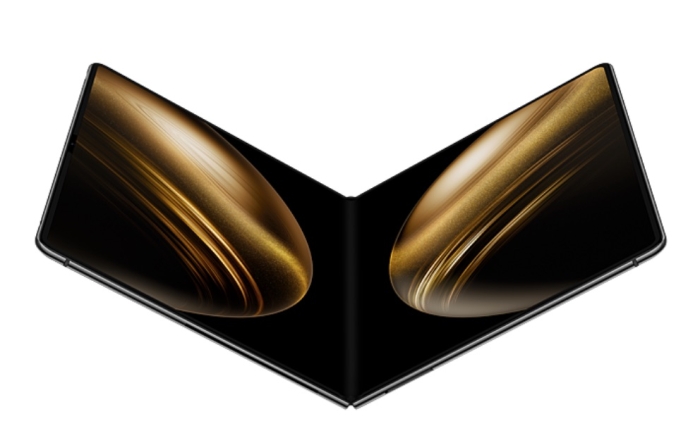
On top of that, Huawei refreshed its foldable laptop line with the MateBook Fold Extraordinary Master Edition, a halo configuration aimed at users who want cutting-edge design, big storage and the bragging rights that come with a futuristic foldable PC.
The MatePad Edge is essentially Huawei’s answer to the Microsoft Surface Pro and similar "tablet that replaces your laptop" concepts. It revolves around a 14.2-inch OLED touchscreen with a sharp 3,120 × 2,080 resolution, a productivity-friendly 3:2 aspect ratio and a 120 Hz refresh rate for smooth scrolling, pen input and UI animations. Huawei rates the panel at up to 1,000 nits of peak brightness, which should keep text readable even in bright offices or near windows. Slim bezels wrap around the display, and the whole thing is housed in a sleek unibody aluminium shell that measures just 6.85 mm thick and roughly 789 g. Despite that thin profile, Huawei has integrated a 175-degree adjustable kickstand so you can prop the device almost upright for typing or drop it low into a drafting-style angle for drawing and note-taking.
Under the hood, the MatePad Edge is powered by Huawei’s in-house Kirin X90 or Kirin X90A chipsets, paired with 16 GB or 32 GB of RAM and SSD options ranging from 256 GB all the way up to 2 TB. On stage, Huawei claimed performance on par with Apple’s latest M5 silicon in sustained workloads, and quoted roughly 3.8× higher compute performance versus the previous-generation Kirin T92 platform. Those numbers immediately sparked debate among enthusiasts: if Huawei can build a tablet chip that supposedly trades blows with an M-series part, why can’t it ship a phone chipset that fully matches Snapdragon 8 Elite-tier performance? The answer, as always, is thermals and power budgets. A 14-inch tablet with serious cooling and a big battery can comfortably run at power levels that would cook a slim smartphone chassis in minutes.
The cooling system is a key part of the MatePad Edge story. Higher-end configurations add liquid cooling and dual vapor chambers, letting the Kirin X90 maintain higher clocks for longer without turning the metal body into a hand warmer. This sort of cooling trickery has been largely reserved for gaming laptops and a handful of experimental "liquid-cooled" phones, but seeing it in a mainstream productivity tablet is significant. It also sheds light on Huawei’s bold performance claims: when you can sustain multi-dozen-watt envelopes for extended periods, you can chase M-class benchmarks while Apple continues to run its iPad-class M-series at far below their desktop potential.
Software is just as important as raw horsepower. The MatePad Edge runs HarmonyOS 5, also referred to as HarmonyOS Next 5, and Huawei is positioning this release as a genuinely desktop-class experience rather than a scaled-up phone UI. Users get native desktop apps, multi-window workflows, support for external displays and Huawei’s familiar cross-device collaboration tricks with its phones and laptops. For people deep in the Huawei ecosystem in China, the MatePad Edge is pitched as a central work hub: open a full office suite, drag files straight from a connected phone, annotate documents with the stylus, then hand the project off to a MateBook with just a couple of clicks.
Input options reinforce that "real computer" ambition. The 14.2-inch OLED panel supports the Huawei M-Pencil Pro stylus, which promises lower latency and more nuanced pressure sensing to better serve note-takers, illustrators and anyone who likes to mark up PDFs. An optional magnetic keyboard cover turns the tablet into a laptop-style clamshell with a chiclet layout, 1.8 mm of key travel and a pressure-sensitive touchpad that supports gesture control. A six-speaker array is tuned for both entertainment and conferencing, and four microphones work together to cut background noise and keep voices clear during video calls.
Huawei has also paid attention to imaging and conferencing needs. On the rear, the MatePad Edge carries a 50 MP main camera with an f/1.8 aperture alongside an 8 MP ultra-wide lens, which are more than enough for document scanning, quick product shots or capturing whiteboards in meetings. On the front, a 32 MP selfie camera is embedded in the bezel to handle high-resolution video calls and face-based unlocking. Power comes from a substantial 12,900 mAh battery that supports up to 140 W wired charging, promising full-day mixed use and very fast top-ups between meetings. In terms of physical connectivity, the approach is minimalist: a single USB 3.1 Gen 1 port handles data, charging and wired accessories, pushing most expansion toward docks, hubs and wireless peripherals. That design choice is already triggering discussion among power users who would have preferred at least one extra port.
In China, the MatePad Edge will be offered in Space Gray and Bright Moon Silver finishes. The baseline version with 16 GB of RAM and 256 GB of storage starts at CNY 5,999, which translates to roughly 840 USD at current exchange rates. At the top end, the model with 32 GB of RAM and a 2 TB SSD climbs to CNY 12,999, or about 1,830 USD. Positioned between an ultra-thin laptop and a high-end pro tablet, the MatePad Edge is clearly a flagship-class purchase, and Huawei is betting that existing Mate and P-series owners will see it as the natural third screen in their setup rather than as a niche experiment.
Alongside the tablet, Huawei also launched the MateBook Fold Extraordinary Master Edition, essentially a fully loaded version of its foldable laptop platform. Available in eye-catching black and red colorways, this edition pairs 32 GB of RAM with a 2 TB SSD while retaining the design and display hardware of the standard MateBook Fold. Users still get the large folding OLED panel that can shift from a compact tablet-like canvas to a more traditional laptop layout, as well as a thin-and-light chassis aimed at frequent travellers, digital creatives and executives who want to work on something more interesting than yet another silver ultrabook.
The MateBook Fold Extraordinary Master Edition is priced at CNY 26,999, or around 3,800 USD, firmly establishing it as a halo product rather than a mass-market workhorse. Huawei is not chasing volume here; instead, the Fold series is being used to signal that the company can play in the same experimental space as the most daring Windows OEMs and PC makers. For users already living inside Huawei’s ecosystem, pairing a MatePad Edge for mobile productivity with a MateBook Fold on the desk or in the office creates a coherent, premium setup that blurs the lines between tablet, laptop and foldable PC.
The bigger question now is where Huawei’s silicon roadmap heads next. If the Kirin X90 inside the MatePad Edge really can spar with Apple’s M5 in sustained workloads, it is reasonable to expect that some of that architecture and efficiency work will filter down into mobile chips like the new 9030-series SoCs. At the same time, day-to-day smartphone experience is about cool, stable performance for messaging, social apps, camera processing and casual gaming, not about holding 28 W for half an hour. Most Huawei phone buyers will never push their handsets anywhere near tablet-class thermal envelopes. For now, the MatePad Edge and the MateBook Fold Extraordinary Master Edition stand as Huawei’s loudest statement that it intends to compete head-on with Western brands at the very top of the productivity stack, even if the smartphone side of the equation still has a little catching up to do.