The race to build the first truly mainstream triple-folding phone is already underway, and it has quickly turned into a two-horse showdown. On one side you have Huawei’s Mate XTs, on the other Samsung’s brand-new Galaxy Z TriFold. Both can bend twice and open out into a tablet, both cost as much as a serious laptop, and both are meant to show where the future of ultra-premium smartphones is heading. 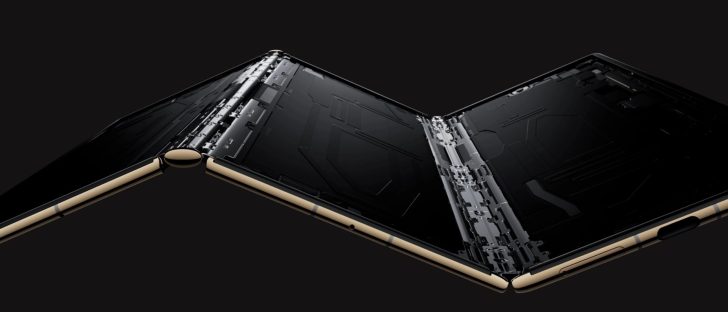
But look a little closer and their philosophies could not be more different.
Ahead of launch, popular tech YouTuber Mrwhosetheboss put the two devices side by side and highlighted one crucial difference: how many distinct shapes they can take. Samsung’s Galaxy Z TriFold essentially has two personalities. Folded up, it behaves like a slightly chunky ‘candy bar’ phone with a standard cover display. Unfold it completely and the device snaps into a sprawling roughly 10-inch tablet canvas. What you do not get is a convenient halfway mode – a single-fold state where the phone becomes a narrow book-style tablet.
That missing middle ground is exactly where Huawei tries to shine. The Mate XTs uses a Z-shaped folding pattern, allowing the flexible panel to wrap around the outside of the device. Because of that, Huawei can offer three clearly different ways to use the phone. Closed, it looks and feels like a conventional smartphone. Unfold one segment and you get a mini-tablet footprint, similar in spirit to Samsung’s own Galaxy Z Fold line. Unfold the second segment and the Mate XTs stretches out into a broad 10.2-inch display that behaves much more like a compact tablet than a supersized phone.
This extra stop between phone and full tablet is not just a party trick. A single-fold mode is perfect for reading, for split-screen messaging and browsing, or for watching video while still having room for controls and comments. It also makes the device easier to hold in one hand than the full triple-panel expanse. In day-to-day use, Huawei’s approach simply gives you more ways to adapt the screen to the task in front of you, and that is what makes the Mate XTs feel more like a shape-shifting pocket computer than a phone that just happens to unfold.
Samsung, however, did not leave that extra mode on the cutting-room floor by accident. The company opted for a U-shaped folding design where the main OLED panel is tucked safely inside the chassis when the device is closed. The outer sections, covered in Gorilla Glass Ceramic 2, act as protective shells, shielding the softer inner surface from keys, coins, sand and anything else that normally scratches plastic-based flexible displays. From Samsung’s point of view, exposing less of the fragile panel is worth the sacrifice of one extra form factor.
There is solid logic behind that decision. A triple-fold design means more hinge segments, more moving parts and more opportunities for dust or grit to work their way in. On the Mate XTs, the primary screen lives on the outside almost all the time. Put it face-down on a café table, slide it into a bag without a case, or repeatedly fold and unfold it throughout the day, and every small abrasion happens directly on the most important component of the device. Over months and years, micro-scratches can build up into a visible haze, and a serious gouge or crack could require replacing the entire panel assembly – a repair that will almost certainly be eye-wateringly expensive on a cutting-edge triple-fold.
By prioritising a more sheltered U-shaped fold, Samsung is essentially saying it would rather deliver two reliable modes than three fragile ones, especially when the Galaxy Z TriFold is expected to land around the US$2,447 mark. At that price, longevity and peace of mind are as important as raw novelty. The inner screen is still made from a softer material than the glass on the outer cover display, and Samsung openly acknowledges it is more vulnerable to scuffs and scratches. Hiding it away whenever the device is shut is the brand’s way of extending its usable life.
There is also a psychological angle here. Buyers willing to spend ultra-premium money on a brand-new form factor are already taking a risk on something unproven. Many of them will gladly trade one extra folding mode for the reassurance that the most delicate part of the device spends most of its time locked away behind tough glass. Huawei’s Mate XTs, in contrast, wears its technology on the outside like a concept car: eye-catching, flexible and futuristic, but always just that bit more exposed to the real world.
Where Samsung clearly aims to dominate is on the spec sheet. Inside the Galaxy Z TriFold sits Qualcomm’s Snapdragon 8 Elite, a top-tier chipset designed for heavy multitasking, console-grade gaming and AI-driven features. Drive three panels, keep several apps in split-screen, jump into a desktop-like interface on an external monitor – that kind of workload is exactly what this silicon is built for. Huawei’s Mate XTs hardware is far from weak, but Samsung’s partnership with Qualcomm gives the TriFold a marketing edge and likely a performance lead in the most demanding scenarios, particularly when the device is being used as a 10-inch tablet replacement.
All of this means the showdown between Huawei’s Mate XTs and Samsung’s Galaxy Z TriFold is less about who can bend their phone the farthest and more about which compromise you are willing to live with. Huawei offers the most flexible, transformer-like experience, with three genuinely different shapes that can replace both a phone and a small tablet. The cost of that versatility is a display that is always exposed and potentially more prone to long-term, irreversible damage. Samsung answers with a more conservative but better-protected design: fewer usage modes, but a safer home for the fragile inner screen, backed up by cutting-edge internals.
As triple-folding phones move from concept videos to real products, these two strategies give us an early look at where the category might go. Future designs may try to fuse Huawei’s versatility with Samsung’s caution, but for now buyers have a clear choice: embrace the Mate XTs and its do-anything form factors, or side with the Galaxy Z TriFold and its armour-first philosophy, confident that the fragile heart of the device spends most of its life safely out of harm’s way.
2 comments
huawei design looks way more futuristic, i’d still risk the scratches just for that single-fold tablet mode 🙈
outer folding always felt like a tech demo… looks nice on day 1, not sure about year 3 tho