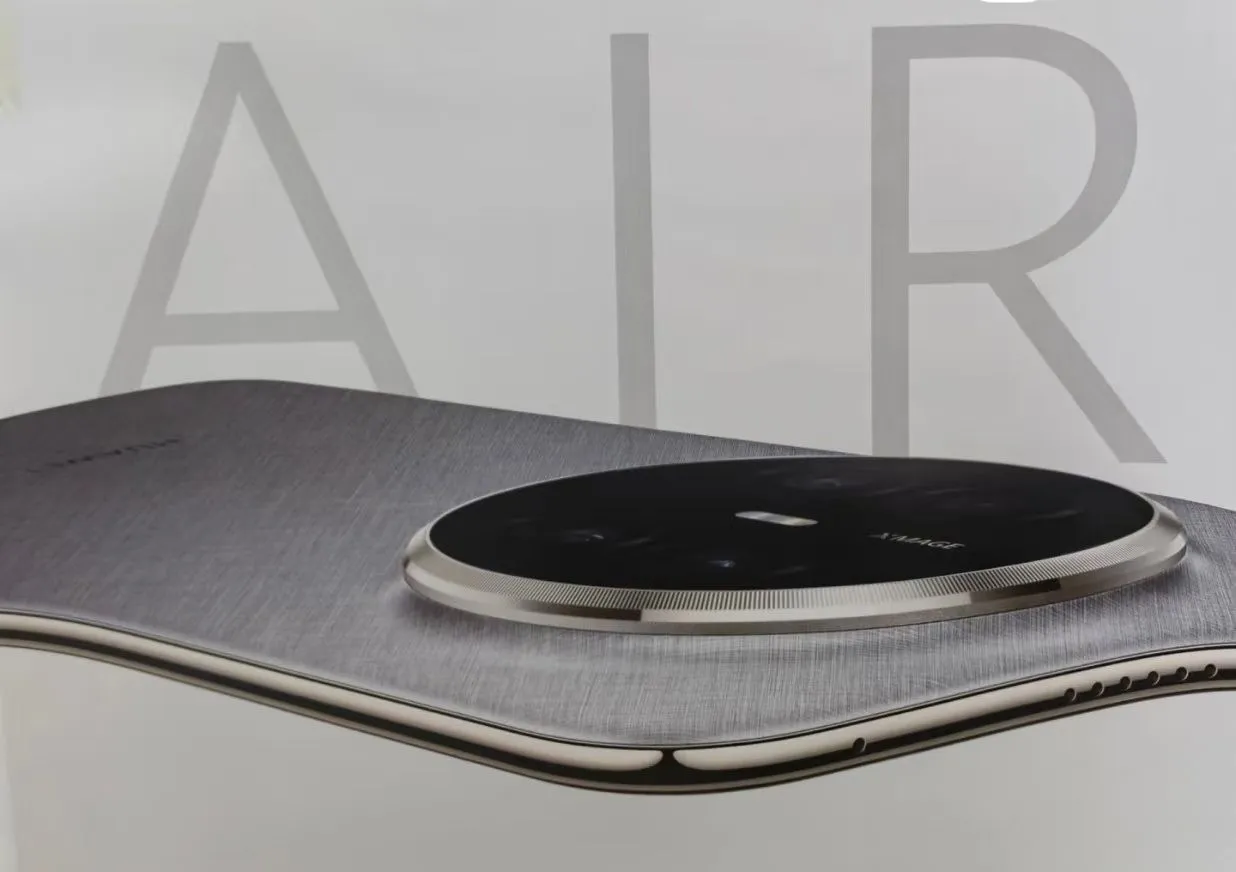
Huawei Mate 70 Air: the ultra-slim wildcard that could shake up big-screen phones
The race to build impossibly thin phones has a new contender, and it is not coming quietly. According to a steady drumbeat of leaks, Huawei is preparing a device tentatively called the Mate 70 Air to debut alongside its next flagship series in November. While nothing is officially confirmed, the profile emerging is unusual: a phone that chases razor-thin design while also flirting with features most wafer-light handsets skip, notably long-range zoom and a battery that looks, frankly, oversized for this class.
The first eye-catching detail is the rear design. Early imagery points to a slim chassis punctuated by a massive circular camera island. That oversized ring is not there for decoration. In phones, real estate on the back usually signals serious optics, and if the rumor mill is even half right, Huawei might be packing a dedicated telephoto module into a device that still qualifies as an ultra-slim. That would be a rare trick, and a direct shot across the bow of other ultra-thin darlings of 2025.
Consider the immediate rivals named in the same breath. Apple’s iPhone Air opts for simplicity with a single rear camera, leaning hard on a 48MP sensor and computational tricks that aim to mimic the versatility of multiple lenses. Samsung’s Galaxy S25 Edge goes a step further, adding a dedicated ultra-wide for breadth but still relying on digital zoom once you push beyond the main lens’s comfort zone. If Huawei really fits a bona fide telephoto in the Mate 70 Air, it would be the first ultraslim model to pair diet-phone dimensions with true optical reach.
That brings us to zoom. Reports suggest the Mate 70 Air will offer up to 30x hybrid zoom. Hybrid zoom blends optical information from a telephoto with multi-frame processing and sharpening to stretch beyond physical focal length while preserving more detail than crude crop-and-blow-up approaches. The end result is rarely perfect at extreme ranges, yet it tends to beat pure digital zoom, which can get mushy fast at 5x, let alone 10x. Even Apple’s own marketing sleight of hand – calling one high-resolution camera the equivalent of several – can’t change the physics; without dedicated optics, fine detail at distance is hard to hold together. By contrast, a modest optical baseline plus smart processing can keep text legible and edges cleaner out where stadium seats and skyline spires live.
Of course, zoom magic is more than a number on a spec sheet. Google’s Pixel 10 Pro, with its headline-grabbing triple-digit max zoom feature, occasionally illustrates the limits of software enhancement at the far end of the range. Stabilization, atmospheric haze, and aggressive noise reduction all conspire to scrub detail. If Huawei caps at 30x hybrid, that may actually be a sweet spot where computational photography can still deliver usable results without pushing into watercolor territory.
How thin is thin? Here, expectations should be tempered. Early whispers point to a thickness somewhere above 6 mm but under 7 mm. That would make the Mate 70 Air slightly thicker than both the Galaxy S25 Edge and iPhone Air, which reportedly dip below the 6 mm line, but still firmly in the “slimphone” club. Motorola’s Edge 70 sits right around 6 mm, so Huawei would land in familiar territory – only with that conspicuous camera island hinting at more ambitious optics than we usually see at this size.
Display rumors are even bolder: a 7-inch panel. That is petite tablet territory, and it reframes the entire device. A screen this large invites multimedia, gaming, and document editing, but it also raises alarms about endurance. Ultra-thin phones traditionally compromise on battery because there is nowhere to hide the cells. Yet multiple reports suggest Huawei is aiming north of 6,000 mAh. If true, it signals either highly efficient space usage or the deployment of high-density cell tech, such as silicon–carbon chemistry, which can store more energy per volume compared with conventional graphite-based lithium cells.
Pair a near-tablet display with a 6,000+ mAh battery and you get a very different proposition from the iPhone Air and Galaxy S25 Edge. Those phones are exercises in elegance and pocketability, but they pay the tax of digital zoom at distance and, in many scenarios, battery endurance that tracks their slim frames. Huawei appears to be sketching a different triangle: thin enough to feel svelte, big enough to be immersive, and dense enough in battery to last through a long day – especially if the company’s tuning and chipset efficiency cooperate.
Still, the devil is in the details we do not yet have. What sensor sits behind that suspected telephoto? Is there a high-quality main with a large aperture to support low light? Are we getting optical image stabilization across lenses, and what is the periscope stack height if one is used? How aggressively will the software blend frames for hybrid zoom, and will Huawei allow granular control over sharpness, noise, and tone mapping to avoid overprocessed images? These are the questions that separate “spec sheet exciting” from “reviewer approved.”
Availability will likely remain the sore point. Even if Huawei nails the formula, Western buyers may watch from the sidelines due to ongoing restrictions that keep the brand out of many markets and complicate software services. That is a shame for enthusiasts who want to see the ultra-thin segment evolve beyond fashion-first compromises. A Mate 70 Air with credible 30x hybrid zoom, a truly big display, and a battery that scoffs at screen-on time would force rivals to respond, perhaps nudging Apple and Samsung to rethink how much optical hardware they can squeeze into their slimmest frames.
For now, pencil the Mate 70 Air into your mental calendar for November, treat every leaked render and spec with healthy skepticism, and watch that camera island. In smartphone design, big circles usually mean big ambitions. If Huawei can thread the needle – balancing thinness, optics, and endurance – it might deliver the most practical ultra-slim yet, and a new benchmark for how much performance a wasp-waisted phone can really carry.
2 comments
Apple calling one cam equal to four still cracks me up. Physics says hi
7 inches on an ultrathin body? My pockets are scared but my eyes are happy