HMD is doubling down on the most old-school corner of the phone market with three new keypad models, the HMD 100, HMD 101 and HMD 102. On paper they look like successors to the companys recent 4G feature phones, but this new trio actually strips things back even further. In a year when most people talk about 5G and foldables, HMD is quietly launching handsets that behave more like music players and emergency call devices than modern phones.
Visually, the three models stand out from the earlier HMD 101 4G and HMD 102 4G announced in September. 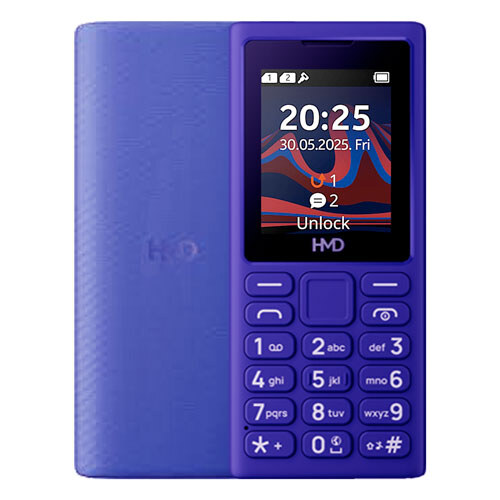
The new shells are chunky, colorful and clearly inspired by classic Nokia bricks, with big, clicky keys and a small non-touch display. They are designed to survive drops, live at the bottom of a backpack, or serve as a glovebox backup for people who want something that simply makes calls and sends texts without any distraction.
Within the tiny lineup, the HMD 102 is the most capable device. It offers a basic rear camera with LED flash for quick snapshots, along with an MP3 player for local music. That strongly suggests microSD support, since internal storage on such devices is practically non-existent. The HMD 101 takes a step down by omitting the camera but still keeping the core calling and messaging features. At the very bottom sits the HMD 100, which appears to give up the MP3 player entirely, turning it into a pure talk-and-text phone for people who only care about signal bars and battery percentage.
The most controversial part of the story is what these phones do not have. There is no mention of 4G support in the documentation for the HMD 100, 101 or 102, even though many carriers are actively shutting down legacy networks. In some countries, 3G has been switched off while 2G is kept alive for voice and machine-to-machine connections; in others, 2G is gone and 3G is on borrowed time. That makes 2G and 3G only handsets a risky bet for buyers who do not follow network roadmaps and might one day find that their brand new phone cannot register on the local towers.
Adding to the sense of being out of time, the new HMD trio uses microUSB rather than USB C. In regions like the European Union, where USB C has effectively been mandated for portable electronics, that port choice would keep these models off official shelves. HMD does have almost identical 4G ready versions with USB C and dual SIM for those markets, including models like the HMD 101 4G, HMD 102 4G, HMD 105 4G and HMD 110 4G. For buyers in India and other countries where 2G networks still run and regulations are looser, these microUSB, non 4G variants can still exist on paper and in stores.
So why launch such aggressively basic hardware in 2025. From HMDs perspective, there are still pockets of demand: people who want a cheap work phone that lives in a toolbox, parents buying a first device for a child, festival goers who refuse to risk a flagship in the crowd, or users chasing a digital detox lifestyle. A keypad phone with no apps, no social networks and no constant notifications can be oddly attractive when the goal is to stay reachable without being fully online all the time.
Still, the criticism from enthusiasts is hard to ignore. Some already call this lineup the basic definition of e waste, arguing that it makes little sense to manufacture new plastic and silicon for devices that, in terms of functionality, are not much more capable than an old iPod or a forgotten smartphone from a drawer. Used iPhones from the 3G and 4s era easily outperform these on features, apps and camera quality, even if their batteries are no longer fresh. The idea of releasing non 4G, microUSB phones when the world is talking about 5G-only networks looks to many like a step backwards.
There is also a sense of missed opportunity. Fans of keypad devices have been asking for a true 5G feature phone with modern radios, long battery life and a classic T9 keyboard. Instead, HMD is essentially reskinning the same low end platform again and again, shaving off features like the camera or music player to hit different price points. For some, that feels less like innovation and more like stretching a basic design to the limit to keep factories busy.
To be fair, these phones are not pretending to be something they are not. The user guides are clear about what you get: calls, texts, a torch, maybe a radio and some offline music playback on the better model. For people in regions where 2G or 3G is guaranteed to stick around for the next few years, that might be absolutely enough. A small battery can last for days, the hardware is simple to repair, and there is very little software to slow down or become unsupported.
For everyone else, the smarter move is probably to stick with HMDs 4G feature phones or an entry level Android device. Those options keep the same nostalgia of a compact body and physical keys or a very small screen, but they add safer network support and modern ports. The HMD 100, 101 and 102 show that there is still life left in ultra basic handsets, yet they also highlight how quickly a phone can turn into e waste if the networks around it move on.