Few big-name creators are as willing to show doubt in public as Hideo Kojima. While most studios sell every new project as a guaranteed masterpiece, Kojima has been unusually blunt about his experimental horror game OD, openly admitting that he does not even know if the concept will work. 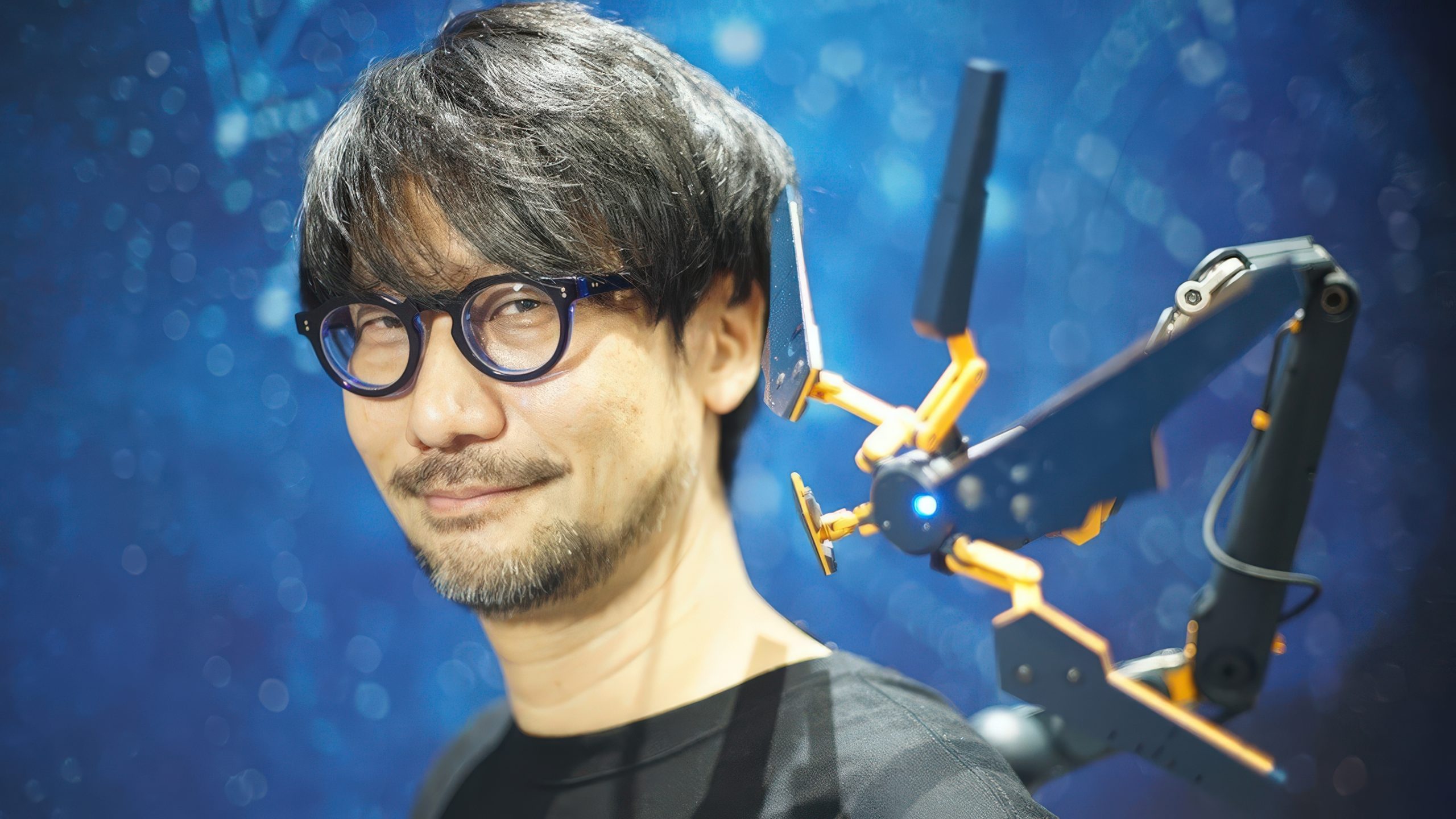
Coming from the mind behind Metal Gear Solid and Death Stranding, that uncertainty is not a marketing gimmick – it is a warning and a promise that OD is being built to sit far outside the comfort zone of traditional horror games.
Kojima’s career has been defined by pushing against established formulas. With Metal Gear Solid, he turned stealth into a cinematic playground full of meta tricks and fourth-wall breaks. With Death Stranding and its sequel, he tried to invent the so-called strand game, transforming lonely post-apocalyptic landscapes into networks of fragile connections where players help each other indirectly. For some, that was visionary; for others, it was just a very pretty walking and delivery simulator. OD arrives on top of that split reputation, and a portion of the audience is already rolling its eyes, saying they are tired of Kojima and that his creative spark faded after the dense, polarizing era of MGS4.
In a recent interview, Kojima explained that OD is not just another strange single-player game wrapped in familiar systems. In the past, even his wildest ideas still lived inside recognizable frameworks: you bought a game, finished its story, maybe tried some optional content, and moved on. This time, he suggests, the very foundation is different. He talks about changing the "service model" from the ground up, hinting that OD might reinvent how a horror game is delivered, updated, or even shared between players. That kind of structural experiment is risky in a market where many people are already exhausted by half-baked live-service projects.
What does changing the service model actually mean in practice? Kojima, predictably, will not say. It could be something as simple as a limited, time-based experience that evolves in sync with real-world events, or as radical as a persistent horror world that remembers what the community does and mutates accordingly. It might lean on cloud tech, episodic storytelling, or social mechanics that blur the line between watchers and players. Any direction he chooses will demand a lot from both the studio and the audience, and he is clearly aware that one misstep could turn OD into an ambitious failure rather than the next big paradigm shift.
Instead of clear explanations, we have trailers packed with strange imagery and uneasy performances. Kojima has said those trailers are full of hints, and that if you keep thinking about them you might piece together what OD really is. The second trailer in particular has already unsettled viewers with its unnatural laughter, lingering close-ups and theatrical, almost stage-like delivery. Fans are pausing every frame, trying to decode symbols, background details and bits of dialogue, but the overall feeling is one of deliberate confusion. That confusion might be the point: if horror is about losing control, OD seems happy to start by making sure players do not even understand the basic rules.
The reaction to all of this has been sharply divided. On one side are long-time followers who remain fascinated by Kojima’s willingness to embrace strangeness. They see his admission that OD might not work as proof that he is still chasing new ideas rather than coasting on nostalgia. On the other side are players who feel he has drifted too far into self-indulgence, calling Death Stranding and its sequel boring delivery sims and arguing that the "genius" narrative around him is outdated. Some are blunt enough to say he should retire instead of gambling on another experimental project. Others are wary of his choice of collaborators and digital likenesses, arguing that leaning on polarizing public figures and culture-war flashpoints could alienate potential buyers before the game even has a chance to stand on its own.
Behind that backlash is a deeper fatigue with the modern games industry. Many big-budget horror titles still cling to design patterns popularized by Resident Evil: tight corridors, resource management, predictable escalation and occasional multiplayer spin-offs that do little to change the core dynamic. OD is being positioned as something that could crack that mold, focusing less on jump scares and more on psychological unease, social tension and a lingering sense that the game itself is watching you. If the service model really is being rewritten, horror might move away from scripted haunted-house tours toward experiences that feel unstable, fleeting and personal, where missing an event or playing at a different time genuinely changes what you see.
Of course, swinging that hard comes with real risk. Even a legendary name does not guarantee that a radically new format will catch on. Kojima has been here before: every time he has announced a strange new direction, from the cinematic ambitions of early Metal Gear Solid to the lonely traversal focus of Death Stranding, segments of the audience have laughed, complained and predicted disaster. Some of those experiments became landmarks; others remained divisive cult favorites. With OD, he seems to be embracing the possibility of failure upfront, framing the project almost like a creative experiment in front of millions of people rather than a safe, pre-tested product.
Timing adds another layer of uncertainty. Death Stranding 2 has only just arrived, with a PC version still expected down the line, and that alone is a huge commitment for Kojima Productions. OD is almost certainly further off, both in development time and in public reveals. Treating it as a long-term experiment rather than the next big blockbuster may be the healthiest way to approach it: something that will grow in the shadows while the studio supports its existing work and slowly fine-tunes this risky new horror concept.
Whether OD ultimately lands as a masterpiece, a beautiful misfire or something in between, the project already captures an important truth about where big games are right now. The safest path is to repeat proven formulas until the audience drifts away from boredom. Kojima, for all his excesses and missteps, is choosing the opposite path: admitting he might fail loudly, and then building a game around that uncertainty. If OD can turn that creative anxiety into a new kind of horror – one where players feel genuinely unsure about what the game is, how it will change and whether they can trust it – then the gamble may prove worthwhile, even for those who currently swear they are done with him.
2 comments
ngl i’m kinda tired of kojima at this point… feels like everyone still calls him a genius no matter what he puts out 😅
death stranding was lowkey a vibes game for me, but yeah it did feel like a super fancy mailman sim half the time lol