Helldivers 2 has won over players with its frantic co-op action and its satirical take on space warfare, but lately one detail has been dominating community conversations: why does the PC installation balloon to 150GB, three times the size of its PlayStation counterpart? Arrowhead Studios has now spoken up, offering both a candid explanation and a reminder that there are no quick fixes to a problem rooted deep in the way games handle data.
The studio’s deputy technical director Brendan Armstrong recently addressed the issue in a Steam update, framing the post as the first in a new series on the “technical health” of the game. 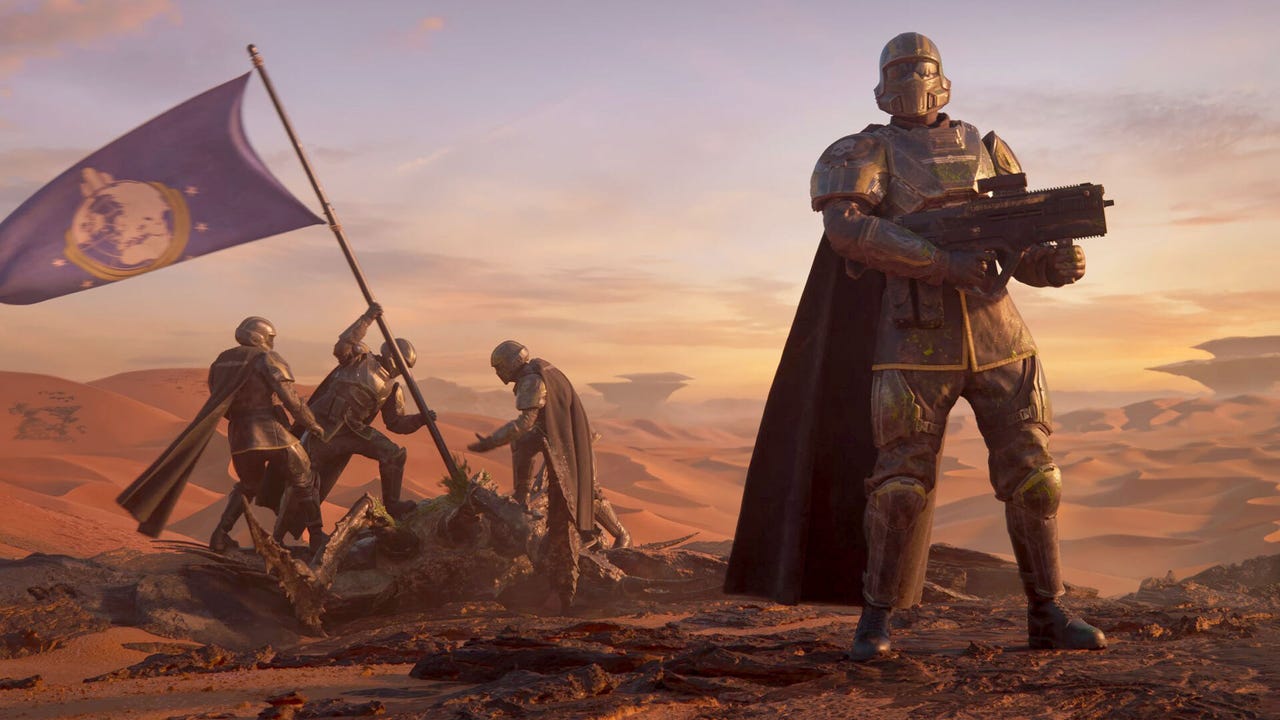
He acknowledged that the massive install footprint is a ‘hot topic’ and revealed the uncomfortable truth: much of that size comes from deliberate data duplication. The design choice, though seemingly inefficient, is tied to the need to accommodate mechanical hard drives (HDDs), which remain part of the PC minimum specs even in 2025.
Why Data Duplication Exists
Armstrong explained the basics of mechanical drive technology. HDDs store information on spinning platters that are read by a moving head. The physical motion introduces delays, known as seek times, when the head has to skip around to fetch scattered files. In a game like Helldivers 2, where levels are filled with varied assets – trees, rocks, vehicles, weapons, buildings, sound effects – performance can tank if the drive constantly jumps around. To mitigate this, developers sometimes create duplicate files, placing them in proximity to related assets so the HDD doesn’t thrash across the platter during load.
On SSDs, this problem essentially disappears. Solid state drives use flash storage with no moving parts, delivering near-instant seek times. This is why the console versions, which require SSDs, can avoid duplication entirely. But Arrowhead stressed that as long as a portion of its PC audience still runs the game on mechanical drives, the duplication must remain, or else squads risk being slowed down by the weakest link in their four-player team.
The Numbers and the Debate
Arrowhead’s internal estimates suggest around 12% of PC players are still on HDDs. While a minority, the design philosophy is that every Helldiver should drop into battle together at roughly the same time. In other words, if one squadmate is stuck with longer loads, everyone waits. This balancing act has prompted Arrowhead to err on the side of inclusivity, even if it means tripling the installation size.
However, the explanation has not silenced the debate. Many players argue that the decision prioritizes outdated hardware at the expense of modern gamers. Some even accuse the studio of masking poor optimization with technical jargon. One particularly skeptical voice noted that duplicating assets in a directory does not guarantee they sit closer together physically on a disk platter, suggesting Arrowhead’s reasoning is more spin than substance. Others counter that, whatever the mechanics, the game does boot up and transition impressively fast despite its size.
Searching for Smarter Solutions
Armstrong admitted that the current approach has reached its limits, promising that the team is looking into alternatives. These include sweeping unused assets, refining how the engine handles shared resources, and experimenting with compression strategies that resemble the de-duplication consoles already employ. The challenge lies in ensuring that gains in file size do not create new penalties in load times – a risky balance, especially in a game where momentum and immersion are key.
The next patch will make modest improvements by trimming obvious excess data, though Armstrong warned that players probably won’t notice because new content being added will offset the savings. In the longer term, more radical engine adjustments are on the table. Still, he tempered expectations: “We’re taking your concerns very seriously, but there are no easy solutions.”
Community Reactions
The community remains divided. Some players shrug at the 150GB footprint, pointing out that storage is cheaper than ever and internet speeds are fast in many regions. Others argue that not everyone has terabytes of SSD space to spare, especially on laptops or portable devices like the Steam Deck where every gigabyte counts. More pragmatic voices suggest offering separate installation packages: a slim SSD edition and a bulkier HDD-friendly edition, similar to how some games distribute optional high-resolution texture packs.
There’s also irony in the fact that some players still install games on huge capacity HDDs deliberately. One user mentioned running an 18TB drive for bulk storage and not caring about 150GB at all, while others say they would prefer the option to save space by skipping duplicated or high-resolution assets they don’t need. Comparisons to Diablo IV and other titles with optional hi-res DLC packs show that the industry does have potential models for striking this balance.
The Road Ahead
Ultimately, Arrowhead’s transparency is welcome, even if it doesn’t deliver an immediate fix. The studio is in a difficult position: trying to satisfy both players clinging to legacy drives and those with modern SSDs expecting leaner, smarter storage. The developer has promised that it will keep iterating and exploring new techniques, though for now, Helldivers 2 will continue to consume a hefty chunk of your hard drive.
For a game built around camaraderie, shared sacrifice, and everyone fighting side by side, perhaps the bloated install is an ironic extension of its philosophy: no Helldiver left behind, not even those still spinning their data on a platter.
2 comments
i got an 18tb hdd lol 150gb is nothing to me, but on my steam deck it’s way too much to waste
pc gaming used to be about pushing limits now devs hold us back for ppl with decade old hdds 😑