Google Wallet is getting a commuter-grade upgrade. A forthcoming feature called Express Transit Card aims to remove one of the last bits of friction in public transport payments: unlocking your phone and picking the right card at a crowded gate. Instead of fumbling with screens while a line builds behind you, you’ll simply hold your Android phone to a supported reader and walk through. No PIN, no fingerprint, no face unlock – just tap and ride where the system is supported.
Today, Google Wallet already handles transit in select cities using stored passes or regular tap-to-pay cards. 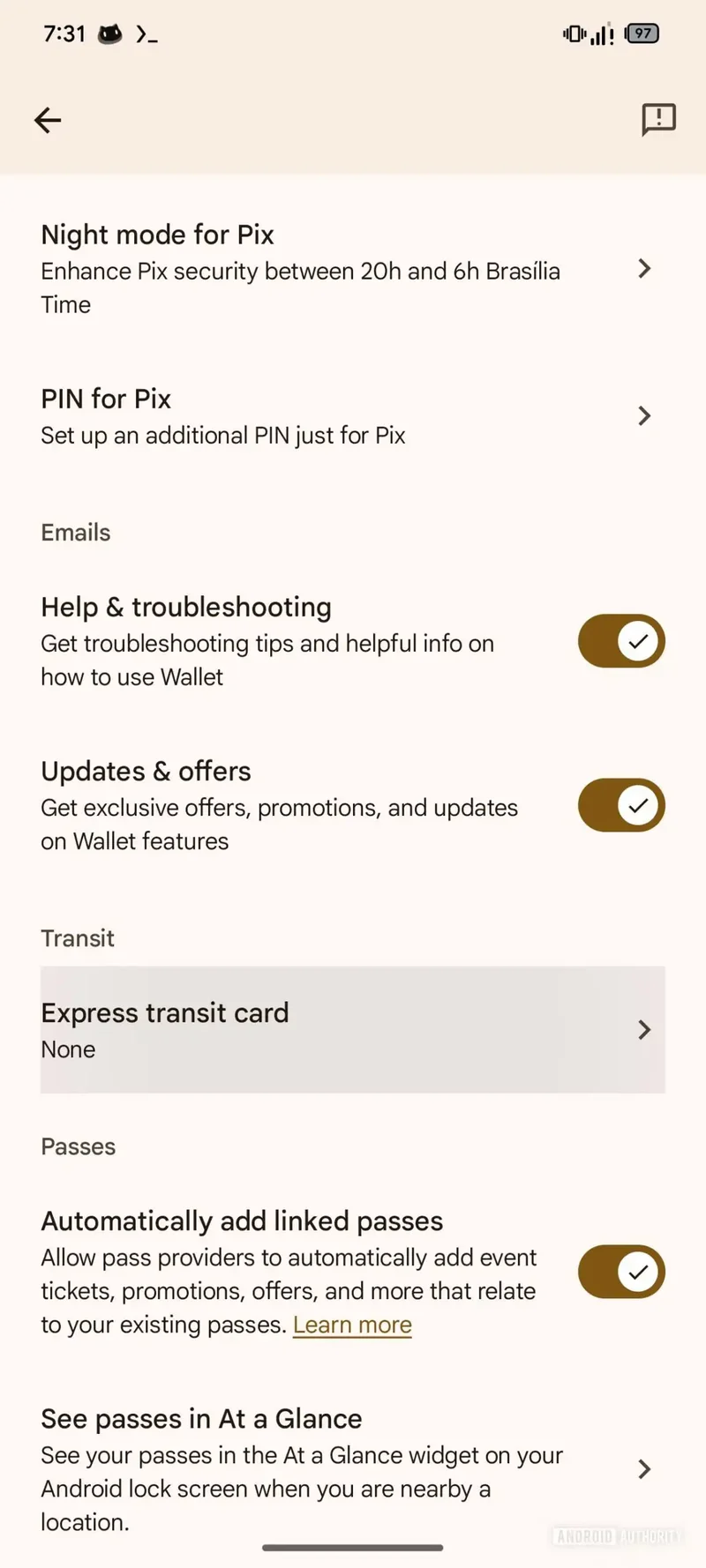
The headache shows up when you carry multiple cards or switch between personal and business accounts. The usual dance is familiar: wake the phone, unlock it, open Wallet, swipe to the correct card, hope the gate hasn’t timed out, then try again if you missed. Express Transit Card short-circuits that routine. You’ll designate one debit or credit card strictly for transit, separate from your everyday default payment method. At the gate, Wallet recognizes approved transit terminals and routes the tap to that dedicated card automatically while the phone stays locked.
How Express Transit works (and why it’s different)
Under the hood, transit readers use standardized contactless fare protocols that are optimized for speed. By whitelisting a single card for those terminals, Wallet can authorize that quick tap without dragging you through authentication. Importantly, this choice lives alongside, not instead of, your normal tap-to-pay setup. Buying coffee? Your usual default card still applies. Hitting the bus, metro, or train? The transit card takes over for that one scenario. It’s a neat separation that keeps your payments tidy and prevents accidental charges to the wrong account after the morning commute.
Security is baked into the context. The fast, no-unlock flow is limited to participating transit gates and validators, not just any random retail terminal. That constraint, combined with card network rules and device-level protections, keeps the convenience squarely aimed at high-throughput turnstiles where seconds matter.
Google catching up to rivals
Apple Pay has offered an Express Transit mode for years on iPhone and Apple Watch, enabling instant entry with the device locked. Samsung Wallet provides a similar option on compatible Galaxy phones. With Express Transit Card, Google Wallet moves onto the same playing field, which is excellent news for Android riders who’ve watched friends breeze through gates while they swipe through cards.
Is Google late? Sure. But for commuters, what matters is reliability, speed, and broad availability. Once rolled out, this update should close a real-world gap that shows up every weekday at rush hour. When you’re shoulder-to-shoulder on a platform, shaving even two seconds off a tap can be the difference between catching the train and watching taillights.
Where and when you can expect it
As with all transit features, support depends on your city and agency. Wallet already works with a patchwork of regions using passes and contactless fares, and this new mode will layer on top of those systems as agencies enable it. Google hasn’t attached a firm release date, but indications point to availability in an upcoming Wallet update. Expect a gradual rollout and the usual staggered support by market.
More travel smarts in Wallet
The timing also lines up with a broader push to make Android more trip-aware. With the Android 16 cycle, Live Updates in Wallet are set to surface real-time flight and train details – boarding times, platform changes, delays – so your travel essentials live in one glanceable place. Pair that with Express Transit Card and you get a cohesive door-to-door experience: tap into the metro, pop out at the airport, and see your gate info without digging through email.
What this means for riders – and agencies
For riders, the value is obvious: fewer taps, fewer misses, fewer awkward gate retries. Families and team travelers can also keep their spending cleaner by locking a single card to transit while leaving personal purchases untouched. For transit agencies, faster entries mean shorter queues and better throughput during peak windows – without forcing riders into proprietary plastic or app-based barcodes.
Bottom line: Express Transit Card isn’t flashy, but it solves a daily pain point. It aligns Google Wallet with the best of Apple Pay and Samsung Wallet, respects the realities of crowded commutes, and quietly makes public transport feel modern. When it lands in your city, you’ll know – because for the first time in a while, your morning tap might just feel effortless.