The global smartphone industry is often seen as a predictable battleground, but the first half of 2025 brought an unexpected twist: Google’s Pixel brand managed to catapult itself into the spotlight as one of the world’s top five premium smartphone vendors. This accomplishment is significant not only for Google, which has struggled for years to find mass-market traction, but also for the dynamics of the premium segment itself. Despite the overall smartphone market showing relatively sluggish year-on-year performance, the high-end category – devices priced at $600 or more – surged ahead, thanks in large part to Apple’s dominance, Samsung’s resilience, and the rapid rise of Xiaomi and Google.
Apple: Still the King of Premium
No matter how impressive Google’s growth looks, one must first acknowledge Apple’s sheer scale. 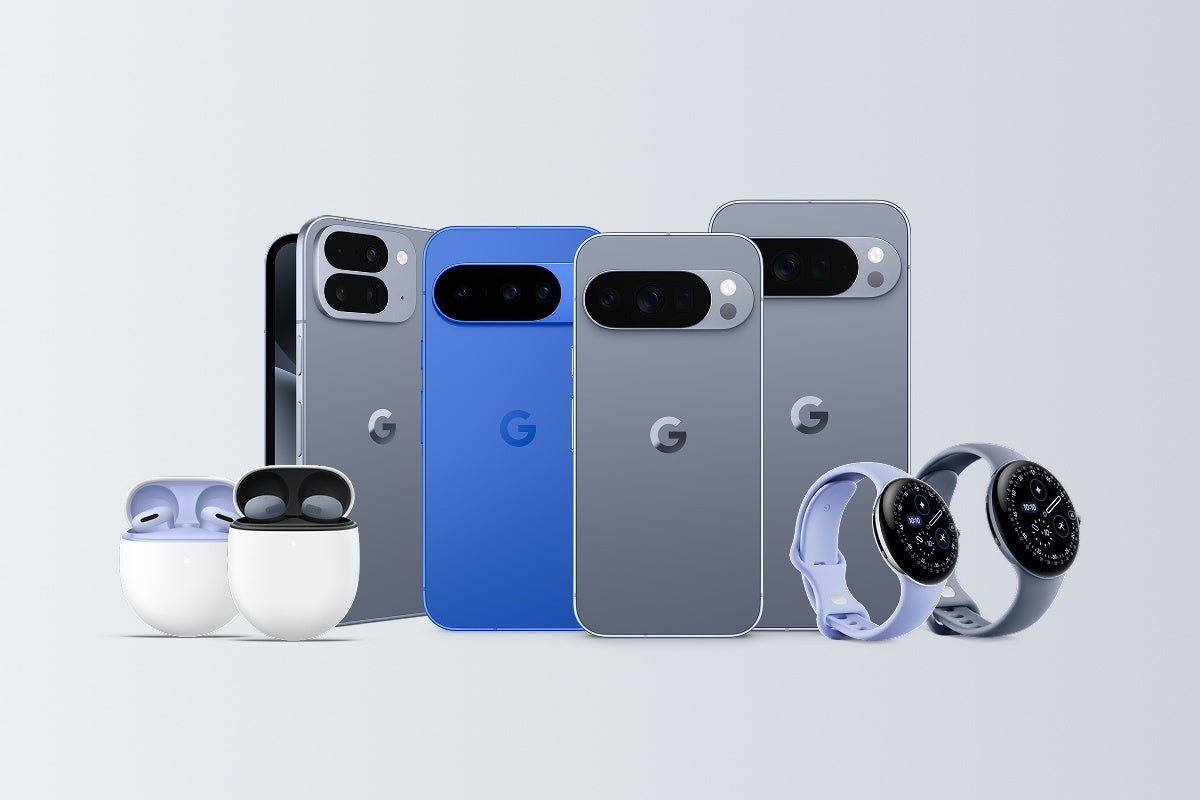
The iPhone maker controlled an enormous 62% of the premium smartphone market during the first six months of 2025, a commanding share that translates to nearly two-thirds of every high-end phone sold worldwide. While this marked a slight dip from the 65% share recorded in H1 2024, Apple still managed to grow its volume by 3%. The iPhone 16 family, though not specifically singled out in Counterpoint Research’s report, is clearly a strong driver of this performance.
Apple’s slight share decline reflects the growing competitiveness of rivals rather than any weakness in its own lineup. However, with the iPhone Fold still rumored and yet to materialize, Cupertino risks ceding ground in the foldable race. Analysts suggest that further delays could limit Apple’s long-term potential in this lucrative subsegment.
Samsung: Holding Firm at Second Place
Samsung continues to solidify its position as Apple’s closest competitor, holding 20% of the premium market – the same level as last year. Unlike Apple, Samsung’s market share did not slip, and its Galaxy S25 lineup performed better than its predecessor, the S24 series. The South Korean giant has been able to close the distance to Apple slightly, narrowing the gap to 42 percentage points. Although still a wide margin, Samsung has strong prospects, especially with its expanding foldable portfolio. The Galaxy Z Fold 7, for instance, is exceeding expectations and establishing the brand as a leader in innovation.
Google: The Fastest Riser
The most surprising development of H1 2025 was Google’s meteoric rise. Thanks to the Pixel 9 series, bolstered by aggressive marketing campaigns and expanded distribution into new regions, Google doubled its premium sales compared to the same period in 2024. This translated into a staggering 105% year-over-year growth rate, marking the first time in five years that Google has broken into the top five premium vendors globally. The Pixel 9 was particularly well-received for its AI-driven camera upgrades and unique software features that distinguished it from the crowded Android space.
Yet the question lingers: can Google maintain this momentum? Doubling sales once was impressive, but repeating such exponential growth seems improbable. That said, the launch of the Pixel 10 lineup – comprising the Pixel 10, Pixel 10 Pro, Pixel 10 Pro XL, and the foldable Pixel 10 Pro Fold – shows that Google has no intention of slowing down. With improved hardware, better battery optimization, and a more polished foldable offering, Google could gradually chip away at competitors’ shares. Its marketing machine, more energized than ever, is signaling a long-term commitment.
Xiaomi and Huawei: Still in the Game
Xiaomi, often considered the disruptor in the smartphone industry, recorded 55% growth in the premium segment during H1 2025, with much of this success driven by its dominance in the Chinese high-end market. While still behind the big three globally, Xiaomi’s trajectory is upward, and its strategy of offering premium features at lower prices continues to resonate with buyers who want value without compromise.
Huawei, meanwhile, retains its spot as the third-largest premium vendor, but its growth was a more modest 24%. Though not insignificant, this progress pales compared to Xiaomi’s and Google’s explosive numbers. Still, Huawei’s brand remains strong in markets where it maintains access to cutting-edge technology, particularly in China, and it remains a formidable presence.
The Future of Premium Smartphones
The biggest unknown is how the premium sector will evolve in the coming years. Foldables appear to be the defining trend, shaping the strategies of nearly every major vendor. Samsung, with the Z Fold 7 already winning acclaim, looks well-positioned in this space. Google’s Pixel 10 Pro Fold, despite facing delays, could give the company credibility in the foldable market if handled more smoothly in future product cycles. For Apple, the risk of falling behind grows each year it delays the rumored iPhone Fold, even if its conventional iPhone line remains a juggernaut.
What’s clear is that the premium market is more dynamic than it has been in years. Apple’s dominance is no longer absolute, Samsung is closing in with both conventional and foldable devices, Google has proven it can break through with the right mix of products and marketing, Xiaomi is climbing fast, and Huawei is hanging onto relevance. The coming battles will not be fought only on specs but also on design, ecosystem integration, and the ability to excite consumers in an era where innovation often feels incremental.
Conclusion
The first half of 2025 marks a turning point. While Apple still towers over the competition, the rapid rise of Google and Xiaomi shows that the premium smartphone market is not static. With foldables gaining ground and new players pushing harder than ever, the second half of 2025 and beyond promises to be far more competitive – and far less predictable – than many expected.
2 comments
google marketing actually working??
samsung fold looking better than ever