For years, Google resisted adding native call recording to its Pixel phones, often citing regulatory concerns and privacy issues. 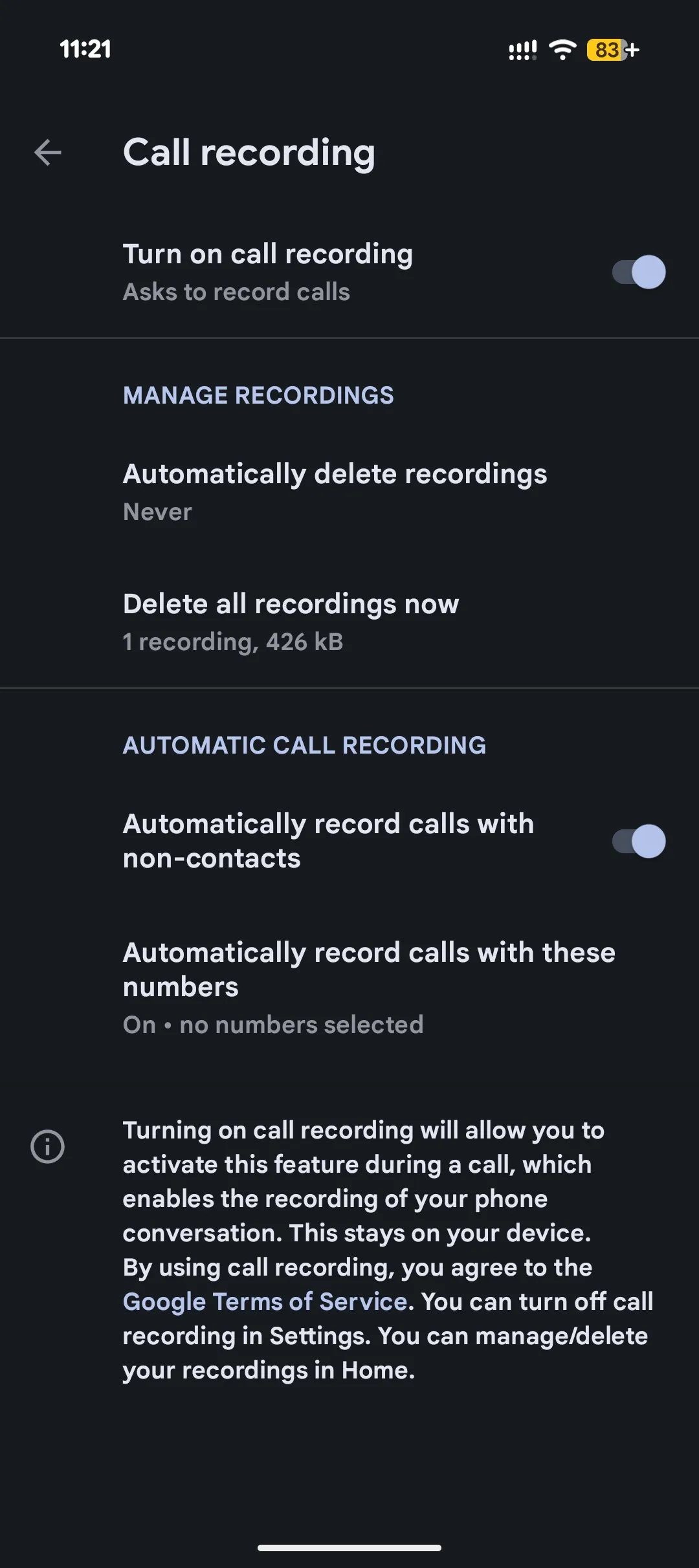
That hesitation now appears to be fading. In a quiet yet significant update, Google revised its official support documentation to confirm that Pixel 6 devices and later, running Android 14 or newer, can indeed record phone calls – provided users meet certain conditions.
First, the feature isn’t universally available. Google emphasizes that call recording depends heavily on regional laws and carrier restrictions. While some countries openly allow it, others either ban or strictly regulate the practice. As a result, the Phone by Google app will only surface the option if the device is in a market where call recording is legally permitted. The app must also be updated to the latest version from the Play Store for the functionality to appear.
When the feature is available, users have several recording options. Pixel owners can set the phone to automatically record calls from numbers not saved in contacts, select specific contacts for automatic recording, or manually initiate recording on individual calls. Regardless of the mode chosen, transparency is built into the system. At the start of each recording, participants hear an announcement that the call is being recorded, and when recording ends, a notification is displayed to both parties. Recordings are stored locally on the device and can be configured to auto-delete after a chosen timeframe, adding a degree of control for users who don’t want to archive conversations indefinitely.
There are, however, technical limits. A call cannot be recorded until it is answered. Similarly, calls placed on hold or merged into a conference call cannot be captured by the feature. Early sightings of this tool have primarily come from India, where Pixel 8 Pro owners running a public beta of the Phone app reported having access to the recording option. Some scattered reports suggest limited availability in Canada and the U.S., particularly on devices testing beta builds of Android 16. Despite those glimpses, the rollout remains inconsistent, with many Pixel 6 and Pixel 7 devices in Western markets still showing no sign of the function.
For those who do discover the feature, using it is straightforward. Once a call is initiated, users can open the Phone app interface, tap on Call Assist, and select Call Recording. To end the recording, the same menu provides a Stop button. Google’s support page outlines these directions in detail, making it easy for users to configure automatic recording or manage storage settings. It also warns that deleting a call log will simultaneously delete the associated recording, so caution is needed to avoid losing valuable records.
Legal compliance is perhaps the biggest consideration. In the U.S., recording laws vary dramatically from state to state. In 38 states and Washington D.C., a one-party consent rule applies – meaning if you’re part of the conversation, you can record it without informing the other party. The remaining states, however, enforce a two-party consent requirement, obliging everyone on the call to agree to recording. That discrepancy makes cross-state calls especially complicated, and the safest approach is to always follow the stricter rule. Google echoes this in its support notes, urging users to obtain consent before activating the feature.
Consent can be gathered in multiple ways. Some businesses use an automated disclaimer such as “This call may be recorded for quality assurance purposes” at the beginning of conversations. Others rely on an audible beep inserted at regular intervals during the call, a method that instantly signals recording activity. A more formal path is securing explicit written or verbal approval before the conversation begins. Regardless of the method, ensuring that both parties are aware of recording is the only way to stay out of legal jeopardy in strict-consent jurisdictions.
The introduction of native call recording on Pixel phones is notable because it removes the reliance on third-party apps, many of which struggled with Android’s increasingly tight restrictions. Over the last few years, Google steadily cut off unofficial workarounds, leaving users frustrated. Now, by offering an official option, the company is reclaiming control of the feature while ensuring it is deployed in compliance with local law.
For professionals, journalists, and anyone who regularly needs accurate records of phone discussions, the arrival of call recording could be a game-changer. At the same time, the fragmented rollout means not every Pixel user will see the feature yet, and its success will depend on how broadly Google is willing – or legally able – to expand it. As the beta sightings suggest, the groundwork is being laid, but the complete picture may take months to emerge.
Ultimately, whether you’re a Pixel 6 owner in India or a Pixel 8 Pro user in North America, it’s worth checking Google’s support documentation periodically. The feature may arrive without much fanfare, but when it does, it could transform how you use your phone in both personal and professional settings. Just make sure you know the laws where you live before pressing that record button.