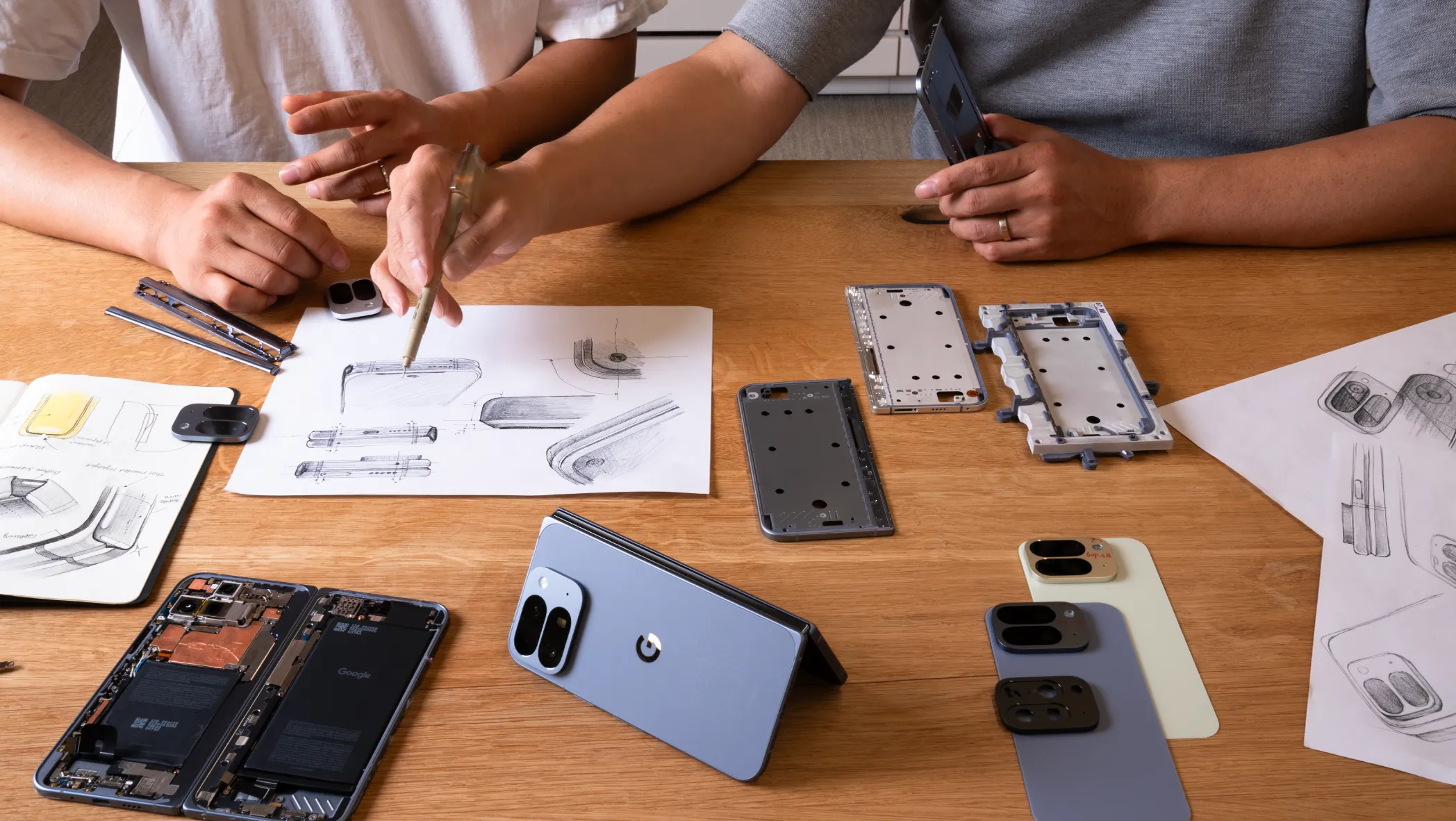
Google Reveals How the Pixel 10 Pro Fold’s Revolutionary Gearless Hinge Works
When Google unveiled the Pixel 10 series this August – featuring the Pixel 10, Pixel 10 Pro, and the standout Pixel 10 Pro Fold – it marked another milestone in the company’s hardware innovation. The Pixel 10 Pro Fold only hit store shelves recently, but Google has already pulled back the curtain on the intricate engineering behind its most distinctive feature: the gearless hinge. In a detailed blog post, Google engineers explained the logic, challenges, and benefits behind abandoning the traditional geared mechanism that has dominated foldable phone design for years.
According to Google’s design team, opting for a gearless hinge was a daring choice – one that required more aggressive engineering and a greater tolerance for complexity. Traditional hinges rely on four small gears with interlocking teeth, ensuring the two halves of the phone rotate symmetrically as it opens and closes. Over time, however, these gears tend to accumulate dust and microscopic debris, which leads to friction, stiffness, and gradual deterioration of the folding experience. The fold, quite literally, is the heart of a foldable device, and anything that undermines that smooth motion quickly becomes a deal-breaker for users.
Google’s solution was to remove gears entirely and replace them with a system based on CAM mechanisms – precision-engineered components that translate rotational movement into linear motion. These CAMs, supported by internal springs, synchronize the movement of the two halves, ensuring the device opens with perfect balance and closes with a satisfying, consistent resistance. As one side moves, the other follows naturally, creating a sense of fluid, mechanical harmony that users can feel in hand. The result is not only smoother motion but also a hinge that promises superior long-term reliability.
This engineering shift brought a cascade of additional benefits. Without gears taking up internal space, Google’s designers were able to fit a larger battery and slimmer bezels while maintaining the device’s sleek form factor. The gearless hinge also reduces protrusion from the phone’s spine, which improves comfort when holding the device folded or unfolded. Perhaps most impressively, the Pixel 10 Pro Fold achieved an IP68 water and dust resistance rating – something exceedingly rare in the foldable world – because the design eliminated the tiny gaps and cavities that gears typically require.
The hinge, then, is not just a mechanical upgrade; it’s a design statement. By simplifying the motion and reducing mechanical complexity, Google is signaling that the future of foldables lies in durability and tactile satisfaction rather than gimmicks. “We wanted to create something that feels elegant and natural every time you open it,” one engineer reportedly said. The sensation of opening the Pixel 10 Pro Fold is meant to evoke the same smooth precision as closing a high-end watch clasp.
Google’s main rival in this arena, Samsung, has taken a similar approach with its Galaxy Z Fold 7, which features an Armor Flex hinge using a water-droplet-shaped design and a multi-rail structure. Like Google, Samsung abandoned the traditional gear assembly to slim down the hinge and make the folding mechanism more flexible and less prone to dust ingress. The battle between these two tech giants now extends beyond display technology and camera prowess – it’s also a contest of mechanical innovation and craftsmanship.
Ultimately, the hinge defines the experience of a foldable phone. It determines how smooth the motion feels, how reliable the device remains after thousands of folds, and even how thin or comfortable it is to hold. As foldables continue to mature, this component will likely become the biggest differentiator among brands. Google’s engineers seem confident that their gearless approach not only improves durability but also redefines what users expect from a premium foldable.
The growing interest in foldable phones suggests that this form factor is here to stay. Users increasingly appreciate the duality of compact portability and expanded screen real estate. And while challenges remain – most notably the persistent crease that appears on nearly every foldable display – manufacturers are closing in on perfection. Rumors suggest Apple may debut its first foldable iPhone next year, potentially featuring a ‘creaseless’ display. Whether those claims hold up remains to be seen, but one thing is clear: the race for the perfect fold is far from over, and Google’s latest hinge innovation may have just given it a meaningful edge.
1 comment
ok but how many folds before it breaks tho?