Google is once again reshaping the way we think about wireless audio by expanding support for Auracast, a breakthrough feature built on Bluetooth Low Energy (LE). Traditionally, Bluetooth has always been about one-to-one connections: your phone connects to a single pair of headphones, or your smartwatch pairs directly with your phone. 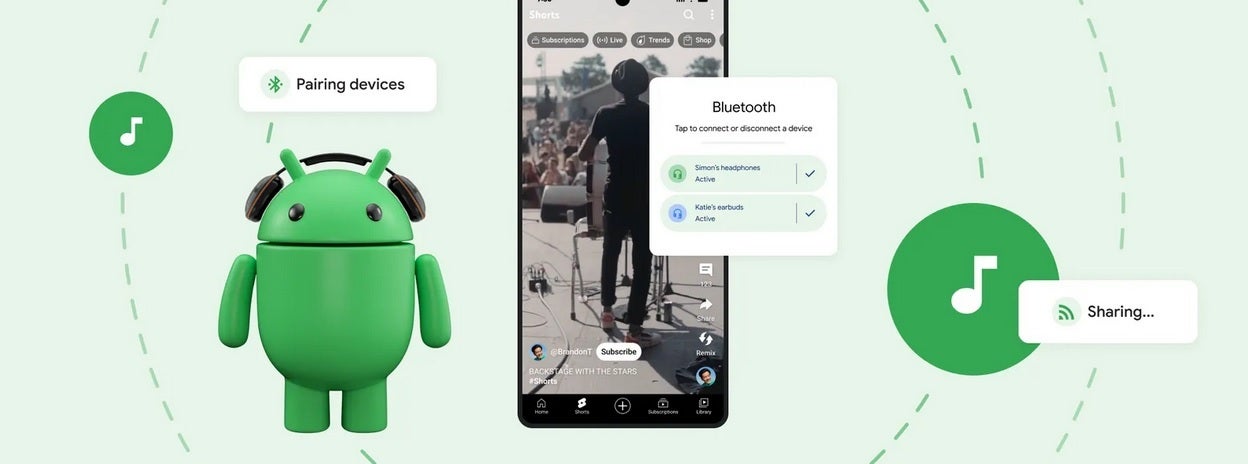
Auracast flips that idea on its head by turning a smartphone or another audio source into a kind of miniature radio station, capable of broadcasting high-quality audio streams to an unlimited number of nearby receivers.
In simple terms, imagine your phone not just streaming music to your earbuds but simultaneously broadcasting the same track to a friend’s headphones, your sibling’s earbuds, or even a hearing aid in the room – all without losing sound quality. This is the vision of Auracast, and it’s steadily becoming a reality as Google and its partners roll out wider support across phones and audio accessories.
The journey began earlier this year with the launch of the Pixel 9 series, where Auracast first appeared as an accessibility feature tailored for hearing aids. Google offered specialized presets designed to make life easier for people with hearing difficulties, ensuring clear sound for environments like conversations, public spaces, and media playback. In recent weeks, however, Google has moved beyond accessibility to expand compatibility with mainstream headphones and earbuds. Notable names on the growing list include the Sony WH-1000XM series, JBL Tour One M3, Samsung Galaxy Buds 3 Pro, and Sennheiser Accentum True Wireless. Each of these devices can now latch onto Auracast broadcasts, opening up new ways of experiencing shared audio.
On the phone side, Auracast broadcasting is now enabled on a widening family of models. For Google’s lineup, that means the Pixel 8 and anything newer. Samsung’s flagship lines are also covered, from the Galaxy S23 through the brand-new S25, along with foldables like the Galaxy Z Fold 5, Z Fold 6, and Z Fold 7. Even select Xiaomi and Poco devices support the feature, though these versions aren’t always available through U.S. carriers.
The practical applications of Auracast are wide-ranging and genuinely useful. Think about airports, bus stations, or museums where announcements are often garbled or hard to hear through traditional speaker systems. With Auracast, institutions could broadcast these messages directly to compatible headphones, earbuds, or hearing aids, providing crystal-clear audio. On a smaller scale, the feature is perfect for friends sharing a moment of music together. Instead of the awkward and arguably unsanitary habit of passing one earbud back and forth, you can now let your companion tune in directly through their own device. Group listening sessions also become effortless: with a QR code scan or a simple tap using Google’s Fast Pair, everyone nearby can join the same broadcast in seconds.
Of course, we are still at the early stages of this technology. Adoption is limited to specific phones and a handful of compatible headphones, but the ecosystem is expected to grow rapidly. As more manufacturers embrace Auracast, it could fundamentally change how audio is shared in public and private settings alike, from classrooms to gyms to living rooms. Analysts even suggest it could reshape the hearing aid industry by standardizing how assistive devices receive and process sound.
Beyond its functional uses, Auracast also highlights a subtle cultural shift. Wireless technology is no longer just about personal convenience; it’s increasingly about shared experiences. By enabling one-to-many audio streaming, Google is betting on a future where sound becomes more communal – whether that’s a DJ broadcasting at a party without bulky speakers, or a tour guide at a museum seamlessly delivering narration directly into visitors’ ears.
In short, Google’s decision to expand Auracast across more Pixel and Galaxy devices isn’t just another incremental software update. It’s a clear step toward redefining the future of Bluetooth, moving beyond its original limitations and unlocking a host of new possibilities for both accessibility and everyday use. The promise of a more connected, seamless audio world is no longer just a concept – it’s rolling out now, one update at a time.
And while we’re talking about technology milestones, don’t forget: this fall brings another exciting release – the upcoming coffee table book “Iconic Phones: Revolution at Your Fingertips.” Celebrating the defining mobile devices of the 21st century, it’s set to become a must-have for every tech enthusiast.
1 comment
bro no way my grandma’s hearing aid will join my spotify party 😂