Google appears to be quietly preparing one of the biggest shifts in its desktop strategy since the birth of ChromeOS. For years, the company has experimented with how Android and ChromeOS should coexist, overlap and, eventually, converge. Now a recently spotted job listing has revealed the clearest sign yet that Google is ready to move on: a new AI-first desktop platform called Aluminium OS, an Android-based operating system that could ultimately replace ChromeOS on laptops, tablets and small desktop boxes.
The deleted job listing, originally unearthed by Android Authority, described a senior product manager role for a “new operating system built with Artificial Intelligence (AI) at the core.” Buried in that description was the internal name Aluminium OS, almost certainly a codename but one that tells us a lot about Google’s intentions. 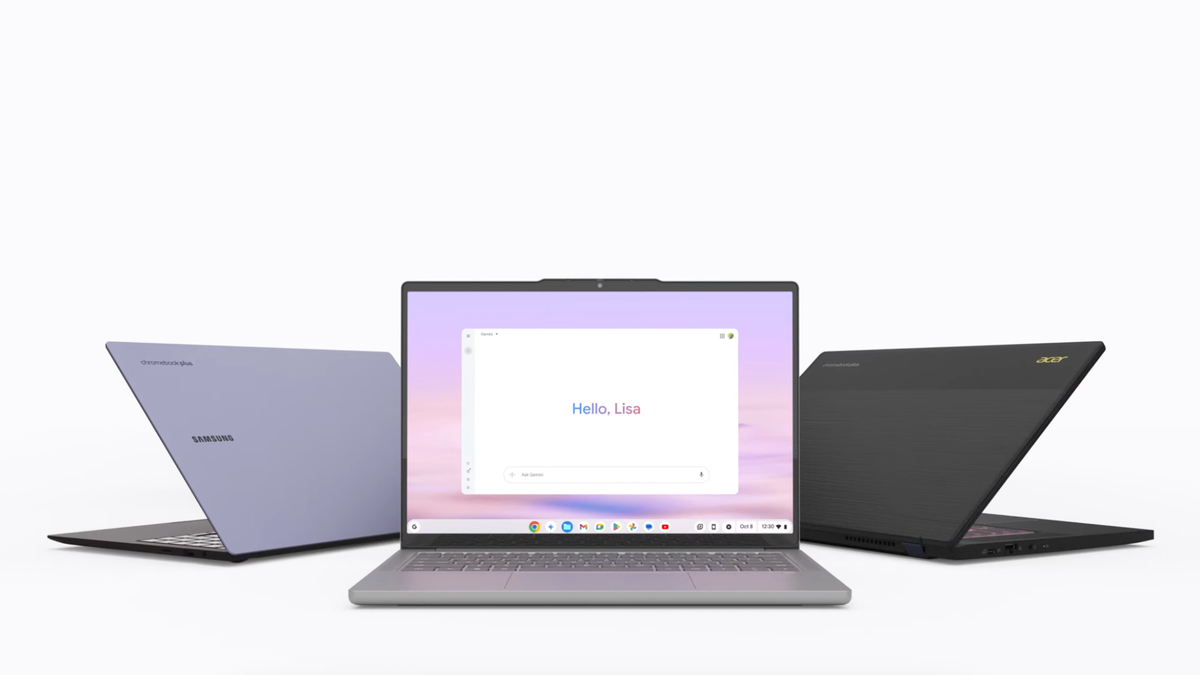
Unlike ChromeOS, which grew out of the Chrome browser and relied heavily on web apps, Aluminium OS is explicitly positioned as Android-based software designed to run across a broad portfolio of devices. In other words, Google wants to bring the flexibility, app ecosystem and familiarity of Android into a true desktop-class environment.
Aluminium OS: An Android desktop built around AI
The listing paints Aluminium OS as a next-generation platform where AI is not just an add-on but the central organizing principle. Rather than treating assistants and smart features as separate apps, the OS is described as being built with AI at the core, suggesting that search, productivity, system management and even UI behaviour could be dynamically adapted by on-device and cloud intelligence. Given Google’s current focus, it is hard not to imagine deep integration with Gemini, the company’s flagship AI model, for everything from summarizing documents to context-aware recommendations and real-time support.
Crucially, Aluminium OS is based on Android, which means it inherits a massive ecosystem of apps, games and services that already work on phones, tablets, TVs and car systems. For developers, that dramatically lowers the barrier to entry compared with targeting ChromeOS directly. For users, it means that the software they rely on every day – from messaging apps to creative tools – should be available from day one, but now inside a desktop-optimized shell with proper windowing, keyboard and mouse support.
A name that nods to Chrome and Chromium
Google’s choice of the British spelling “Aluminium” is more than just a quirky stylistic decision. It fits neatly into the company’s long-running tradition of metal-themed branding around the Chromium project, the open-source foundation that underpins both Chrome and ChromeOS. By leaning into this naming convention, Google signals that Aluminium OS is not a random experiment, but part of the same lineage that defined its modern browser and desktop strategy.
Internally, Google reportedly uses the acronym ALOS – ALuminium Operating System – to refer to the project. That shorthand reinforces the idea that this is intended as a full operating system family, not merely a skin or launcher on top of Android. It is the spiritual sibling of ChromeOS, but built on a platform that is far better suited to the rich app ecosystem and touch-first world that Google now lives in.
ChromeOS will live on… for a while
The job description makes it clear that ChromeOS is not disappearing overnight. Google wants to build a portfolio of devices that run both ChromeOS and Aluminium OS in parallel. That portfolio spans laptops, detachables, tablets and compact boxes, with configurations covering budget machines, mid-range workhorses and premium hardware. For a time, consumers and businesses will be able to choose between the web-centric ChromeOS experience and the more app-heavy, AI-first world of Aluminium.
However, the direction of travel is hard to miss. One of the core responsibilities for the senior product manager role is to craft a long-term strategy for transitioning Google “from ChromeOS to Aluminium.” In other words, the company is already planning how to phase ChromeOS out gracefully. When that happens, ChromeOS will join the long and ever-growing Google Graveyard of discontinued products and services – from Google+ to Inbox – that once seemed central but were eventually replaced by something new.
Hardware ambitions and a direct challenge to Windows and Apple
Earlier this year, Sameer Samat, who oversees the Android Ecosystem at Google, confirmed that a merged vision of Android and ChromeOS is scheduled to arrive next year. While specific devices have not yet been announced, the roadmap described in the listing suggests Google and its partners are aiming straight at mainstream PC buyers. Think ultra-portable laptops that can go toe-to-toe with Apple’s MacBook Air, flexible detachables and tablets that compete with the iPad, and a wave of affordable and mid-range laptops that directly confront Windows machines in schools, homes and small businesses.
If Aluminium OS delivers on its promise, Google could finally have a single, coherent platform that stretches from phones to full-size PCs. That would make Android not just the world’s most popular mobile OS, but a serious desktop contender as well. For hardware makers, it opens the door to simplified product lines with shared software foundations. For users, it could mean a more seamless experience between their smartphone, tablet and laptop, without the awkward gap that currently exists between Android and ChromeOS.
AI-first OS in a moment of backlash against Windows
The timing of Aluminium OS is particularly interesting. Microsoft has been pushing its own AI assistant, Windows Copilot, deep into Windows, but that effort has sparked skepticism and outright backlash from parts of the PC community. Concerns around privacy, distracting overlays and half-baked integrations have left some users wary of AI that feels bolted on rather than thoughtfully woven into the experience.
Google has a chance to learn from those missteps. By designing Aluminium OS with AI as a foundational layer, it can present Gemini-powered features as natural extensions of the desktop rather than intrusive add-ons. Imagine system-wide, context-aware help that respects user privacy settings, intelligent power and performance optimization tuned by machine learning, and creative tools that can draft documents, generate images or summarize long webpages directly within the OS interface.
If Google gets that balance right, Aluminium OS could become the most serious threat Microsoft’s consumer Windows business has faced in years. A nimble, Android-based, AI-driven desktop platform arriving just as users question the direction of Windows is exactly the kind of disruption that could shift market share, especially among younger, mobile-first users who already live inside Google services.
A risky but potentially transformative transition
None of this is guaranteed. Migrating from ChromeOS to Aluminium OS will require careful planning to avoid alienating schools, enterprises and long-time Chromebook fans who value the simplicity and security of a browser-first system. Compatibility layers, support timelines and clear communication will all be critical. But if Google can manage that transition while giving users a richer, more capable and more AI-aware desktop environment, Aluminium OS could mark the start of a new era in computing – one where Android finally grows up into a full-fledged desktop citizen and ChromeOS becomes an important stepping stone in Google’s operating system history, rather than the final destination.