Holiday shopping is supposed to feel festive, but for most of us it turns into a chaotic blur of browser tabs, price trackers and half-finished wish lists. You bounce between retailers, juggle promo codes and still end up wondering if the jacket, console or Lego set you want is actually in stock anywhere near you. 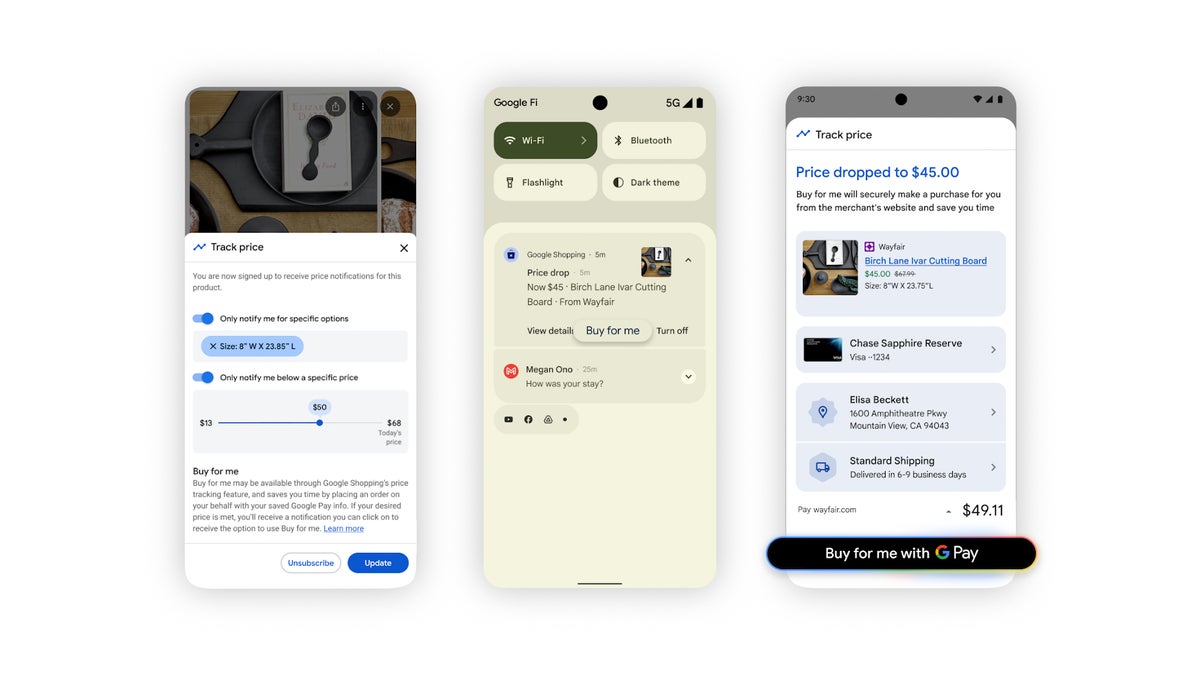
Google thinks this annual ritual is broken, and its answer is bold: turn Search into a full-blown AI shopping assistant that does the boring, time-consuming work for you.
With its latest Gemini-powered update, Google is pushing beyond simple links and basic product carousels. The company is rolling out a set of AI shopping features designed to handle everything from vague gift ideas to the annoying task of calling local stores. Instead of being just a place where you look up products, Search is being reshaped into a do-it-for-me tool that actually takes actions on your behalf.
From typing keywords to talking like you would to a friend
The first big change is how you actually shop in Search. In AI Mode, Google wants you to talk to it the way you would talk to a helpful friend. Instead of typing rigid queries like ‘men faux leather jacket black medium’, you can say something more natural like, ‘I need a stylish faux leather jacket that works for winter dinners and doesn’t look cheap.’ The AI then pulls in products, shoppable images and smart filters that match the vibe of what you described, not just the literal keywords.
For more complex categories like skincare, headphones or gaming laptops, the experience gets even more powerful. Google can generate side-by-side comparison tables that highlight details like ingredients, finish, noise cancellation or refresh rate. It is like having a mini buying guide built in for every category, helping you quickly understand what really matters instead of blindly scrolling through endless listings.
All of this is powered by Google’s Shopping Graph – a vast, constantly updated map of products, prices, reviews and store data – and plugged directly into the Gemini app as well as regular Search. That means you can start your research on your phone, continue it later on your laptop and still have the AI remember what you are looking for and what you care about.
Meet the new AI agents: from calling stores to buying for you
Beyond better search results, Google is introducing AI ‘agents’ that can actually perform tasks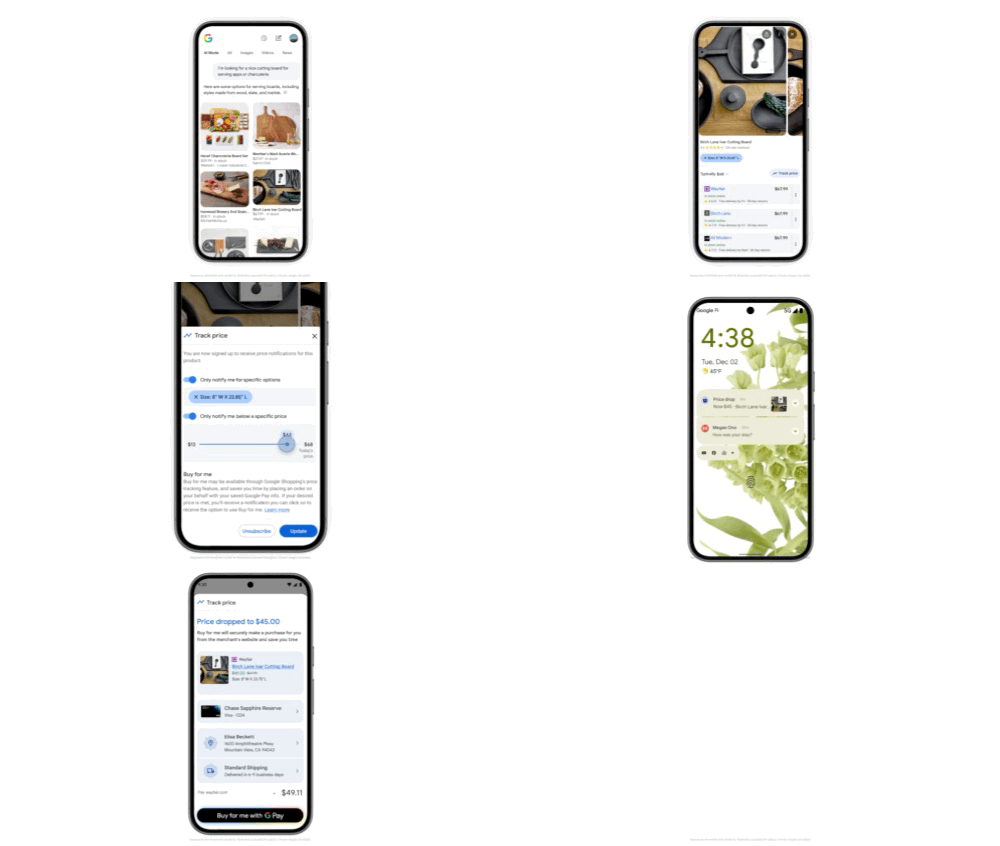
. Two of them stand out as game-changers for everyday shoppers: ‘Let Google Call’ and ‘agentic checkout’. Together, they represent a big shift from Google showing you options to Google acting on your decisions.
‘Let Google Call’ – outsourcing the awkward store call
If you have ever called a store to ask whether a specific product is in stock, you already know how painful it can be. You get transferred, put on hold, misheard or given a vague answer like ‘I think we have a few left’. Google’s ‘Let Google Call’ feature aims to eliminate that friction. When you find a product in Search and want it locally, Google can offer to contact nearby stores for you.
Behind the scenes, this uses the company’s Duplex technology, now upgraded with Gemini. Instead of you picking up the phone, the AI calls the store, asks clear questions about stock, size, price and current promotions, and then packages the answers back into a neat summary inside Search. It effectively bridges the gap between online discovery and offline availability – something Amazon and other e-commerce giants still struggle to replicate for local inventory.
For shoppers, this means you can stay in your browser while the AI deals with ringing phones, background noise and confused staff. For busy parents, last-minute gift buyers or anyone chasing down a sold-out toy, that alone might make the feature worth using.
‘Agentic checkout’ – when the AI finishes the purchase
The second big feature is what Google describes as agentic checkout. The idea is simple but powerful: instead of you constantly refreshing product pages for price drops, you tell Google what you want and what you are willing to pay. You can track a specific item, set a spending limit or target price, and let the system monitor it on your behalf.
Once the price hits your chosen threshold, the assistant can step in and actually complete the purchase on the merchant’s site using Google Pay. In other words, the AI does not just notify you that the deal is good – it can finish the checkout process for you. This is especially tempting for items that sell out quickly, like limited edition sneakers, popular video games or rare Lego sets, where a few hours of delay can mean missing out completely.
Of course, this raises trust questions. How comfortable are you really with an AI pulling out your digital wallet the moment a price drops? For big-ticket purchases like a sofa, laptop or TV, many people will probably want a final manual review. But for smaller, highly specific items that you have already researched and approved, auto-checkout could feel like a supercharged version of a price alert.
Google vs Amazon: the battle for the entire shopping journey
Underneath the friendly assistant branding, there is a much larger strategic move happening. For years, Amazon has tried to own the full shopping pipeline, from search to purchase to delivery, and its ‘Shop with Alexa’ experience makes it easy to reorder basics or repeat past purchases. But it has never truly excelled at open-ended discovery or nuanced, multi-step shopping decisions where you compare brands, read detailed information and check local availability.
Google is aiming to leapfrog that model by stitching together its strengths in Search, AI and local business data. The ‘Let Google Call’ feature taps into something Amazon cannot easily match: the ability to connect your online query to real-world stores that still operate with phones, shelves and human staff. Duplex and Gemini together turn what used to be your least favorite errand into an automated background task.
At the same time, agentic checkout and conversational AI Mode show that Google does not just want to send traffic to other sites – it wants to orchestrate the entire journey from inspiration to payment. If it succeeds, Google becomes less of a search box and more of a full-service shopping concierge that quietly executes your decisions while you move on with your day.
Useful upgrade or slightly terrifying future?
There is something undeniably convenient about handing off the grunt work to an AI. The idea that you can say, ‘Find me a cozy but minimal winter coat under this budget, make sure my size is in stock locally, and buy it if it goes on sale’ feels like science fiction turning into a browser feature. For shoppers who already live in their phones and rely on recommendation engines, this will slot neatly into existing habits.
Still, it is worth staying a bit skeptical. Agentic features depend heavily on details: did the AI pick the exact model you wanted, in the correct color and size? Did it factor in return policies and delivery times? How does it handle mistakes, and how transparent is the process if something goes wrong? Google will have to prove that the experience is not just smart in a demo but reliable in messy, real-world scenarios.
Where this update clearly shines right away is in reducing friction. Offloading phone calls to an AI agent, skipping hold music and avoiding vague answers from overworked staff is a very tangible quality-of-life upgrade. Even if you never let Google auto-buy anything, you may happily let it handle those awkward, time-consuming customer service interactions.
In the bigger picture, Google’s new AI shopping assistant marks a turning point: search engines are no longer just gateways to information, they are becoming active participants in your decisions. Whether you find that thrilling, unsettling or a bit of both, one thing is clear – holiday shopping will never be quite the same once an AI starts doing the legwork for you.
2 comments
ngl if Google wants to sit on hold with the store instead of me, they can have all my respect 😂
auto checkout sounds cool till the AI accidentally buys 5 jackets instead of 1 lol