Rumor Watch: GeForce RTX 5060 Ti 16GB Could Tighten in Stock as GDDR7 Costs Spike
A fresh round of supply chatter suggests the NVIDIA GeForce RTX 5060 Ti 16GB may become harder to find in the near term. The core claim: pricing pressure and limited availability for certain GDDR7 memory chips – paired with an already hot DRAM market – could constrain output for one of the most popular early GeForce RTX 50-series cards. The story began with a well-known leaker citing channel notes about rising costs for standard-density GDDR7 (the so-called 2 Gb class), alongside separate noise around tight supply for higher-density 3 Gb parts reportedly tied to Samsung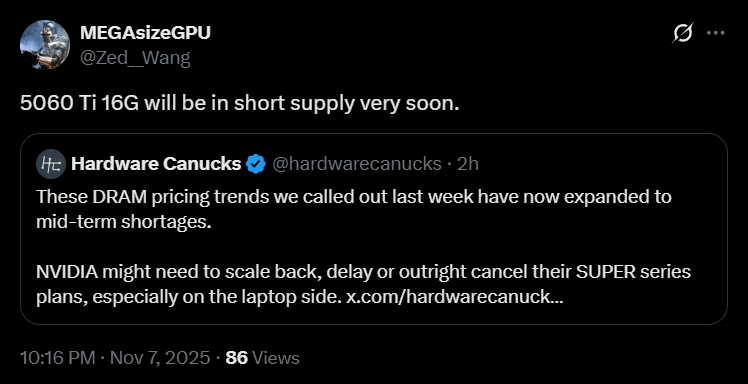
. None of this is official, but it fits the broader pattern we’ve seen this year: DRAM of almost every type is getting pricier, and shelves are emptier than they were a quarter ago.
Our Rumor Meter
- Source: 4/5 (known leaker with a track record, but not primary)
- Corroboration: 1/5 (few independent channel confirmations so far)
- Technical Fit: 3/5 (memory cost and density constraints can directly hit GPU output)
- Timeline: 4/5 (“days to weeks” squares with how fast memory contracts ripple into AIB shipments)
How we rate rumors: 0–20% Unlikely; 21–40% Questionable; 41–60% Plausible; 61–80% Probable; 81–100% Highly Likely.
Why memory sits at the center of this
Modern GPUs live and die by their VRAM supply. Board partners budget around the bill of materials, and memory is one of the largest line items. When the market bids up DRAM – whether that’s mainstream DDR4/DDR5 for PCs or graphics-grade GDDR6/GDDR7 – the pressure shows up quickly in retail pricing and in how many boards partners are willing (or able) to produce. The current chatter specifically references standard-density GDDR7 used on RTX 50-series models. Even if the precise figures differ by vendor, a shortage or price jump on those chips is exactly the kind of friction that can narrow weekly shipments.
Note on units: memory vendors often quote densities in gigabits (Gb) per device, while end users think in gigabytes (GB) for total VRAM. The upshot is simple: fewer or pricier chips per board means either a more expensive card or fewer cards built.
Why single out the RTX 5060 Ti 16GB?
Two threads are converging. First, channel talk earlier this season indicated that RTX 5060 Ti 8GB allocations were being throttled after a lukewarm reception, with partners nudged toward the 16GB configuration. Second, that 16GB SKU has reportedly been selling at or around MSRP and has emerged as one of the most popular early Blackwell-era mainstream cards. Pair sustained demand with volatile memory inputs and you get the recipe for intermittent gaps on store shelves – especially in the “days to weeks” window distributors plan around.
One caveat: if the same GDDR7 density is shared across multiple RTX 50 models, it’s reasonable to ask why only the 5060 Ti 16GB would suffer. The honest answer is that we don’t have a clean, public bill of materials for every board, and not every AIB juggles the same supplier mix. It’s common for a single SKU to feel a pinch first simply because its demand curve is steeper or its memory sourcing is less diversified.
State of the DRAM market
Beyond GPUs, DRAM pricing has been on a tear. Consumer DDR4/DDR5 kits have nearly doubled in some regions compared with last year’s lows, and graphics memory hasn’t been immune. When one segment tightens (say, mobile or server), wafer allocation and contract pricing cascade into others. That’s why we’re seeing synchronized pressure: DDR4, DDR5, GDDR6, and GDDR7 all drifting up, with occasional spot shortages on specific densities.
What it means if you’re shopping
- Short window risk: If you were already eyeing the RTX 5060 Ti 16GB, watch pricing and local stock. Small jumps or “out of stock” tags may come and go quickly.
- 8GB reality check: Many budget gamers argue the 8GB tier needs heavy discounting in 2025 titles. If 8GB inventory is indeed limited, steep promos could appear – but availability may be patchy.
- Alternatives: If shelves tighten, look at adjacent RTX 50-series options or hold for confirmed restocks – just remember the same GDDR7 dynamics could spill over.
- Don’t panic-buy: This is a plausible shortage, not a confirmed long drought. Prices can whipsaw as batches land.
What to watch next
- Retailer inventories: sudden gaps followed by small restock waves are a telltale sign.
- AIB guidance: quiet changes to bundle offers or regional allocations often precede formal statements.
- Memory vendor notes: any public hints about GDDR7 output, especially on standard densities, will be meaningful.
Bottom line: the thesis that RTX 5060 Ti 16GB supply could tighten in the near term is coherent with how rising GDDR7 costs propagate through the channel. We’re marking it as 60% Plausible until we see stronger corroboration from distributors or memory vendors. If you’re set on this card, keep an eye on stock bots and local retailers – but don’t let rumor alone rush your upgrade. The DRAM cycle giveth and taketh; today’s squeeze can quickly become tomorrow’s promo when supply catches up.
1 comment
Prices already creeping up in my local shops. One week it’s MSRP, next week +5–7%. Not panic but yeah, I notice