Samsung’s next ultra-premium flagship may finally close the most frustrating security gap between Android and iPhone. We still haven’t seen the Galaxy S26 family on stage, yet credible chatter is already circling the Galaxy S27 Ultra. The headline rumor: Samsung is preparing a new face authentication system called Polar ID that aims to deliver payment-grade reliability without the bulky hardware that has locked Apple’s Face ID into place since 2017. 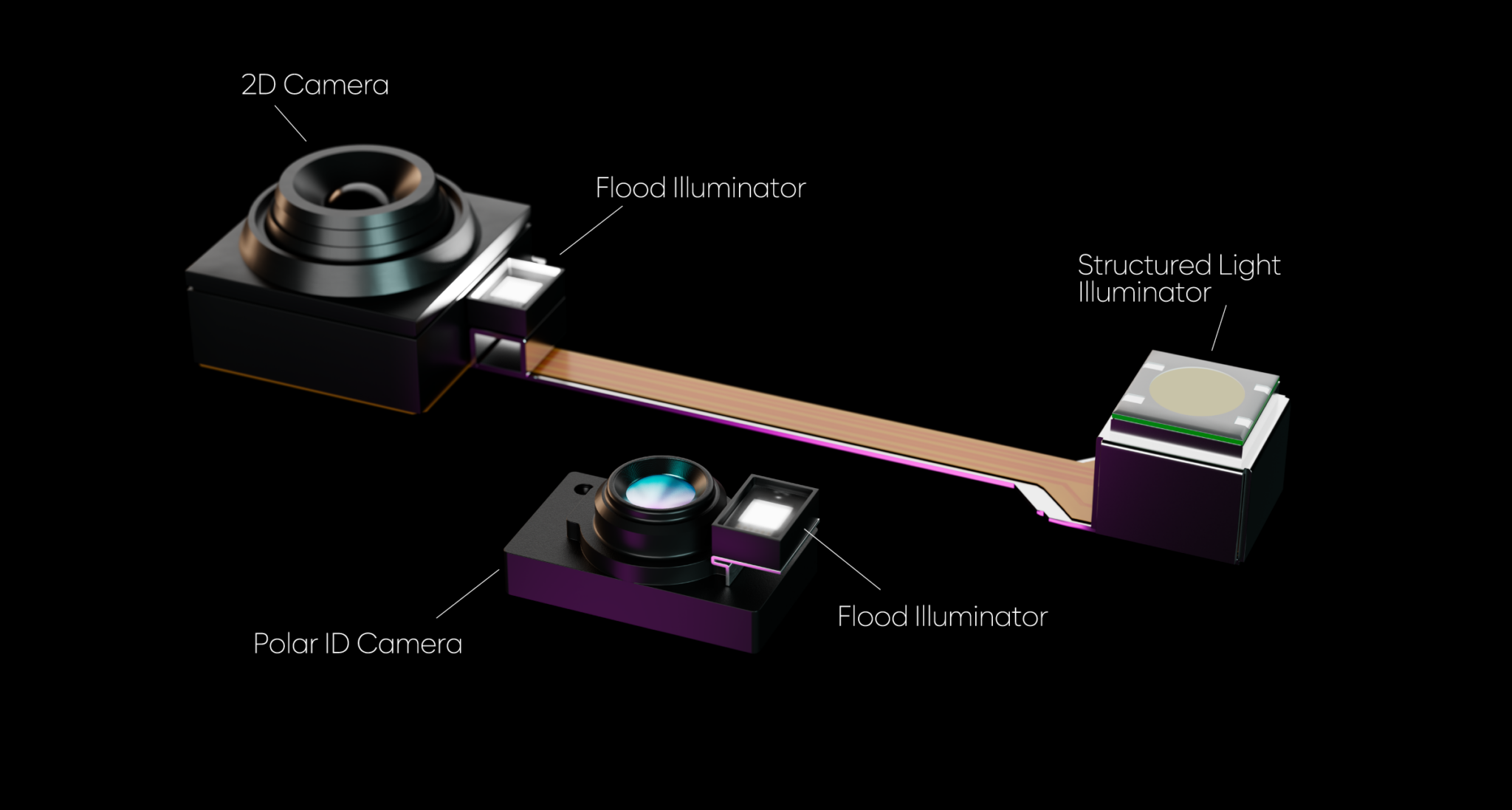
If true, the S27 Ultra could mark the first time an Android phone matches Face ID’s mix of speed, consistency, and deep OS integration.
What the firmware leak suggests
According to an early test firmware referenced by well-known leaker @SPYGO19726, the Galaxy S27 Ultra includes a biometric security framework entry for "Polar ID v1.0", described in internal logs as a "polarized-light authentication system." The same breadcrumbs reportedly tie the module to Samsung’s ISOCELL Vizion front sensor and a new secure enclave routine. Just as intriguing is the claim of roughly 180 ms unlock latency, which – if it holds in shipping software – would feel instantaneous in daily use. The important promise, though, is stronger spoof resistance than today’s camera-only face unlock on most Android phones.
Polar ID 101: the metasurface twist
Polar ID isn’t a marketing sticker invented overnight. It’s a technology platform from Boston-based Metalenz built on optical metasurfaces – engineered, wafer-scale structures that precisely shape light in ways traditional glass lenses can’t. Unlike simple RGB or IR cameras that only measure brightness and color, Polar ID captures the full polarization state of light reflected from your skin. Human tissue scatters and polarizes light in patterns that are extremely hard to fake, giving the system a rich biometric signature that goes beyond a flat selfie or even many 3D masks. Metalenz has long argued that this approach can deliver high security without the power-hungry, space-eating dot projectors used in structured-light systems.
Why Android needs this
Apple’s Face ID set the benchmark by combining a flood illuminator, IR camera, and dot projector to build a 3D depth map of your face. The trade-off: hardware volume. That’s part of why the iPhone line still carries the Dynamic Island area to house the module. Android manufacturers mostly chose the opposite path – thin bezels and tiny punch holes – then leaned on plain camera-based face unlock, which is fast but easier to spoof. As a result, many Android phones – including recent Galaxy flagships – limit what you can authorize with your face. Payments, password managers, enterprise logins, and other sensitive actions often fall back to fingerprints or PINs. A Polar ID-class system could finally give Android users a secure, reliable, and widely accepted face credential.
How Polar ID compares to Face ID
Face ID’s strength comes from active depth sensing: it projects a pattern of IR dots, reads the deformation, and constructs a 3D mesh. Polar ID, by contrast, passively analyzes how polarized light interacts with your skin’s microstructures and subsurface layers. Both aim to detect "liveness" and defeat masks, but they do so differently. The polarized-light route may fit into thinner bezels or small punch holes because metasurface optics can be compact and manufactured at scale on semiconductor tools. If Samsung executes this well, we could see a cleaner front design than phones that rely on large 3D modules – while still meeting the bar for payments and passkeys.
Speed, security, and the secure enclave
The rumored ~180 ms unlock time would be competitive with Face ID and faster than many in-display fingerprints. More meaningful is the security chain. The firmware references to a new secure enclave routine imply on-device processing and storage of your face template, isolated from the main OS – a must for banking, enterprise, and FIDO2 compliance. Metalenz has also claimed that sophisticated 3D masks and premium spoof tools are detected as non-human thanks to the unique polarization signature of living skin. If that translates to certification from payment networks and platform security teams, Polar ID could unlock the same high-trust actions long reserved for Apple users.
Silicon partners and the camera sensor choice
There’s industry context that makes this rumor feel plausible. Metalenz publicly announced a collaboration with Qualcomm at the 2023 Snapdragon Summit, then followed in early 2024 by naming Samsung’s ISOCELL Vizion 931 as a reference sensor for Polar ID. That trio – Metalenz for optics, Qualcomm for the ISP and security stack, and Samsung for image sensors – forms a credible end-to-end path to commercialization. If the S27 Ultra adopts Polar ID, expect deep hooks into Android’s BiometricPrompt API, strong-box backed keys, and seamless support for passkeys in Chrome and major password managers.
Real-world behavior to watch
Great lab demos don’t always survive the chaos of pockets and sidewalks. The S27 Ultra’s Polar ID will need to prove it works at odd angles, in dim bars, under bright backlight, and through common eyewear. Polarization sensing can be robust in varying light, but sunglasses – especially polarized lenses – may challenge any optical system. Battery impact will matter too; if Polar ID runs a low-power pre-auth pipeline to wake the device as you raise it, Samsung must balance responsiveness with endurance. And for privacy, users will want clarity that face templates never leave the secure enclave and are never synced to the cloud.
Rumor history and launch timing
Polar ID’s debut has been rumored before. Early whispers pointed to the Galaxy S25 Ultra, followed by counter-rumors moving the tech to the S26 Ultra. Neither materialized. The latest firmware hints suggest the S27 Ultra – likely arriving in early 2027 – may be the true launch window. Firmware can include experimental flags that never ship, so treat any single leak with caution. Still, the confluence of supplier partnerships, sensor choices, and now software hooks makes this the most convincing moment yet.
What it could change for users
If Polar ID lands as advertised, Samsung may finally offer an all-conditions face unlock that developers and banks trust by default. That means instant logins to finance apps, frictionless autofill, stronger enterprise device policies, and cleaner 2FA flows using passkeys. It could also free Samsung’s industrial designers from carving out large islands or notches, keeping the display nearly uninterrupted without sacrificing security. Just as importantly, it would push the entire Android ecosystem forward; once one big player ships payment-grade face auth in volume, others will follow.
The bottom line
Apple’s lead in face authentication has lasted almost a decade. With Polar ID, the Galaxy S27 Ultra has a realistic shot at erasing it – delivering a compact, fast, and hard-to-spoof system grounded in polarized-light sensing and modern secure enclaves. If Samsung nails the execution, 2027 could be the year Android finally meets Face ID on equal terms, not with me-too camera tricks, but with a different, arguably more elegant, optical approach.
3 comments
Leakers said S25/S26 before… I’ll believe it when Samsung shows it
Finally Samsung catching up to Face ID without a huge notch. About time
As long as it doesn’t murder battery, this is a win