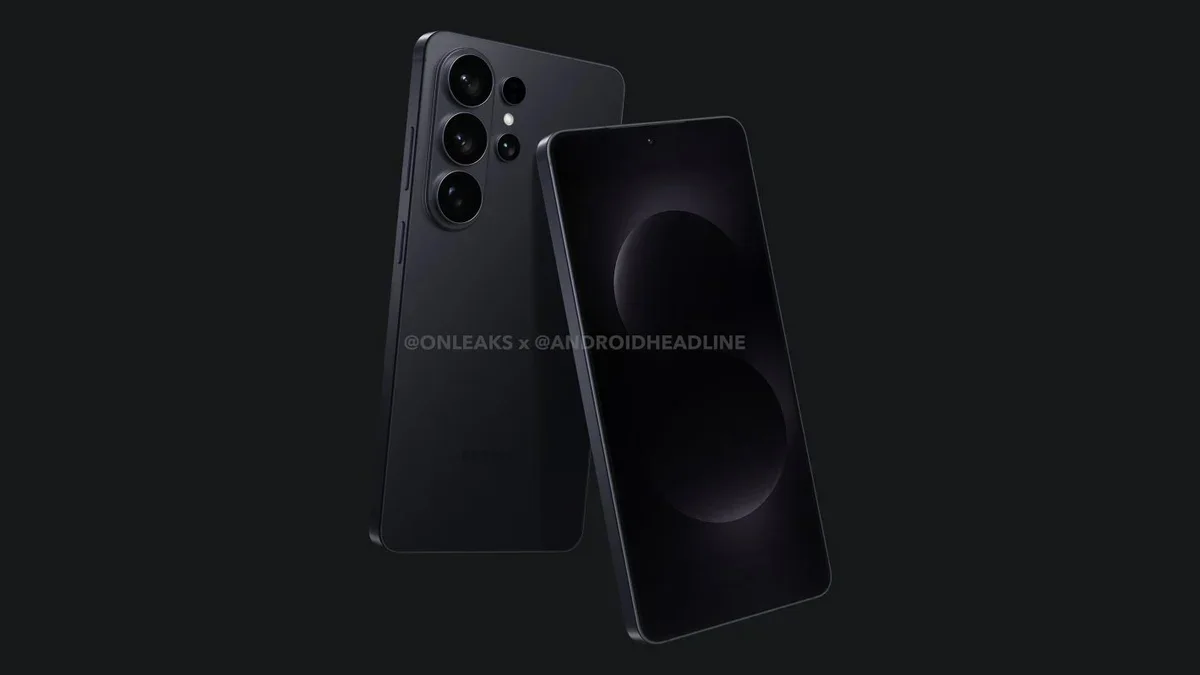
Galaxy S26 Ultra hype check: when an upgrade starts to look like a rerun
Every year, the same ritual repeats itself. Samsung pulls back the curtain on its next Galaxy S Ultra, and a big part of the Android crowd leans in, ready to see where the mainstream flagship bar will be set. Yes, there are wild concepts like the new Galaxy Z TriFold with its tablet-sized canvas and eye-watering price, and yes, there are plenty of aggressive Chinese flagships pushing crazy specs. But for many people who want something familiar, polished, and widely supported, it is the Galaxy S Ultra line that ends up in their pocket.
This is why the Galaxy S26 Ultra matters so much. It is not just another premium phone; it is the default upgrade path for a lot of loyal buyers who have been rocking an S22 Ultra, S23 Ultra, or the crowd-favorite Galaxy S25 Ultra. Yet the latest leaks suggest that Samsung may have quietly walked back two of the very few tangible upgrades that early rumors promised: a slightly bigger battery and a more unleashed display. That leaves the S26 Ultra feeling, at least on paper, more like an S25 Ultra "S" edition than a bold new chapter.
The question is not whether the Galaxy S26 Ultra will be good. Of course it will: this is Samsung, this is the Ultra, and the basics will be nailed. The real question is whether it will be good enough for people to trade in an already excellent Galaxy S25 Ultra for a phone that looks and behaves suspiciously similar while asking for flagship money in 2026.
What a true flagship is supposed to feel like
Ask anyone why they pay top dollar for a flagship and you will hear the same things. A true flagship does not have to scream with RGB lights and wild designs; you can recognize it even with your screen off. The build is dense, solid, and carefully sculpted. The frame feels expensive, the glass does not creak, the buttons are reassuring. You pick it up and your hand tells you this is not a budget compromise.
Fire up the display and that feeling is supposed to intensify. A flagship screen is big, bright, and smooth, with near-instant touch response and a refresh rate that makes scrolling feel liquid. You swipe between apps and nothing stutters; games load fast and keep their frame rates; the speakers are loud enough that you do not immediately reach for earbuds. The camera system delivers not just raw megapixels but reliable results in terrible lighting, fast focusing, and telephoto shots that cheap phones simply cannot mimic.
Most importantly, when you pay for an Ultra, you expect more than just "good enough for today". The experience should age gracefully. Three or four years down the line, the phone should still feel competent, still hold a day of battery life, and still get up-to-date software. This is the unspoken promise baked into the Galaxy S series. That is why it stings a bit when year after year you see some core specs stagnate while cheaper rivals experiment with bigger batteries, faster charging, and bolder tuning.
Battery is the new pain point: seven years at 5,000 mAh
Nothing captures this frustration better than the Galaxy S26 Ultra battery story. Early whispers suggested that, after six consecutive years of 5,000 mAh cells from the Galaxy S20 Ultra all the way to the Galaxy S25 Ultra, Samsung would finally nudge the capacity up to 5,200 mAh. Nobody expected a miracle from an extra 200 mAh, but combined with a more efficient chipset and improved display materials, it sounded like a respectable, if modest, step forward in real-world endurance.
Now, one of the most reliable Samsung leakers on X, Ice Universe, has poured cold water on that hope. According to the latest detailed spec comparison between Galaxy S26 Ultra and Galaxy S25 Ultra, the new model is once again listed with a 5,000 mAh cell. That would make it the seventh Ultra in a row stuck at the same headline capacity, at a time when some mid-range phones are pushing into almost comical territory. Just look at rumors around devices like Honor's upcoming Power series flirting with 10,000 mAh batteries; that is literally twice the capacity on paper.
Of course, capacity alone is not the whole story. No one really wants a 260 g brick of a phone just to hit three days of screen time, and it is absolutely true that efficiency can offset pure milliamp hours. If the rumored Exynos 2600 on 2 nm or the Snapdragon 8 Elite Gen 5 inside the Galaxy S26 Ultra really deliver major gains in power efficiency, the S26 Ultra could still outlast the S25 Ultra in daily use without inflating the battery size. There is a strong argument that battery capacity should not be treated as a macho spec-flex, but as one part of a bigger design puzzle.
Still, perception matters. For many people, seeing "5,000 mAh" on the spec sheet for the seventh year running while cheaper phones claim two or even three-day stamina with larger cells leaves a bad taste. It reinforces the idea that flagships are playing it safe while mid-rangers actually experiment. Samsung is trying to ease the blow with a boost from 45W to 60W wired charging on the Galaxy S26 Ultra, which should cut down charging times. That is nice, and overdue, but it does not quite replace the excitement of a clear, measurable leap in endurance.
How efficiency could quietly save the S26 Ultra
There is an optimistic reading of this situation. If Samsung really leans into efficiency, the combination of a 5,000 mAh cell, a 3 nm or 2 nm-class chipset, and aggressively tuned display behavior could turn into a quiet win. Instead of flexing with giant battery numbers, the S26 Ultra could simply last longer in the real world than the S25 Ultra did, especially for people who do not game all day or run maximum brightness outdoors nonstop.
The problem for enthusiasts, though, is that this kind of progress is invisible on a spec sheet. Many tech-savvy users have learned to skip generations unless there is a clear tangible jump: better zoom, much longer battery life, obviously brighter and smoother display, or a camera upgrade they can see in the first sample gallery. A phone that claims the same battery capacity, the same advertised brightness, and similar camera resolutions does not scream "you need to upgrade", even if under the hood it is sipping less power.
M14 OLED: a powerful panel held back by caution
The display story follows a similar pattern. On paper, the Galaxy S26 Ultra sticks to a familiar formula: a 6.9 inch OLED with 1–120 Hz adaptive refresh rate and up to 2,600 nits of peak brightness. That is perfectly respectable and already plenty bright for most use cases. The twist this year is the M14 luminous material used in the panel, something Samsung fans have been hearing about for months. M14 is supposed to enable both higher peak brightness and better efficiency, and other manufacturers are reportedly already pushing it to its limits.
According to Ice Universe, though, Samsung may not be unleashing the full potential of this panel in its own flagship. Devices like the Chinese iQOO 15 are rumored to be driving the same M14 screen to higher brightness, wider color gamut, and advanced high-frequency dimming modes. By contrast, the Galaxy S26 Ultra could be deliberately tuned more conservatively: capped at 2,600 nits, locked to 8-bit color output in most scenarios, and relying on relatively low frequency PWM dimming that is kinder to battery life than to display nerd bragging rights.
In other words, M14 on the S26 Ultra might be used more as a power-saving tool than as a way to deliver a new class of jaw-dropping visuals. Samsung seems to be betting that most buyers will prefer squeezing a few more hours of battery life out of the day over chasing 3,000+ nit peaks and ultra-wide color spaces that only trained eyes can appreciate. It is a pragmatic choice, but for enthusiasts who know what the panel is capable of, it feels like a missed opportunity.
There is an ironic twist here too. Some readers openly admit they now prefer to avoid Chinese smartphone brands because of ongoing geopolitical tensions, and they look to Samsung as a safer, more neutral choice for their phones, laptops, and even cars. Yet if Chinese brands are the ones fully exploiting cutting-edge panels like M14 while Samsung holds back in the name of efficiency, the buyers who avoid those brands on principle will be the ones living with the more constrained version of that same hardware.
Design, performance, and cameras: lots of deja vu
Beyond battery and display, the rest of the rumored Galaxy S26 Ultra package looks firmly evolutionary. The phone is said to be about 0.3 mm thinner and roughly 4 g lighter than the Galaxy S25 Ultra, bringing it to around 214 g. On paper, that is an impressive feat of engineering; shaving off millimeters and grams from a device packed with cameras, S Pen, and a big battery is no small task. In everyday use, though, very few people will pick up an S26 Ultra and think, 'Wow, this is dramatically thinner than last year's model.'
On the performance front, the move to the Snapdragon 8 Elite Gen 5 is predictably framed as a big deal. Benchmarks will no doubt show large jumps in synthetic scores compared to the previous Snapdragon 8 Elite and even the older Snapdragon 8 Gen 3. In reality, all of these chips are already far beyond what normal apps and games can fully exploit. You will not suddenly notice Instagram loading twice as fast or your messaging apps feeling radically snappier. Where the new silicon could matter more is in efficiency and sustained performance under load, especially if Samsung keeps thermal throttling under tighter control.
Memory is another mixed bag. The Galaxy S26 Ultra is expected to top out at 16 GB of RAM again, but with faster LPDDR5X modules that can improve responsiveness under heavy multitasking. That sounds great, until you remember that RAM prices have surged and manufacturers are not shy about passing those costs along. Do not be surprised if the S26 Ultra family debuts with higher launch prices or if the best RAM and storage tiers are pushed further into ultra-premium territory.
The camera system, meanwhile, looks like a classic 'if it isn't broken' story. Samsung is rumored to stick with the ISOCELL HP2 main sensor and essentially copy the megapixel layout of the Galaxy S25 Ultra for the rest of the lenses. The controversial part is that the 3x telephoto may move to a physically smaller sensor, which could impact low-light and detail performance at that focal length. Samsung will undoubtedly lean on processing to compensate, but it still feels like a side-grade rather than a statement upgrade.
The subtle wins: software, privacy, and everyday trust
It is not all doom and gloom. There are still areas where the Galaxy S26 Ultra can carve out a quiet advantage over its rivals, even if those gains do not jump off the spec sheet. Samsung's software support commitments remain among the best in the Android world, and the One UI experience, while heavy, is familiar and powerful. For many buyers, that sense of continuity is worth more than chasing every spec spike from year to year.
One rumored feature that could genuinely feel fresh is the new display privacy trick. Early reports suggest that Samsung is experimenting with ways to make it harder for people sitting next to you to peek at your screen, possibly by subtly altering viewing angles or brightness for off-axis viewers. In an era of constant travel, remote work, and open office spaces, a built-in privacy layer at the display level could end up being more valuable than yet another bump in peak brightness.
Then there is the simple fact that, for people avoiding Chinese brands because of political concerns or data security fears, the Galaxy S26 Ultra might be one of the few high-end options that still feels 'safe'. Whether those fears are justified or not is a separate debate, but perception drives buying decisions. Samsung benefits from being a known quantity with mature ecosystems, accessories, and repair networks in most major markets.
Why some fans are already eyeing the Galaxy S27 Ultra
Even with those strengths, the mood in enthusiast circles is shifting. When leaks around the Galaxy S26 Ultra read like a list of subtle tweaks rather than bold improvements, you start hearing the same refrain: 'I will just wait for the S27 Ultra.' Some even joke they might hold off until an S28 Ultra finally gives them a reason to move on from their trusted S23 or S25.
Upgrade fatigue is real. Phones have become so good that upgrading every year rarely makes sense, and more and more users keep their devices for three, four, or even five years. In that environment, each new Ultra has to justify its existence not just technically, but psychologically. It has to create that little itch that makes you feel like you are missing out by staying put. A safe flagship with a slightly faster chip, the same main camera, the same advertised brightness, and the same battery capacity struggles to generate that itch, no matter how rational its efficiency-driven design may be.
Should you upgrade from a Galaxy S25 Ultra?
So where does this leave potential buyers? If you are still on an older device like the Galaxy S21 Ultra or S22 Ultra, the Galaxy S26 Ultra will almost certainly feel like a major leap in every area: display smoothness, camera consistency, battery life, charging speed, and software features. For you, the question is less about S25 vs S26 and more about whether it is finally time to move up to a modern Ultra with long-term support.
If you already own a Galaxy S25 Ultra, things get trickier. Based on what we know so far, the S26 Ultra looks like a refinement rather than a reinvention: a more efficient chip, somewhat faster charging, a slightly lighter body, and a display panel with more headroom that Samsung may not fully tap. It could well be the better phone overall, but the gains might be subtle enough that most S25 Ultra owners will feel comfortable sitting this generation out and waiting to see whether the Galaxy S27 Ultra finally delivers a more substantial battery or camera breakthrough.
A safe flagship in a risky year
In the end, the Galaxy S26 Ultra story is not about failure; it is about caution. Samsung appears to be playing defense rather than offense: preserving battery life instead of chasing giant cells, tuning the M14 panel for efficiency instead of bragging rights, reusing a proven camera stack, and focusing on small design and performance refinements instead of headline-grabbing shifts. For mainstream buyers who simply want a polished, reliable premium Android phone that will last for years, that approach may be perfectly fine.
For the passionate core of Samsung fans, though, it feels like the S26 Ultra has quietly lost two of its most exciting upgrades before it even launched: the move beyond 5,000 mAh and a truly liberated M14 display. Unless the final device surprises everyone with real-world stamina and clever software tricks, the Galaxy S26 Ultra risks being remembered less as a must-have flagship and more as a very competent, slightly tweaked Galaxy S25 Ultra with a new name and a new chip. And that is a dangerous place to be for a phone that is supposed to lead the Android world, not just keep up.
2 comments
Your point of view caught my eye and was very interesting. Thanks. I have a question for you.
my plan is simple: skip S26U, see what happens with S27U or even S28U. if samsung finally gives bigger battery or real camera jump, then i will trade my S23U. until then not falling for tiny upgrades every year