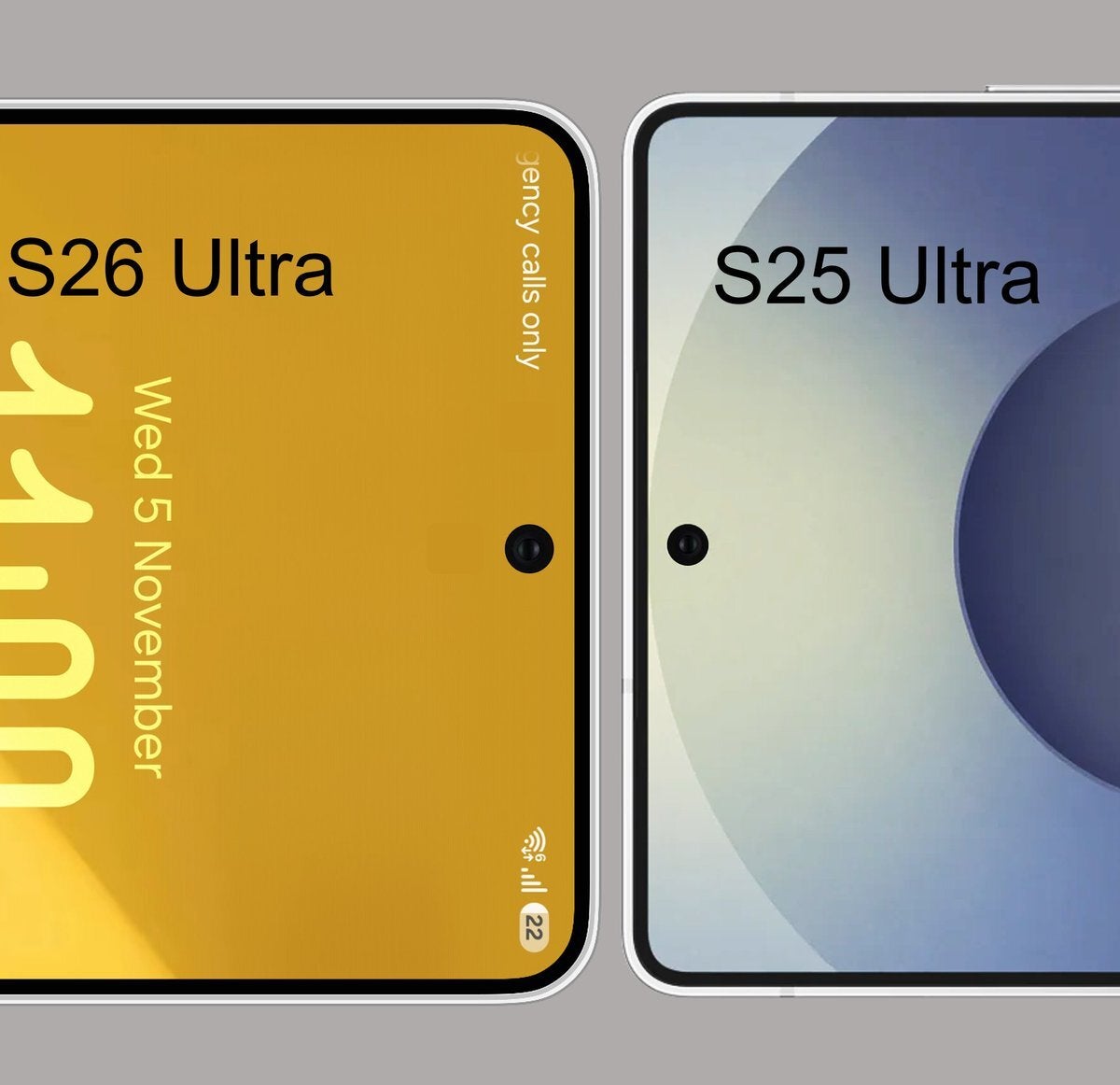
Galaxy S26 Ultra’s selfie bet: a bigger punch hole for wider shots
Samsung’s next flagship, the Galaxy S26 Ultra, is shaping up to be a story of small hardware tweaks with a very specific goal: better selfies. According to reliable chatter in the supply chain and noted leaker Ice Universe, Samsung is planning a larger front-camera opening – around 4 mm in diameter – paired with a lens that captures a noticeably wider field of view. For day-to-day users, that means more of your friends, background, and context in each shot, even if it comes with a tiny ding to the screen’s minimalist aesthetic.
What’s actually changing up front
The headline adjustment is the switch from an approximately 80-degree FOV on the Galaxy S25 Ultra’s selfie camera to an 85-degree FOV on the S26 Ultra. On paper, five degrees sounds minor; in practice, it’s the difference between cutting off shoulders in a tight indoor scene and comfortably fitting a couple more people into the frame. You’ll also be able to hold the phone slightly closer while keeping your face proportionally natural, reducing that stretched-edge look common on narrower lenses.
There’s no new sensor rumored here: the S26 Ultra is still expected to use a 12MP front camera. The upgrade, then, centers on optics and tuning rather than raw pixel count. A wider lens generally needs more careful correction to avoid distortion and edge softness, which is where Samsung’s modern image pipeline will be asked to earn its keep.
About that bigger hole in the display
Yes, a 4 mm punch hole will be the largest on an Ultra model to date, and some will call it a display downgrade. But the tradeoff is pragmatic. A wider-angle lens often requires a physically larger opening to minimize vignetting and keep the aperture efficient. If you’re the type who notices cutouts for the first few hours and then stops seeing them, you’ll likely appreciate the everyday benefit – cleaner group selfies and roomier framing – far more than the minor hit to visual symmetry.
Rear cameras: steady as she goes
Elsewhere, Samsung is reportedly keeping the rear camera lineup mostly intact, including the 3x telephoto. The 200MP main may see a subtle hardware refinement – either a slightly larger sensor or a faster lens – but the bigger leap is expected on the software side. With One UI 8.5, Samsung is likely to push new computational photography algorithms for noise handling, HDR consistency, night detail, and motion capture. It’s a familiar playbook: squeeze more performance from proven sensors through smarter processing and more robust scene detection.
Context: how Apple is thinking about selfies
Samsung’s approach contrasts with Apple’s recent move on the iPhone 17 line, where an 18MP Center Stage camera and a square sensor enable clever reframing for portrait or landscape shooting without rotating the device. Apple’s Dynamic Island is still physically larger than Samsung’s punch holes, so while the S26 Ultra’s opening grows, it remains less visually dominant than Apple’s notch-island combo. The philosophical difference is telling: Apple is leaning into sensor shape and auto-reframing; Samsung is opting for a wider lens and algorithmic polish while preserving a minimal cutout.
Why this tradeoff could be worth it
Selfies are among the most frequent photos many people take. A broader FOV makes spontaneous photos more forgiving: indoor dinner tables, cramped elevators, festival crowds, and scenic overlooks all benefit. It also reduces the reliance on a selfie stick and cuts down on the arm-stretch gymnastics just to include that last friend in the corner.
- Pros: wider composition, easier group shots, less cropping, more environmental context.
- Cons: slightly larger punch hole, potential edge distortion that must be corrected in software.
If Samsung’s processing keeps faces natural and straight lines clean, most users will accept the bigger hole as a fair price for consistently better results.
Big picture for the S26 Ultra
The broader narrative is that Samsung isn’t ripping up the camera playbook this cycle. Instead, it’s doubling down on iterative quality-of-life wins: a front camera that sees more of the world, a main sensor pipeline that squeezes more from 200MP files, and computational refinements under One UI 8.5. In a year where headline-grabbing specs may be scarce, smarter tuning often matters most.
Bottom line
If the rumors hold, the Galaxy S26 Ultra will trade a touch of screen purity for a front camera that simply works better in the real world. For people who live in their selfies, video calls, and social stories, that’s a sensible upgrade – one you’ll notice every day, long after the punch hole fades into the background.