You want the best phone, even if you hesitate to admit it. Most people who spend time reading about smartphones, specs and camera comparisons are not dreaming about a basic budget handset. They are picturing a shiny flagship from Apple, Samsung or Google, with a screen that looks better than their TV and a camera that makes every night photo look like a mini photoshoot. 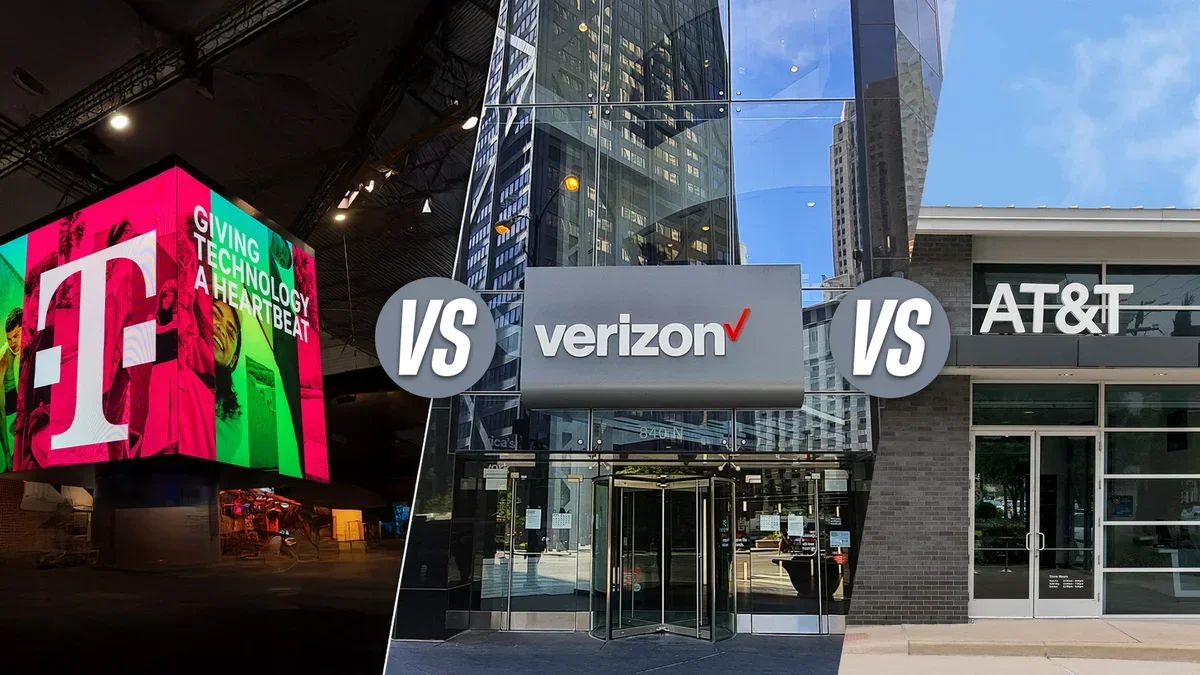
The problem is obvious: those phones cost serious money, and there are many more pleasant ways to spend a four figure sum than on a slab of glass and silicon.
That is precisely where the big carriers step in. Verizon, AT&T and T Mobile have perfected a magical phrase that seems to dissolve all that sticker shock at once: free phone, on us. Suddenly the price tag vanishes, the salesperson smiles, and you are told you can walk out with the latest flagship today without paying anything upfront. For someone who is tired of stuttery maps, blurry photos and laggy apps, that offer feels almost irresistible.
But as with most things in telecom land, the magic trick only works because you are not looking too closely at the other hand. National surveys have shown that tens of millions of Americans have signed up for these so called free phone deals without fully understanding how they work or what they truly cost over time. Monthly bill credits, promo periods, qualifying plans and early termination rules are wrapped in dense legal language that conveniently hides what really matters: the total amount of money you are going to hand over before the contract ends.
How free carrier phone deals actually work
On paper the structure looks harmless. The carrier lists the retail price of the phone, usually something in the 800 to 1300 dollar range for a modern flagship. Instead of asking you to pay that at once, they split it into 24 or 36 monthly installments. Then they promise to apply monthly bill credits in the same amount, so that you effectively pay zero for the device. As long as you keep your side of the bargain, each installment is canceled out by a matching credit and the phone feels genuinely free.
The catch is hidden inside that tiny phrase as long as. To receive those credits, you typically must stay on a specific, usually higher tier unlimited plan for the entire term. Downgrade to a cheaper plan, miss a few payments, cancel service or port your number early and those nice credits can vanish instantly. The remaining balance on the phone becomes due, often at the worst possible moment, and what looked like generosity turns into an expensive bill. Many people never realize the risk because the salesperson focuses on the low (or zero) upfront cost rather than the full cost of ownership.
Who really benefits from these offers
In the short term, these promotions can absolutely help certain customers. If you are cash strapped but firmly decided to stay with a particular carrier for years anyway, a device promotion can smooth out the expense and let you avoid a big lump sum. People who genuinely use a lot of data every month, stream video away from Wi Fi, play online games and tether laptops might already need a premium unlimited plan. For them, attaching a free phone promo to a plan they would pay for regardless can be a rational move.
New customers switching carriers are another big target. A free phone is the carrot meant to pull you away from a competitor. Tech fans who insist on having the newest flagship every cycle often see these promos as a way to upgrade now and worry about the math later. Older users, especially those over 50, can also be drawn in by the idea of getting something valuable at no upfront cost, even if they mostly make calls, send texts and occasionally browse the web. They might end up paying for unlimited data they barely touch, simply because it was part of the bundle.
The uncomfortable truth is that the carriers, not the customers, usually walk away with the bigger win. For many people, especially those who could happily live on a cheaper plan or a slightly older device, the free phone structure becomes a quiet drain on their budget. The combination of a pricey plan and a long commitment means they often pay more over two or three years than they would have paid by buying a phone outright and pairing it with a leaner plan or a low cost MVNO.
Why carriers push free phones so hard
From the carrier perspective, the strategy makes perfect sense. Telecom markets are mature, which means almost everyone already has a phone and a plan. Average revenue per user, or ARPU, is growing slowly, often under two percent in saturated markets. Carriers have poured billions into 5G networks, spectrum licenses and infrastructure. They cannot easily double your bill overnight, so instead they dress up stability and lock in as generosity.
By dangling a free flagship, Verizon, AT&T and T Mobile are not giving away hundreds of dollars out of kindness. They are trading a device subsidy for something far more valuable: your predictable monthly revenue over a long period. Once you accept the deal, you are less likely to switch carriers, more likely to stay on a high tier plan and more willing to overlook gradual price tweaks or added fees. The phone is bait; the plan is the hook.
The psychology behind crossing that line
Humans are famously bad at comparing immediate pleasure to long term cost. Walking out of a store today with a top tier phone in your pocket feels like a clear win. Doing a spreadsheet to calculate what that choice will cost across 36 months does not. We are wired to respond strongly to the instant hit of reward, especially when the pain of paying is spread out into small, monthly amounts rather than one visible slab of cash.
Carriers understand this better than anyone. They design offers that exploit our bias toward short term gratification and our discomfort with complexity. Contracts are full of exceptions, side conditions and footnotes that make comparison harder than it needs to be. When plans are complex, many people simply default to whatever the salesperson recommends, especially if it comes with a shiny gadget attached. It is not that consumers are careless; they are overwhelmed.
Do the math before you sign
Before you cross your own financial Rubicon and accept that free device, it is worth slowing down and doing simple arithmetic. Start with your real data usage. If your monthly consumption rarely exceeds five to ten gigabytes, an expensive unlimited plan is probably overkill. Think about how often you are on Wi Fi at home, at work or in public spaces. Many users pay for a firehose of mobile data that they hardly use because their phones spend most of their lives connected to routers.
Then compare two scenarios. In the first, you accept the free phone offer tied to a premium unlimited plan. Maybe the plan costs ninety dollars a month and the carrier wipes out the monthly phone installment with credits, so the device seems free. Over thirty six months, you quietly hand over more than three thousand dollars in service fees. In the second scenario, you buy the same phone outright for, say, one thousand dollars and pair it with a forty dollar plan that comfortably covers your usage. Over the same thirty six months, your combined cost is roughly two thousand four hundred and forty dollars. In this simplified example, the so called free phone actually costs you hundreds of dollars more over time.
Audit, compare, review
There are a few practical steps every consumer should take before committing. First, audit your data usage for several months. Your carrier account usually shows this history. If you are consistently well below the generous caps of mid range plans, there is no need to jump straight to the most expensive unlimited tier just to qualify for a promo. Second, calculate the total cost of ownership: add up every monthly fee, promotion, discount and potential penalty across the full contract term. This is the number that matters, not the upfront price.
Third, compare offers across carriers and even beyond them. Smaller providers and MVNOs can sometimes pair reasonable data plans with financing options or discounts on unlocked phones. The big three are counting on the fact that you will not bother to look elsewhere or that you assume everyone is charging roughly the same. Finally, get into the habit of reviewing your plan at least once a year. Your habits change, you move, you switch jobs, you start working from home. A plan that made sense two years ago may be wasteful today.
The long mortgage analogy and why it matters
Recently, discussions about ultra long mortgages, including forty or fifty year terms, have sparked controversy. The idea is familiar: stretch the payment period, lower the monthly bill, and suddenly an expensive house looks affordable. Yet when you add up the numbers over decades, the total interest paid balloons dramatically. You may end up spending far more in the long run just to enjoy the comfort of a slightly smaller payment each month.
Carrier phone deals are not mortgages, and nobody is tying your smartphone to a half century contract. Most promos run for two or three years. Still, the underlying logic is similar. Spreading a cost over time and hiding it inside a complex bill makes it easier to ignore. You focus on whether the monthly amount feels tolerable, not on the total figure. That is how a phone that should have been a thousand dollar decision quietly becomes a several thousand dollar relationship.
When a carrier deal can actually make sense
It would be unfair to say that every free phone promotion is a trap. There are situations where they are genuinely useful tools. If you already know you will stay with a particular carrier for the full term, you truly need a premium unlimited plan and you are disciplined enough to track bills and changes, a device promo can be a logical way to manage cash flow. Trade in programs that give substantial credit for your old phone, on top of the promo, can further tilt the math in your favor.
Family plans and business accounts can sometimes extract better value because multiple lines share large buckets of data or get stacked discounts. In those cases, the incremental cost of one more subsidized device might be modest compared to the benefit. The key is that the plan has to fit your real world needs, not the other way around. If you have to bend your behavior to justify the plan, something is off.
Staying in control of your upgrade path
Ultimately, the smartest way to handle upgrades is to treat them as deliberate financial decisions, not impulse purchases triggered by a catchy ad. Ask yourself whether your current phone truly limits you or whether you are simply craving something new. Consider alternatives like buying a previous generation flagship at a discount, picking up a gently used phone or exploring mid range devices that deliver more than enough performance for everyday tasks.
Being proactive, asking uncomfortable questions about the fine print and revisiting your plan regularly are the best defenses against turning a free phone into an expensive mistake. Carriers will keep marketing generosity; that is their job. Your job is to protect your own budget. And if you happen to have a fabulously wealthy relative who enjoys gifting you unlocked flagships with no strings attached, then congratulations: you have discovered the only truly free phone deal on the market.
1 comment
My mom got sucked into one of these deals, uses like 3GB a month and pays for mega unlimited, rip wallet