Apple FaceTime and Snap Snapchat are the latest Western apps to disappear from Russia, as the Kremlin continues to tighten its grip on the digital lives of more than one hundred million people. 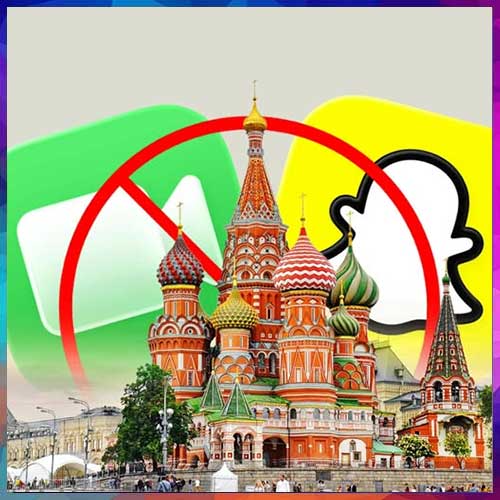
According to Russian regulators, the video calling service and the social platform were allegedly used to organise terrorist attacks, recruit extremists and enable online fraud. On paper that sounds like a security measure. In practice, it extends a long running campaign to wall off the Russian internet from the rest of the world.
The decision does not come out of nowhere. Since the full scale invasion of Ukraine in 2022, Russian authorities have steadily moved against global social networks. Meta services such as Facebook and Instagram have been labelled extremist and blocked, X formerly Twitter is heavily restricted, and TikTok operates in a limited, heavily moderated form. Now, by targeting communication tools like FaceTime and Snapchat rather than only public feeds, regulators are cutting into the everyday ways families, friends and colleagues keep in touch across borders.
Officials frame every new block in similar language: platforms are supposedly being used by terrorists, extremists or foreign agents. The same argument was previously used against the game platform Roblox, accused by censors of promoting violence and so called LGBT propaganda harmful to children. The wording changes slightly each time, but the pattern is consistent. Any service that is hard to control, encrypts conversations by default or simply refuses to hand over enough data risks being portrayed as a national security threat and pushed out of the market.
For people inside Russia, the result is a kind of slow motion construction of a digital iron curtain. WhatsApp has already been warned it could face a full ban, and users report that popular VPN protocols are being quietly throttled or blocked as soon as they become widespread. At the same time, domestic alternatives are promoted, including home grown messengers widely believed to be closely aligned with security services. Citizens who still want an open internet learn to hop between VPN apps and new protocols, but the effort and risk grow with each new blocklist.
Outside Russia, some shrug and say that a ban on FaceTime or Snapchat is just a local problem. Yet more than one hundred million people live under these rules today, and the precedent matters. If a government can claim that any encrypted or foreign owned app is a tool for terrorism, then almost any platform can be switched off overnight whenever it becomes politically inconvenient. The move against FaceTime and Snapchat is therefore about much more than two familiar icons disappearing from Russian homescreens. It is a warning sign of how easily entire societies can be disconnected from global conversation with a few regulatory strokes.
4 comments
Thanks for sharing. I read many of your blog posts, cool, your blog is very good.
Can you be more specific about the content of your article? After reading it, I still have some doubts. Hope you can help me.
If you install the wrong app here you half expect two friendly FSB dudes to knock and offer you a free one way ticket to Siberia 😂
I don’t think the title of your article matches the content lol. Just kidding, mainly because I had some doubts after reading the article.