Call Elon Musk a visionary or a showman and you’ll find plenty of people nodding either way. What’s hard to deny is his knack for dragging future-tech debates into the mainstream. In a recent conversation, Musk framed a stark pivot for the device we still call a smartphone: forget apps and operating systems; think of a pocketable endpoint whose only job is to sense, render, listen, and speak while AI agents do the real work. In his telling, your handset would be an edge node for AI inference – packed with radios, microphones, cameras, and silicon for on-device models – constantly syncing with more capable models in the cloud.
Translate that into everyday use and the idea becomes surprisingly concrete. 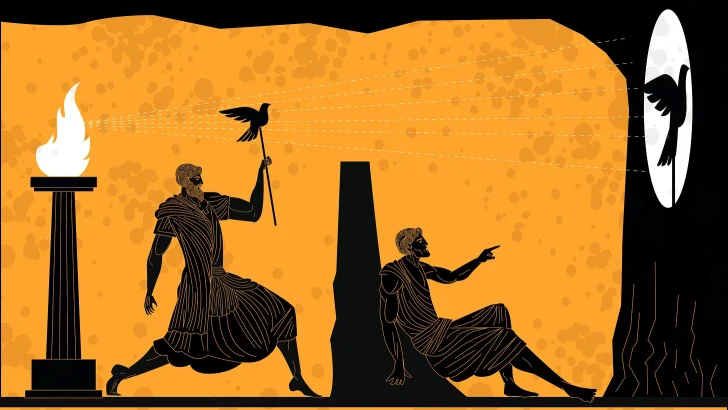
Instead of launching a maps app, you’d ask your personal agent to get you home fast; it would generate the interface you need on the fly, render turn-by-turn visuals, and negotiate with traffic feeds, transit systems, and other agents. Want a quick face-to-face? Two agents would coordinate identity, safety checks, and bandwidth, then synthesize an ultra-realistic video presence – even if the other person’s camera is off. The device is no longer a catalog of apps; it’s a canvas for whatever your moment requires, with the UI and utility composed in seconds.
From Apps to Agents
The technical shift here is from static binaries to dynamic behaviors. Apps today bundle logic, assets, and permissions. An agentic system would instead generate task-specific flows: interfaces that appear when needed, permissions negotiated in real time, and capabilities composed from small, verifiable skills. On-device models (for latency, privacy, and resilience) would handle wake words, summarization, and vision; heavier reasoning and large context windows would spill to the cloud. If it works, our routine taps and swipes collapse into short conversations and quick confirmations.
Developers in my inbox have been blunt: none of this sounds magical so much as inevitable. As models keep getting better at tool use and UI synthesis, the boundary between the operating system and the application layer blurs. The OS becomes an orchestrator and security broker; everything else is a temporary, generated experience. In that world, the familiar app grid feels like a relic of the home-screen era.
Plato’s Cave, Reloaded
To explain the cultural risk, many reach for Plato’s allegory of the cave: prisoners, chained since birth, mistake shadows for reality. Whether you picture a Greek cave or murals like Lascaux in France is beside the point; the metaphor warns that mediated perception can seduce us into accepting a curated illusion. An AI-first interface raises the stakes. If our calls, meetings, entertainment, even our memories are increasingly rendered by generative systems, the line between signal and synthesis gets faint. Deep-realistic avatars and voices will be convenient – and sometimes necessary – but they will also demand new habits of verification and a healthier skepticism about what we “see.”
Musk’s Neuralink looms in the background here. Miniaturize the interface enough and you can imagine bypassing screens altogether, with neural read/write linking our thoughts to agents. That’s exhilarating to some and terrifying to others. A brain-adjacent UI would erase friction but also blur consent, logging, and control. Who audits the prompts in your head? What happens when a glitch feels like a memory?
The Rumored “Apple Killer” and Screenless Directions
Interestingly, whispers about a Jony Ive–designed, OpenAI-backed device point in a similar direction: a compact, possibly screenless object rich in sensors, capable of running tailored models locally, and leaning on the cloud for heavy lifting. Think of it as a context-aware node that understands your environment through microphones and cameras, responds conversationally, and meshes with other agents rather than with human-launched apps. Even if the rumors land short, the design brief tracks the same trajectory: minimal glass, maximal understanding.
Practical Friction: Power, Signal, and Trust
Grand visions meet stubborn physics. On-device inference guzzles power and generates heat; radios hate metal and small volumes; privacy rules don’t like black-box decisions. Readers also raised a crucial operational question: what happens when the network drops? A future-proof design likely needs a failsafe compute path – a low-power coprocessor or dedicated mode that keeps essential functions (calls, emergency location, offline nav, basic media) alive without the cloud. If the phone becomes mostly a mouth and eyes for the AI, it still needs a brain stem for when everything else goes dark.
Trust is the other brick wall. Generative media will flood feeds with plausible fakes. Identity and provenance will need to be woven into the stack: cryptographic signing of live captures, attestations of model involvement, watermarking that survives compression. Agents must be legible – able to explain what tools they invoked, what data they touched, and why a decision was made. Otherwise we’re not just back in the cave; we’re decorating it.
Why Developers Aren’t Shocked
To many engineers, Musk’s framing reads less like revelation and more like a roadmap already in beta. Agent frameworks are learning to chain tools, reason about user intent, and spin up ephemeral UIs. Browser automation is inching toward “do the task, not the steps.” The leap is cultural and commercial, not purely technical: app stores, ad models, and OS lock-ins will resist any shift that dissolves the very concept of an install. Expect hybrids first – agents living inside apps – before the home screen finally gives way.
Guardrails Before Neural Lanes
- Interoperability: Your agent should talk to mine without a dozen incompatible identity stacks.
- Resilience: Offline and degraded-network modes can’t be an afterthought; emergency functions must work without the cloud.
- Auditability: Users and regulators need readable logs of model actions, tool calls, and data flows.
- Personal boundaries: Clear, revocable permissions; fast “kill switches” for microphones, cameras, and models.
- Education: Media literacy for an era when “video proof” may no longer prove very much.
So, Are We Leaving the Cave – or Decorating It?
Musk’s pitch cuts both ways. The optimistic read: agents collapse friction, give us superpowers, and free us from a graveyard of icons. The pessimistic read: we drift into a world where the most persuasive render wins, and reality loses bargaining power. Both can be true at once. The next interface wave will feel less like a new app and more like a new habit: speaking goals, not clicking menus; auditing outcomes, not micromanaging steps; insisting on paper trails for synthetic experiences. If we get the design, policy, and ergonomics right, maybe we finally step out of the cave into brighter light – eyes watering, yes, but wiser about the shadows that follow us.
1 comment
lol the cave analogy – pretty sure those pics are from Lascaux in France, not ancient Greece. point still stands tho: shadows ≠ reality