China has unveiled a major breakthrough in wireless technology that could define the future of 6G. Researchers at Peking University have developed the world’s first “all-frequency” chip, a tiny component capable of operating across the entire wireless spectrum from 0.5 GHz to 115 GHz. 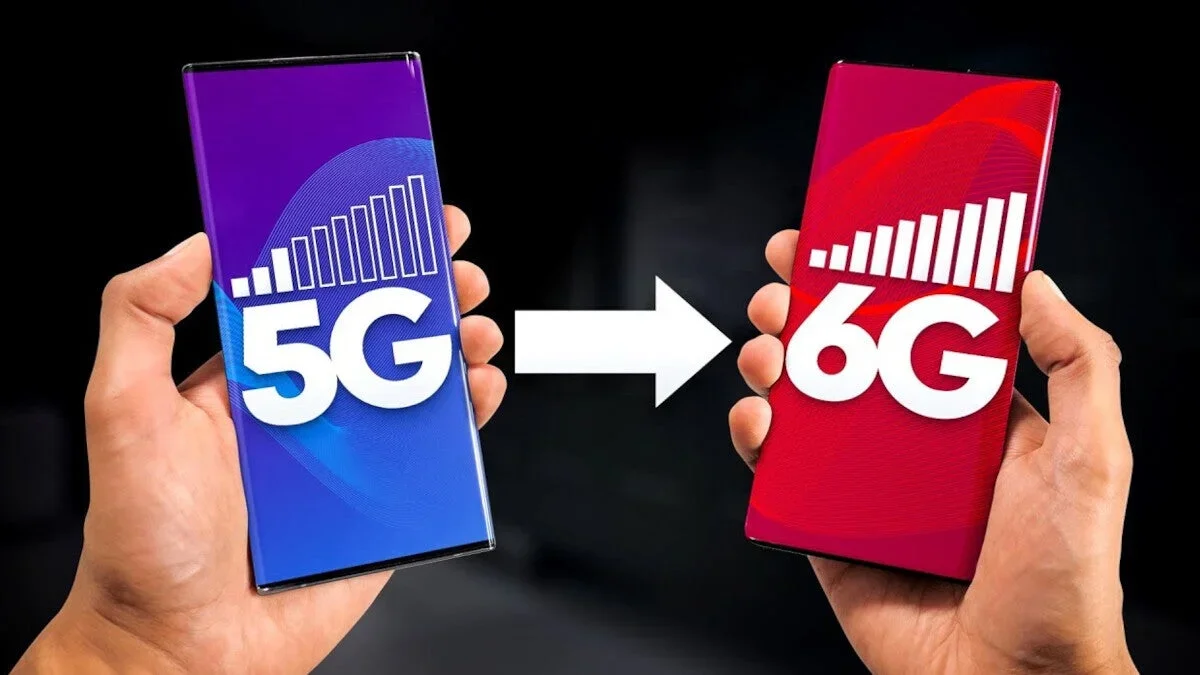
This innovation could transform mobile connectivity, delivering speeds over 100Gbps and making today’s 5G networks – where peak speeds hover around 1Gbps – look outdated.
The chip, no larger than a thumbnail, integrates what once required nine separate radio systems. Traditionally, smartphones rely on different hardware modules for low-band, mid-band, and high-band signals. This new component replaces that complexity, dynamically adjusting across frequency ranges while maintaining energy efficiency and stable performance. Shu Haowen, one of the lead authors from Peking University, highlighted that this advance strikes “an unprecedented balance between size, power consumption, and performance.”
The potential is staggering: downloading a 50GB 8K movie could take only a few seconds. Applications such as holographic remote surgery, virtual reality, and ultra-low latency operations would also benefit from the chip’s ability to handle high-frequency millimeter-wave and terahertz bands. Its adaptive design allows devices to seamlessly switch from low-band coverage in rural areas to ultra-fast mmWave connections in dense urban centers without interruption.
In real-world tests, the chip delivered single-channel data speeds exceeding 100Gbps – nearly 100 times faster than the average peak U.S. 5G experience. It also demonstrated rapid frequency switching, completing transitions in under 180 microseconds, hundreds of times faster than a blink. The chip can even detect and reroute to a clear channel when interference occurs, ensuring consistent performance.
Professor Wang Xingjun of Peking University emphasized that the rise in connected devices creates an urgent need for 6G innovation. By unifying frequency ranges and providing ultra-low latency, the chip could become the foundation for next-generation communications. Future development includes integrating this technology into plug-and-play modules for smartphones, drones, base stations, and even AI-driven smart networks.
While industry analysts do not expect widespread 6G adoption in the U.S. before 2030, global research and standardization efforts are already underway. Organizations such as the International Telecommunication Union (ITU-R) and 3GPP are shaping the framework for IMT-2030, the official name for 6G. With China’s latest achievement, the race toward 6G has clearly accelerated – and the possibilities for what comes next are enormous.
1 comment
lol US still struggling with 5G and china already on 6G 😅