In a year dominated by big-budget sequels and familiar franchises, few stories have felt as refreshing as the unlikely awards run of Clair Obscur: Expedition 33. Among the names on Geoff Keighley’s The Game Awards ballot is British actor Charlie Cox, recognised for bringing life to Gustave, a quick-witted engineer with a mechanical arm who travels the doomed world of Expedition 33. For many fans, the nomination seemed like another triumph in Cox’s career after Stardust, Boardwalk Empire, The Theory of Everything, Daredevil, Kin and Treason. Yet the actor himself has been eager to redirect the spotlight, arguing that the person who truly deserves the applause is the man inside the motion-capture suit.
Clair Obscur: Expedition 33 marks Cox’s first real step into interactive storytelling. 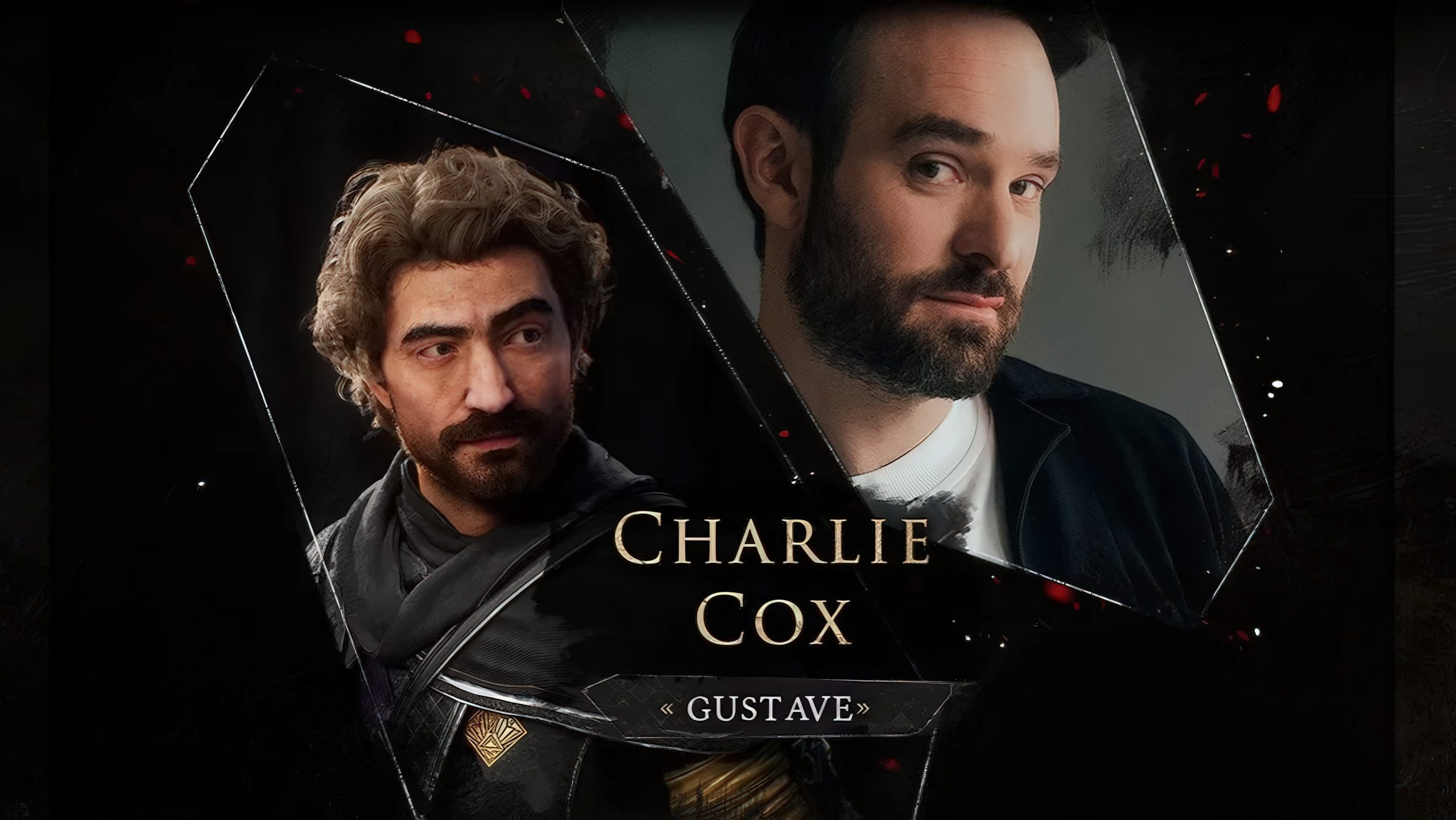
Unlike traditional voiceover gigs, the game relies heavily on performance capture, blending physical movement, facial animation and dialogue to build characters that feel grounded in a painterly, surreal universe. Gustave is written as the pragmatic backbone of the expedition, an engineer who solves problems with a mixture of tired sarcasm and genuine courage, his mechanical arm a visual reminder of the world’s brutal history. It is a role that, on paper, seems tailor-made for a charismatic screen veteran. However, Cox has freely admitted that his own contribution to Gustave was far smaller than audiences might assume when they see his name in the credits.
During a recent panel at LaConve 64 in Monterrey, captured on video by Mexican outlet Posta Entretenimiento, Cox spoke candidly about the nomination and about the collaborative nature of modern game performance. He highlighted French actor Maxence Cazorla, who handled almost all of the motion-capture work for Gustave. According to Cox, the physicality, posture and moment-to-moment reactions that players respond to when they control the character come overwhelmingly from Cazorla’s body language, not from his own time behind a microphone. Any recognition he receives, Cox stressed, ought to be shared with or even redirected to the performer who spent hours in a motion-capture studio turning digital rigging into a believable human presence.
This is not the first time Cox has tried to play down the praise. He has been very open about the fact that he is not a gamer and has not actually played Clair Obscur: Expedition 33. His involvement, he explained in earlier interviews, amounted to roughly four hours in a recording booth after his agent arranged the job. Compared with the years of iteration that define large game productions, that brief session felt almost insignificant to him. Hearing fans and critics celebrate his performance left him joking that he felt like a ‘total fraud’, accepting compliments for work that, in his mind, belongs just as much to the unseen performers, animators and designers who surrounded him.
His comments underline a reality that players often know in theory but rarely see acknowledged so bluntly by stars: video-game characters are built by teams. A single moment on screen might combine a motion-capture pass, a separate facial performance, rerecorded dialogue, hand-tuned animation and careful direction from writing and design leads. In that complex pipeline, names can easily be flattened into a single credit line. By highlighting Cazorla’s contribution so forcefully, Cox is effectively using his celebrity to point back at an often invisible craft, reminding audiences that the emotional weight of Gustave’s journey is the result of layered, painstaking work rather than a lone, heroic turn from a famous actor.
The humility comes at a time when Clair Obscur: Expedition 33 is rapidly becoming one of the defining critical darlings of the year. The game has already swept the Golden Joystick Awards with seven trophies, including acting prizes for Jennifer English as Maelle and Ben Starr as Verso, further cementing the title’s reputation for standout performances. Now, with The Game Awards and the rest of awards season underway, industry observers expect the surreal RPG to collect even more accolades across categories. The recognition places Expedition 33 alongside the small but growing wave of narrative-driven games whose casts are discussed in the same breath as prestige television and cinema.
Success on that scale inevitably fuels talk of cross-media expansion, and Clair Obscur is no exception. A film adaptation has already been announced, and fans are busy imagining how its painterly apocalypse might translate to the big screen. Naturally, the question of who will play Gustave has become a favourite topic for speculation. Some viewers hope Cox will return, this time in front of the camera rather than behind a microphone. Others point to actors such as Glen Powell, who has publicly praised the game and could emerge as a strong contender if the producers decide to separate the film’s cast from the game’s voice and motion-capture ensemble.
Whatever happens with the movie, Cox’s stance on credit offers a revealing snapshot of how the relationship between film actors and game development is evolving. For years, studios have recruited recognisable names to anchor marketing campaigns, sometimes overshadowing the people who shaped the project from the beginning. By consistently framing Gustave as a shared creation and praising Maxence Cazorla by name, Cox pushes back against that dynamic. His comments resonate not only with Expedition 33’s growing fanbase but also with performers and developers across the industry who understand how much artistry goes into a single digital character. In the middle of a crowded awards season, that kind of humility may be as memorable as any trophy.