Call of Duty: Black Ops 7 has landed in Europe with a thud rather than the usual fireworks, and that alone is historic for a series that used to treat November like its private holiday. Early data from European retailers and digital storefronts shows opening week sales down around 63% compared with Battlefield 6’s launch, and well over 50% lower than last year’s Black Ops 6. 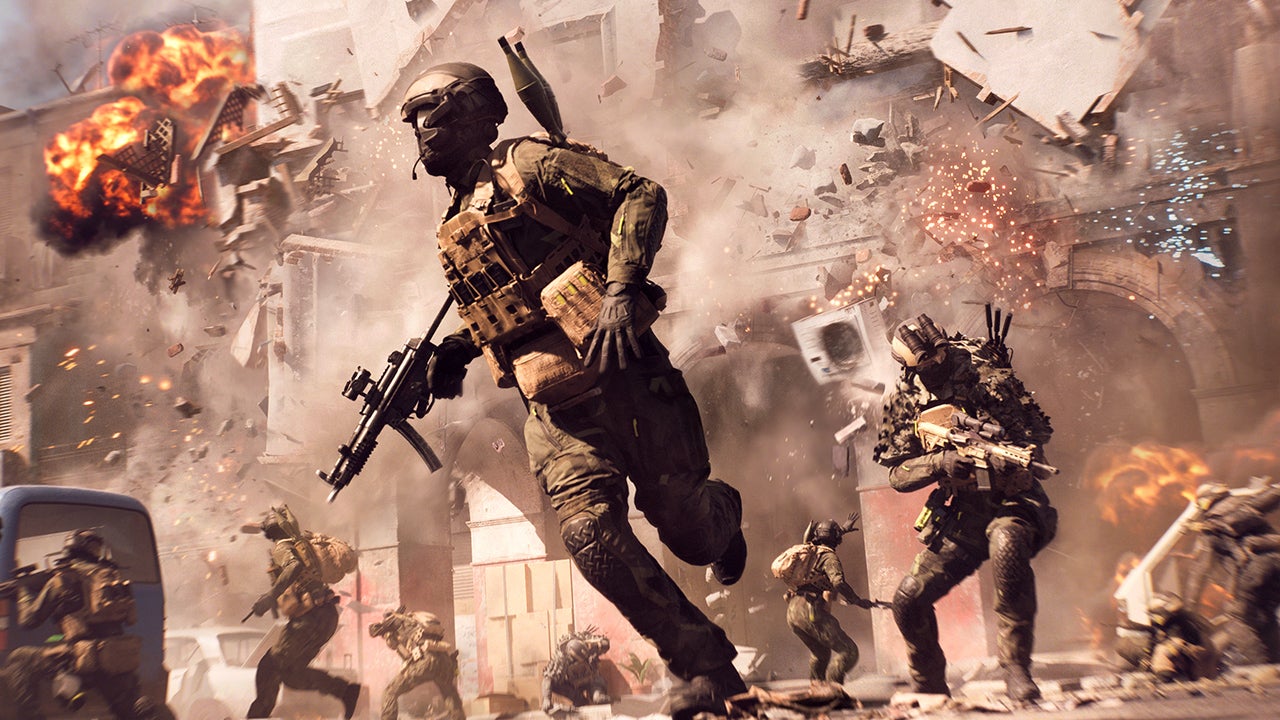
Some analysts even peg the drop versus its predecessor at closer to 60%. For almost any other series that would sound like a death sentence. For Call of Duty, it is something more subtle but just as important: proof that the auto-pilot era of the franchise might finally be over.
On the other side of the genre, Battlefield 6 is enjoying the kind of launch Call of Duty usually claims for itself. EA’s shooter has delivered the biggest opening in Battlefield history, reportedly selling more than 7 million copies in just three days and instantly resetting expectations for the rivalry. Adding to the pressure, Embark Studios’ extraction hit Arc Raiders has quietly become a breakout success of its own, surpassing 4 million copies sold since its late-October 2025 release and hitting over 700,000 concurrent players across platforms. Even more telling, Arc Raiders’ Steam concurrents are trending upward, hinting that strong word of mouth is still driving new players in while Black Ops 7 is already fighting to keep attention.
How bad are the numbers really?
Before we declare Black Ops 7 a disaster, it is worth stressing that Call of Duty plays in a weight class of its own. A launch that analysts call ‘terrible’ for CoD could still mean it ends the year as one of the best-selling games on the planet. The brand, the marketing machine, and the built-in multiplayer habits of millions of players give it a gigantic cushion. But the trend line matters. When a new Black Ops title sells dramatically fewer copies than both a direct competitor and the previous entry, that is not noise; it is a signal that more people than usual decided to sit this one out.
What makes the story even stranger is the silence from Microsoft and Activision. Battlefield 6’s record-breaking opening was trumpeted loudly. By contrast, Black Ops 7 has received a generic ‘thank you for the great response’ message, but no celebratory player counts, no triumphant engagement charts, and no sales milestone press releases. Publishers love to brag when the numbers are great. When they stay quiet after a flagship launch, it is usually because the numbers are harder to spin.
Game Pass muddies the picture – but not enough to save it
Of course, traditional sales charts no longer tell the whole story for Call of Duty. Black Ops 7 is now a first-party Microsoft release and launched day-and-date on Game Pass. Every player who installed it via subscription disappears from boxed-copy and à-la-carte digital sales data. On top of that, Call of Duty’s audience is scattered across PlayStation and Xbox stores, Battle.net, Steam, and physical retail, making any single chart feel incomplete at best.
That said, Game Pass cannot be the magic excuse for everything. Black Ops 6 launched into the same subscription ecosystem and still pushed the Call of Duty hub on Steam to a peak of roughly 315,000 concurrent players at launch. Black Ops 7, by contrast, barely squeaked past the 100,000 mark on Valve’s platform. If Game Pass were secretly turning BO7 into a monster hit, you would expect Microsoft to parade subscriber spikes and record engagement during investor calls. Instead, there has been no meaningful Game Pass victory lap tied specifically to Black Ops 7, which suggests that while the subscription distorts old metrics, it is not hiding some secret mega-success here.
Some players have gone further and argued that the subscription model is now part of the problem. Why buy a new CoD at full price if you assume it will be wrapped into a monthly fee anyway? And if Game Pass prices are climbing while the game itself feels smaller or more recycled, the value proposition starts to look less like a bonus and more like a tax on long-time fans.
Players are tired of paying more for what feels like less
Dip into comment threads, Discords, and subreddits and a clear theme emerges: frustration. A chunk of the community describes buying Black Ops 7 at launch as something only a ‘fool’ would do, pointing to the always-online requirement as a hard deal-breaker. If the servers cough or your connection drops, you are out of luck, even in modes that used to work perfectly well offline. For players who grew up popping in a disc to unwind on their own terms, this persistent connection requirement feels like a step too far.
Price doesn’t help. Between a premium box price, seasonal battle passes, and cosmetic bundles that would look more at home in Fortnite than a military shooter, many fans feel like they are paying more and more just to keep up with a game that changes less and less. The most common comparison is that Black Ops 7 feels like a souped-up expansion pack for Black Ops 6 rather than a genuinely new entry. The campaign has been widely panned as thin, poorly written, and forgettable. On the multiplayer side, new weapons and perks rarely change how people actually play; the meta still favours hyper-fast time-to-kill, aggressive movement, and instant-delete sniper rifles that behave more like laser cannons than heavy weapons.
One self-described slightly-above-average player summed it up as ‘mindless fun’ that is best consumed in short bursts. In open matchmaking they described getting deleted within seconds of spawning, match after match, with kill/death ratios over 1.0 feeling like a minor miracle. Others complain that cross-play and input-agnostic matchmaking mash keyboard-and-mouse users together with controller players even when cross-play is supposedly off, leading to lobbies that feel more like esports trials than casual games. When a new entry in a blockbuster series routinely leaves mid-skill players feeling outgunned and unwelcome, engagement inevitably suffers.
Battlefield 6 and Arc Raiders stole the spotlight
Black Ops 7 is not floundering in a vacuum. Battlefield 6 arrived first and immediately reframed the conversation around big-budget shooters. After the chaotic launch of Battlefield 2042, fans were braced for disappointment, but DICE’s latest effort landed as a confident return to form: large, readable maps, a heavier focus on teamwork, and a tone that embraces the grounded military fantasy that many players feel Call of Duty has drifted away from in favour of neon skins and pop-culture crossovers.
Arc Raiders hit from a different angle. It is not trying to be a traditional military shooter at all, but its stylish sci-fi extraction loop feels fresh in a market crowded with battle royales and derivative PvP modes. For a lot of shooter fans, the one-two punch of Battlefield 6 as the ‘serious’ option and Arc Raiders as the experimental side dish has already filled the time CoD used to own by default. Some long-time Call of Duty players admit they simply jumped to Battlefield, parked themselves in Arc Raiders when they wanted something different, and never saw a reason to buy BO7 or to keep paying for Game Pass after the latest price hike.
That does not mean everyone has abandoned CoD. Some players say they are actually enjoying Black Ops 7 more than expected, rotating between BF6 and BO7 depending on mood. They treat Call of Duty as fast, arcade-style chaos and Battlefield as the slower, more tactical alternative. But even that more positive perspective underlines a crucial shift: Call of Duty is no longer the default purchase. It is just one option in a crowded rotation.
A franchise in need of a breather and a new identity
Underneath all the charts and platform drama sits a bigger question: what is Call of Duty supposed to be in 2025 and beyond? The series has reinvented itself before, but the cadence has been relentless. For many players, the sense that they have been buying the same core experience every November for nearly 20 years has finally caught up with the brand. You see more and more comments from people who say they do not usually wish for a game to fail, but in this case they are hoping a stumble forces Activision and Microsoft back to the drawing board.
Ideas for a reset are already floating around. One camp wants the series to lean back into a grounded World War II setting, but to do it properly instead of just ticking off the usual set-piece bingo card of D-Day beaches, desert tank battles, and snowy forests. Another camp argues that CoD has already drifted into colourful, fantastical territory with its skins and crossovers, so it might as well go fully unapologetic: license something like G.I. Joe, lean into outrageous characters, absurd vehicles covered in missiles and lasers, and stop pretending realism is the goal. What unites both sides is a simple belief that the current formula is exhausted and that the series needs either a genuine creative gamble or a much-needed year off.
Redefining success in the Game Pass era
Historically, a Call of Duty game’s success was obvious. Huge boxed sales at launch plus a long tail of DLC revenue made for an easy scoreboard. In the subscription era, things are murkier. Black Ops 7’s true performance will likely be measured in how many people stick with it over the coming months, how many cosmetic bundles they buy, how many Game Pass subscribers it helps retain, and how effectively it funnels players into the wider Call of Duty ecosystem.
Even judged by those softer metrics, though, the early vibes are not great. Steam concurrents are lower, community sentiment is more hostile, and rival shooters are gobbling up mindshare in ways that would have been unthinkable a decade ago. This is not the unstoppable juggernaut of the Xbox 360 and PS3 era; this is a giant that suddenly looks a little unsteady on its feet.
Looking ahead to 2026 and beyond
All of this is happening with an even bigger storm cloud on the horizon: Grand Theft Auto 6, currently slated for November 2026. For the first time in a long time, Call of Duty is not the looming monolith that everyone else is scared to launch next to. Instead, it is the blockbuster nervously eyeing a cultural event that could dominate the entire holiday season. Few expect Activision and Microsoft to actually give Call of Duty a year off, but if any moment demanded a hard reset, this would be it.
Black Ops 7’s European launch is not proof that the franchise is finished, but it is clear evidence that the old assumptions no longer hold. Players have more choice, less patience, and a lower tolerance for paying premium prices for what feels like recycled content wrapped in live-service grind. Whether the series responds with another safe sequel or finally embraces a bolder reinvention will determine whether this year’s ‘terrible’ launch is remembered as a blip, or as the moment Call of Duty’s long-overdue reckoning truly began.
1 comment
I don’t even hate CoD, but it’s honestly nice seeing it get knocked down a few pegs. A “terrible” CoD launch is still top 10 of the year anyway, the doomposting is hilarious