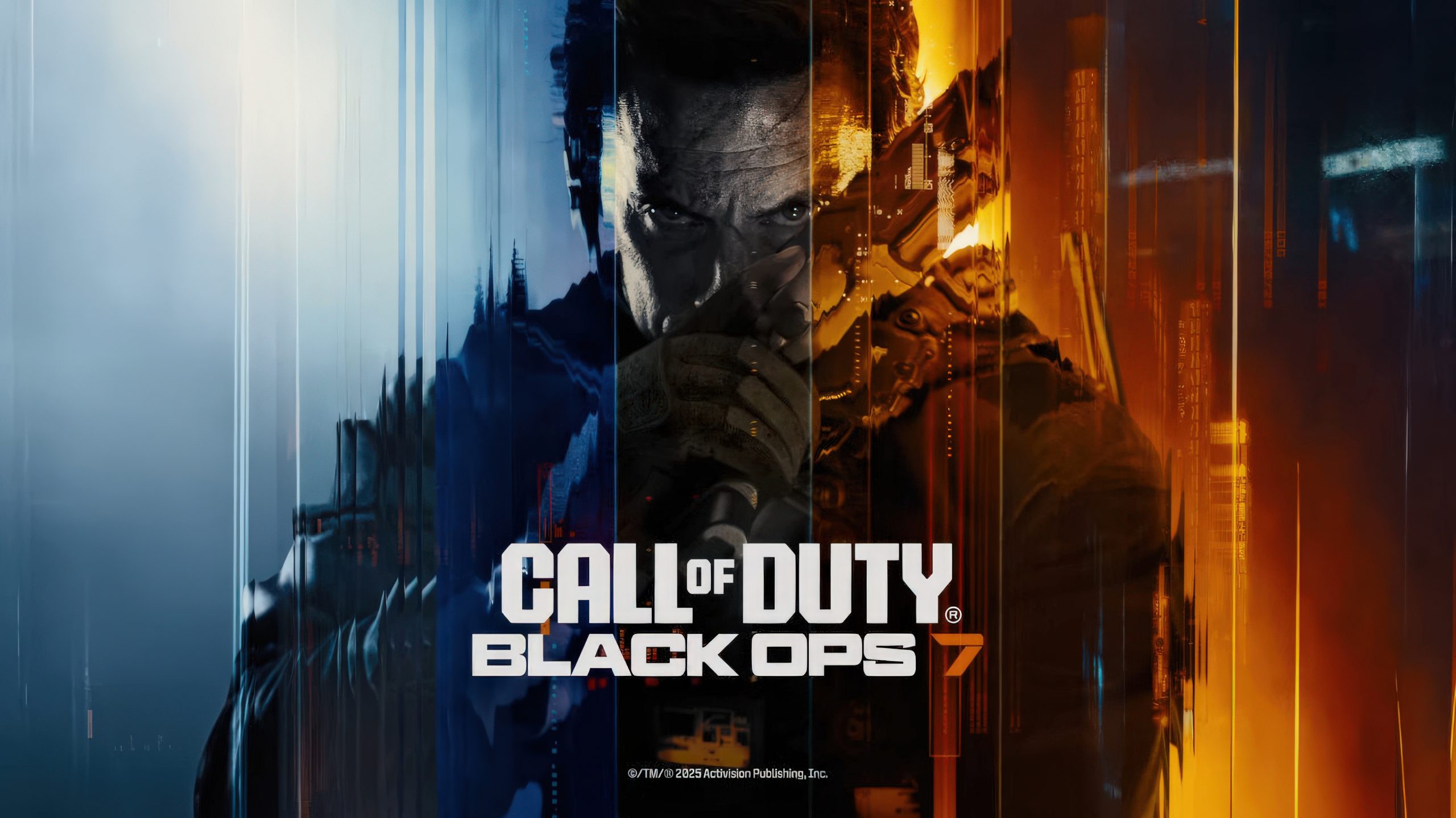
Call of Duty: Black Ops 7 Campaign Review – Co-op Fireworks, Lukewarm Villains
Call of Duty: Black Ops 7 walks into the room with a strange kind of confidence. It is simultaneously the seventh entry in Treyarch’s much-loved Black Ops sub-series and, at the same time, a direct sequel to a game that released on PlayStation 3 and Xbox 360. Rather than meaningfully following up last year’s entry, Black Ops 7 rewinds the clock to Black Ops 2, digs up Raul Menendez, and asks: what if we went back to that era of futurism and unresolved trauma, but did it as a fully co-operative rollercoaster?
The result is a campaign that is best described as “better together.” Taken on its own, the story is one of the least threatening, lowest-stakes narratives the series has seen in a while, with a new paramilitary corporation, The Guild, and its glossy CEO Emma Kagan never quite selling the idea that the world is on the brink. But share the neural link with three friends, and suddenly the same missions become a loud, chaotic theme park of hallucinations, nostalgic callbacks, and shared progression that bleeds into the multiplayer ecosystem. It is a campaign carried by spectacle, co-op systems, and Endgame experimentation, rather than by its villains or its script.
Back to 2035: A Sequel That Reaches Across a Decade
Black Ops 7 is set in 2035, ten years after the events of Black Ops 2. That’s already a fun trick, because for players who were there in 2012, that future has now technically become our past – yet within the game, it is still a slick near-future full of drones, smart munitions, and neural interfaces. Treyarch and Raven respond to this timeline weirdness by building the campaign as a direct narrative follow-up to Menendez’s old war crimes while still trying to make things approachable for newcomers.
If you never touched Black Ops 2, the game frontloads you with a quick crash course on who Menendez is, why Alex Mason and company are traumatized by him, and why the world would freak out if he suddenly appeared again on a livestream. It’s brisk and flashy, more montage than deep recap, but it does enough to keep the campaign from feeling like an inside joke for lore obsessives. For returning players, especially those who still remember the branching paths and wild outcomes of that older campaign, seeing Mason and Woods back in the spotlight lands as a mixture of nostalgia hit and unfinished business.
The premise is simple: Menendez appears to have returned from the dead, broadcasting threats to burn the world down. In reality, he’s more ghost than mastermind, a boogeyman weaponized by The Guild, a private security mega-corp that has taken it upon itself to “protect” the globe. That scarecrow approach to Menendez is the first clue that Black Ops 7’s story is less about a villain we fear and more about trauma being exploited, repeated, and chemically amplified for corporate profit.
The Guild and Emma Kagan: Villains Without Teeth
The Guild positions itself as a leader in robotics, AI, and advanced defense technologies, but its core villainous gambit is surprisingly low-tech: an experimental psychoactive compound that sends victims spiraling into shared hallucinations and uncontrolled rage. Through a neural-link handwave, Mason’s squad gets dosed early, and that drug becomes the narrative excuse for nearly every surreal sequence that follows.
On paper, Emma Kagan should be memorable. She’s a millennial tech-celebrity-CEO who channels an unsettling cocktail of TED Talk charisma and Elizabeth Holmes-esque artificial sincerity. On stage, she sells The Guild as the sleek future of security; off stage, she greenlights chemical weapons tests, shadow ops, and civilian terror. Yet, despite a committed performance and some sharp visual design, she rarely commands the screen the way classic Call of Duty antagonists did. Compared to Menendez, Makarov, or even the series’ more cartoonish villains, Kagan never feels like the gravity well around which the story orbits.
The stakes also feel oddly small. There are threats, there is collateral damage, and there are casualties, but the campaign never quite convinces you that global stability hangs in the balance. The Guild’s forces show up with drones, exosuits, and armored convoys, yet their operations feel like localized experiments rather than a rising world order. As a result, Black Ops 7’s narrative drive is less “stop the apocalypse” and more “clean up a very dangerous corporate mess.” It’s enough to keep you moving forward, especially when the next set piece is only a few minutes away, but it rarely builds that knot-in-your-stomach tension that the series at its best can evoke.
Neural Nightmares: Hallucinations as Set Piece Playground
If the overarching plot feels undercooked, the individual missions are anything but. The psychoactive drug and shared neural link give Treyarch and Raven a license to get weird, and they use it liberally. Rather than a straight line of military engagements, Black Ops 7 weaves in and out of surreal, character-specific nightmares that rewrite the rules of its reality.
For Mason, that means being dragged back to Nicaragua, forced to relive the hunt for Menendez as the sky literally rains down oversized machetes. It’s grotesque, absurd, and visually arresting, with familiar locales warped into symbolic torture chambers. Another mission throws you into the middle of a Russian prison break where walls bend and twist, enemies flicker in and out of existence, and your sense of direction disintegrates alongside the protagonist’s sanity. Then you’re yanked into a burning, futuristic Los Angeles under terrorist attack, watching 2025 blur into 2035 as memories cross-pollinate.
These sequences are some of the campaign’s most memorable moments. They offer a kind of metaphysical horror that Call of Duty usually only flirts with in Zombies modes. Here, hallucinations are canon, not bonus content. The sound design leans into distorted radio chatter, voices echoing inside your skull, and gunfire that feels just a little too close. The co-op neural link twist makes it even more compelling: when you and your friends are all seeing the same nightmare, reacting to different phantoms in your headsets, it sells the idea that this squad truly shares a fractured consciousness.
The downside is tonal whiplash. The campaign jumps aggressively between grounded sci-fi ops against The Guild and these drug-fueled trips into trauma. One moment you are assaulting a Guild facility, the next you are in a fever dream of symbolism and floating blades. Add in a detour to Japan, where yet another faction gets involved and classic multiplayer maps like Raid and Express are reimagined as neon-drenched Tokyo arenas, and the narrative timeline becomes messy. It’s entertaining moment to moment, but keeping track of “what actually happened” versus “what we hallucinated together” can feel like work.
From Branching Paths to a Locked-In Rollercoaster
Part of the reason this story feels more superficial than it could have is what Black Ops 7 leaves behind. Black Ops 2 was famous for its branching storylines, Strike Force side missions, and the ability to shape outcomes through choices and performance. It felt experimental in the way it respected player agency, even if the execution was sometimes uneven.
Black Ops 7 almost completely abandons that philosophy. The campaign is a straight, locked-in rollercoaster: eleven story missions that point you from A to B with little deviation. There are collectibles, optional challenges, and some side objectives, but nothing on the scale of alternate endings or branching character fates. The game wants you to ride the hallucination train once, maybe twice if you missed something, and then move on to Endgame.
Also noticeable is the lack of traditional difficulty selection for the main campaign. There’s no “Veteran” badge to chase, no bragging rights for surviving punishing firefights. Instead, the story mode sits at a comfortable, almost relaxed challenge level, clearly tuned for co-op play and broad accessibility. It’s a blessing for newcomers and casual players who just want to enjoy the spectacle without being chewed up, but veterans who grew up using Call of Duty campaigns as a skill gauntlet may feel a bit under-stimulated until they reach Endgame’s higher tiers.
Four Guns, One Neural Link: Co-op as the Main Attraction
Where Black Ops 7 really finds its identity is in its commitment to full four-player co-op from the opening mission to the credits. This isn’t a tacked-on mode or a handful of “co-op friendly” chapters. The entire campaign is designed around squads of up to four players, with shared progression that feeds your operator’s growth across the game’s ecosystem.
Playing solo is possible, but it feels like missing the point. Everything – from the neural link hallucinations to the big set piece chokepoints – is tuned to the chaos of multiple players crashing into each encounter. A machete storm over Nicaragua is one thing; watching three friends all panic in different directions, yelling about the sky, is another. Even the quieter story beats land differently when you’re experiencing them as a group, reacting in real time to callbacks, cameos, and ridiculous plot twists.
Shared progression is the glue that holds it together. Completing campaign missions contributes to the same leveling track that underpins the core multiplayer and Endgame mode. Finish a trippy prison breakout in the story, and you’re also inching closer to new camos, attachments, and operator perks you’ll use elsewhere. It’s an elegant way of making the campaign feel like a meaningful part of your grind rather than a one-and-done story you clear for a trophy.
That said, there are puzzling omissions. The most glaring is the lack of true drop-in/drop-out support. You can’t just jump into a friend’s ongoing chapter mid-mission; coordinating sessions still requires old-school “everyone queue at the same time” planning. In an era where live-service shooters pride themselves on frictionless grouping, this limitation feels unnecessarily rigid and at odds with how people actually play co-op games today.
Length, Structure, and the Road to Avalon
From the first Menendez scare to the fall of The Guild, the main co-op campaign clocks in around six to seven hours, depending on your squad’s pace and how much time you spend hunting for collectibles or replaying specific chapters for achievements. It’s a focused arc, clearly designed as a self-contained experience with a defined beginning and end, rather than an endlessly replayable story mode.
The final stretch of the campaign pivots toward Avalon, the open map that serves as the canvas for Endgame. Here, the pacing noticeably wobbles. Missions set in Avalon feel more like guided tours of the real estate you’ll be farming later than essential story beats. The urgency drops, objectives blur into “go here, clear this,” and the narrative momentum that had been built through the hallucination missions starts to dissipate. It’s as if the campaign is impatiently nudging you toward the real experiment: Endgame’s persistent PvE sandbox.
Endgame in Avalon: PvE Sandbox With Missing Teeth
Endgame is Black Ops 7’s most ambitious swing – and the mode that will likely divide the community hardest. It’s a PvE-only experience set in Avalon, where squads of up to four operators drop in, pick missions off the map, level up through a trio of chosen skill trees, and extract with upgraded weapons and XP.
Structurally, it sits somewhere between Zombies, DMZ, and an extraction shooter-lite. The map is dotted with repeatable activities: defend this point, escort that convoy, clear out a Guild nest, trigger a contract that spawns a tougher encounter. As you climb through tiered zones, you face denser resistance and higher rewards. Between rounds, you use upgrade stations to boost your weapon’s rarity and power, pushing green guns into blue, purple, and eventually legendary territory.
On a mechanical level, there are some smart ideas. The six skill trees, from Gunner (faster reloads and weapon handling) to Bulldozer (explosive resilience and tankiness), nudge you toward specific playstyles. Picking three of the six per run gives you a reason to experiment, and there’s a satisfying rhythm to seeing your chosen build come online across multiple sessions. Bringing in a weapon you’ve already invested in through core multiplayer feels rewarding when you stack Endgame upgrades on top of an already tailored loadout.
But the more time you spend in Avalon, the more you notice what’s missing. Unlike DMZ or MWZ, there’s no real sense of emergent chaos. Endgame is strictly PvE: no rival squads hunting you, no tense cat-and-mouse extractions where another team might ambush you at the last second. Some players will love that – there’s a sizeable audience that wanted an open-world, PvE-only Call of Duty experience without the anxiety of human opponents. For others, the lack of unpredictability makes runs feel like a checklist rather than an adventure.
Loot is another sore spot. There are no hidden blueprints, rare curiosities in lockers, or secret quests tucked away in corners. Your gear is mostly an extension of what you bring in or what drops through predictable supply rewards. That makes Endgame feel a little sterile compared to DMZ’s wild scavenging, where every duffel bag might hold a weird story fragment or a powerful new toy. When death resets your operator progression back to zero, the sting is even sharper because there’s nothing truly unique to show for those lost runs.
In short bursts, Endgame is a solid way to extend your time in Black Ops 7’s ecosystem, but in its lower and mid tiers it often feels like busywork – a treadmill of familiar encounters you run through again and again for incremental power. Treyarch clearly has plans to spice things up, with teases of massive bosses and even dinosaur-scale threats in future updates, and those could turn Avalon into a far more memorable playground. Right now, though, Endgame feels more like a proof of concept than a fully realized successor to DMZ or Blackout.
Difficulty, Reset Loops, and Who Endgame Is Really For
The contrast between the story campaign’s gentleness and Endgame’s progression harshness is striking. While the main missions hold your hand just enough that almost anyone can finish them, Endgame is where Black Ops 7 hides its teeth. Lose your operator, and you’re reset. A bad string of encounters can undo a night’s worth of progress, and without exotic loot or narrative breadcrumbs to help that frustration feel meaningful, it risks alienating players who don’t have the time or patience to grind back up.
For hardcore fans who miss the anxiety of high-stakes runs and permadeath tension, this reset loop will be appealing. It gives Endgame a risk/reward curve that the main campaign lacks, and it provides a space for min-maxers to obsess over optimal builds, routes, and tier strategies. But for players who mostly showed up for the story, the characters, and some light co-op chaos, Endgame can feel like a wall rather than a natural continuation.
Shared progression between modes helps soften the blow – your time in Endgame still feeds your overall account growth – yet it cannot fully compensate for the feeling that this mode is still figuring out its identity. As it stands, Endgame is a solid extra mode, not a killer app.
Futurism Fatigue and a Crowded Shooter Calendar
Black Ops 7 doesn’t launch into a vacuum. It lands in a year where the shooter market is crowded: a new Battlefield has muscled in; fresh extraction and co-op shooters are vying for attention; ambitious free-to-play projects are trying to siphon away the same audience. Within that context, the decision to lean back into a near-future setting is a double-edged sword.
For some players, the drones, neural links, and smart rifles are a selling point. For others, the appetite is clearly tilted toward modern, grounded conflicts. You can feel that fatigue in the community already, with people openly saying they gravitate more toward current-day settings for their multiplayer fix. When a big-budget competitor offers contemporary warfare and another free-to-play title is soaking up hours with a different flavor of large-scale combat, Black Ops 7’s return to 2035 risks feeling like a step sideways rather than forward.
Then there’s the price. At a premium launch tag, the calculus for many players is simple: is this campaign plus Endgame plus multiplayer worth full retail, or is this something you bookmark for a 30–50% discount down the line? With the campaign being relatively short, the villains failing to stick in the mind, and Endgame still in a “promising but incomplete” state, it’s easy to imagine a large chunk of the audience deciding to wait for a sale while they spend their time (and bandwidth) on competing shooters.
Technical Notes, Presentation, and Little Oddities
On current-gen hardware, Black Ops 7 looks and sounds like a premium Call of Duty should. Explosions are crisp, lighting is dramatic, and the hallucination sequences give the art team opportunities to flex beyond the usual military realism. Performances, especially from returning characters and Emma Kagan’s unsettling tech-CEO veneer, help sell scenes that might otherwise feel thin on the page.
There are, however, the typical barrage of small oddities and jokes the community will latch onto. Yes, even though Avalon is set near the Mediterranean, the ovens there still run in Fahrenheit, a tiny but hilarious immersion break that feels like a metaphor for how this game sometimes forgets to localize its details. On PlayStation, trophy hunters may feel short-changed by the absence of a Platinum trophy, another small but loud point of contention for a certain segment of the fanbase.
Pros, Cons, and the Shape of the Package
Stack it all together, and Black Ops 7’s campaign package looks like this:
- Big win: a fully co-op campaign from start to finish, with shared progression that ties directly into multiplayer and Endgame.
- Big win: striking, mind-bending set pieces that use hallucinations and neural links to justify the wildest missions the series has seen in a while.
- Win for fans: long-time followers of Woods and Mason get emotional payoffs and callbacks that reward a decade-plus of investment.
- Mixed bag: Endgame offers a PvE-only sandbox that will click for some players but feels shallow and repetitive compared to DMZ, Blackout, or the best Zombies outings.
- Weakness: Emma Kagan and The Guild lack the menace and staying power of Call of Duty’s iconic antagonists, making this one of the franchise’s lowest-stakes stories.
- Weakness: No drop-in/drop-out co-op, no campaign difficulty selector, and progression wipes in Endgame all undercut the game’s otherwise welcoming structure.
Verdict: A Blast With Friends, Forgettable Alone
Call of Duty: Black Ops 7 is a campaign built around the assumption that you will bring company. With three friends in your squad, its neural trips, nostalgic flashbacks, and loud, messy firefights become a genuinely entertaining co-op story ride. Shared progression gives you a practical reason to care, and Endgame, for all its shortcomings, at least tries something different with a PvE-focused endgame that may grow into something more substantial over time.
As a solo experience, the cracks show quickly. The villains rarely make your pulse spike, the stakes feel oddly low, and the linear structure can’t match the ambition of Black Ops 2’s branching experiments. Endgame, in its current form, doesn’t fully replace the thrill or depth of DMZ, MWZ, or Blackout, especially for players who thrive on emergent chaos and meaningful loot.
That leaves Black Ops 7 in an interesting middle tier of Call of Duty campaigns. It is far from the worst the series has produced – the co-op focus alone lifts it above several forgettable entries – but it also doesn’t reach the high points of the franchise’s most daring stories. If you already live inside the Call of Duty ecosystem and you have a group ready to link up, this is an easy recommendation. If you’re a lapsed fan wondering whether to drop full price just for the campaign and a half-baked Endgame, waiting for a discount while you size up the competition might be the smarter move.
In the end, Black Ops 7’s message is unintentionally simple: the neural link might be fiction, but the campaign really is better when your brains – and your loadouts – are all in it together.
1 comment
co-op campaign sounds legit, 4 bros yelling about machetes falling from the sky in Nicaragua does sound like peak gaming ngl 😂 story itself tho? kinda meh from what i’m seeing