For years, Burger King’s most infamous figure wasn’t a new sandwich or even a limited-time deal – it was a mascot. The “Creepy King,” with his unsettling fixed grin and uncanny mask, stormed onto television in 2004 and became the face of the fast-food chain until 2011. 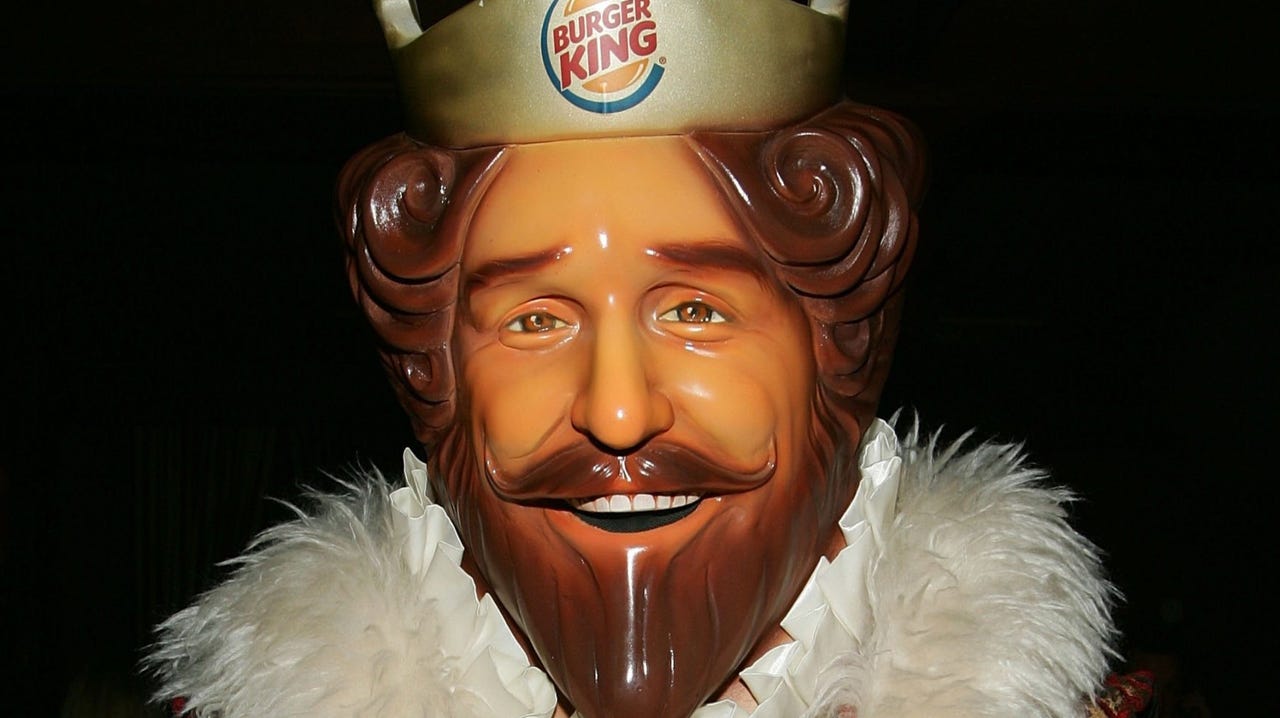
But while the internet turned him into a meme machine, the real-world effect was far less flattering: families with kids were walking right past Burger King’s doors and heading straight to McDonald’s.
At a recent franchise convention, Burger King CMO Joel Yashinsky explained why the company quietly retired the mascot. “We had a number of learnings from Creepy King, and we’ve moved away from him because he had limited appeal,” he said. Translation: kids were creeped out, and parents weren’t buying Whoppers when McDonald’s Happy Meals were sitting right across the street. The numbers back that up – throughout the King’s reign, McDonald’s pulled ahead in average-unit volumes, cementing a gap that BK still struggles to close.
Looking back, the Creepy King felt like Burger King’s attempt to target edgy young adults who thrived on bizarre commercials. And for a while, it worked online: his blank stare became a meme, and he even starred in Burger King’s quirky video games like Sneak King. But the irony was clear – the mascot who entertained gamers on their Xbox 360 was also scaring away children who might have been the next generation of Burger King customers. Even occasional reappearances in ad campaigns couldn’t shake the fact that the King was more cult figure than family ambassador.
Now, Burger King is ditching the irony and doubling down on its roots as a family brand. Plans are underway to rebuild play areas for kids under ten, complete with castle-like turrets, tunnels, windows, slides, and the obligatory ball pit. The difference this time? A friendlier, more inviting brand identity – no terrifying mascot lurking around the corner. “At our heart and soul, we were always a family brand,” Yashinsky emphasized. “So you’ll see that in advertising, in social media, and in our restaurants – fun, welcoming, but never at anyone’s expense.”
The shift mirrors a broader trend in fast food. Once upon a time, chains flaunted bold, unique identities – Taco Bell restaurants shaped like adobe chapels, McDonald’s buildings dominated by golden arches. Today, the industry favors interchangeable neutral storefronts that can be easily flipped if a franchise fails. Burger King’s reset is part nostalgia, part necessity: families bring in steady business, and a creepy plastic monarch wasn’t cutting it anymore.
Still, the Creepy King isn’t forgotten. Fans joke about him showing up in a low-budget horror film or long for a remake of Sneak King. But for now, Burger King is burying the crown, trying to win back parents, and hoping kids see the new playground as a reason to pick BK over McDonald’s. Whether the gambit works or not, one thing’s certain: the King’s haunting smile won’t be peeking out from behind your Whopper anytime soon.
1 comment
Tbh they prob woulda ditched him anyway. Fast food chains all look the same now, grey boxes with no personality