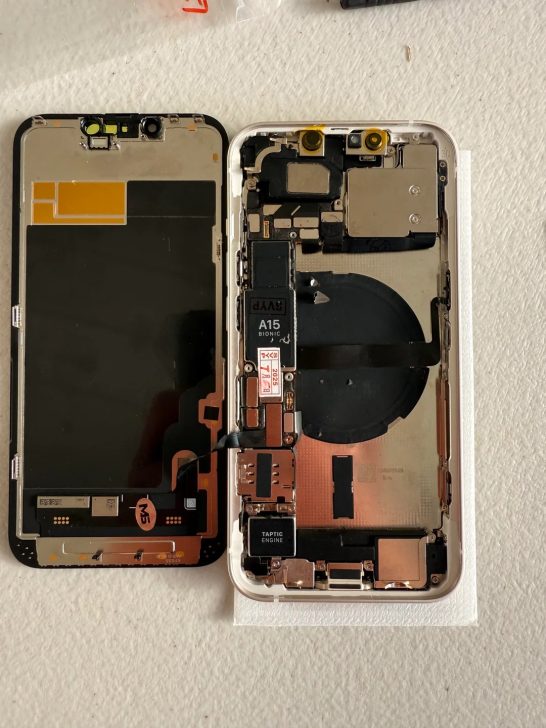
Building an iPhone 13 From AliExpress Parts for About $260: Possible, Risky, and Weirdly Satisfying
Apple’s control over its supply chain makes DIY iPhone builds feel like urban legends – mostly impossible on new models, occasionally doable on older ones. The iPhone 13 sits in that narrow lane. A Redditor recently proved it can be assembled from parts bought on AliExpress for roughly 460 NZD (about $260). It works, boots, makes calls, and passes the basic smell test. But it isn’t a fairytale: you’ll forfeit a couple of features, rely on luck for a key component, and carry ethical and practical risks that a shiny boxed phone simply doesn’t have.
The Bill of Materials, the Tutorials, and the Two Things You Lose
The shopping list was surprisingly short: housing, an A15 Bionic logic board, Face ID hardware, display and metal shields, battery, and assorted brackets and screws. The builder leaned on step-by-step videos from the YouTube channel Phone Repair Guru to stitch it all together. Total parts: ~460 NZD. They even noted the bundle could have been cheaper by around 100 NZD had they not insisted on a pre-paired logic board and Face ID set. That pairing matters: under iOS 18, genuine components can be paired, but if one half of the duo fails later, a fresh random replacement may not handshake with your existing part. That means future repairs can get sticky fast.
Even with a clean build, two niceties don’t show up: True Tone and Battery Health. Without Apple’s calibration handshake, True Tone won’t toggle and iOS won’t show the familiar Battery Health readout. Core performance, Face ID, and the camera still function if you’ve sourced compatible, good-quality parts – but you should expect these missing software bits on a Franken-phone.
The Luck Tax: iCloud Locks and the Ethics of Sourcing
Here’s where the potholes get deep. The heart of the project – the A15 logic board – must be not iCloud-locked. If the previous owner didn’t remove their account, your expensive slab is a paperweight. The Redditor admits luck played a role: their board was clean. They also suspected that many of these harvested parts may have been stolen at some point in their lifecycle, then disassembled in small shops before making their way online. That’s an uncomfortable reality. You can try to mitigate by buying from sellers with long histories and strong ratings, asking for clear proof of unlock, and avoiding anything that smells off – but you can’t fully eliminate the risk. Consider the legal and ethical implications before you click “Buy.”
Time, Skill, and the Hidden Cost of Your Own Labor
The assembly took about four hours. That’s brisk, and it suggests the builder had prior experience. Add time for research, troubleshooting, and surprise setbacks (stripped screw, weak adhesive, dodgy ribbon cable), and a realistic first-timer estimate inches upward. If you value your time at, say, $100/hour, your true “cost” becomes $260 in parts plus $400–$500 in labor – call it ~$700–$760. At that point you’re pushing into the territory of refurbished units with warranties, or even a discounted current-gen phone depending on sales. The DIY route only “wins” if you count the experience and the satisfaction as part of the payoff.
What Works Well – and What Can Bite You
- Works: Core functions (calls, data, Face ID, camera) usually behave fine if your parts are genuine and correctly installed. iOS updates and everyday apps should run as expected on the A15.
- Missing niceties: No True Tone toggle and no Battery Health metrics. Small loss in daily life, but worth noting for resale.
- Water resistance: Consider it gone. Even with new seals, factory tolerances are tough to replicate.
- Repairability later: Face ID and logic board pairing means future fixes can be more complicated than today’s build.
- Warranty/support: You’re on your own. Apple won’t bless this device.
Practical Checklist Before You Try
- Demand proof the board is iCloud-unlocked. No proof, no purchase.
- Buy Face ID + logic board as a matched set if you want fewer headaches today – just know it limits flexibility later.
- Budget for tools and consumables: quality screwdrivers, spudgers, alcohol, adhesives, clamps, and ESD protection.
- Expect cosmetic quirks: aftermarket housings and screens vary in fit and finish.
- Accept the ethics risk and buy from reputable sellers only; walk away if anything feels sketchy.
So…Is It Worth It?
If your goal is the cheapest path to a reliable daily driver, probably not. Factor in time, risk, and missing features, and the spreadsheet starts favoring a refurb with a warranty. But if you’re here for the learning, the challenge, and the satisfaction of bringing silicon and screws to life, building an iPhone 13 for around $260 is one of the few modern Apple projects that’s still feasible – just keep your eyes open and your expectations realistic.