In 2022, Warner Bros. Discovery quietly did something almost unheard of in modern blockbuster culture: it finished most of a superhero movie, then locked it in a vault. Batgirl, a mid budget DC film led by Leslie Grace, featuring Brendan Fraser as the villain Firefly and Michael Keaton back under the cape, never made it to cinemas or streaming. 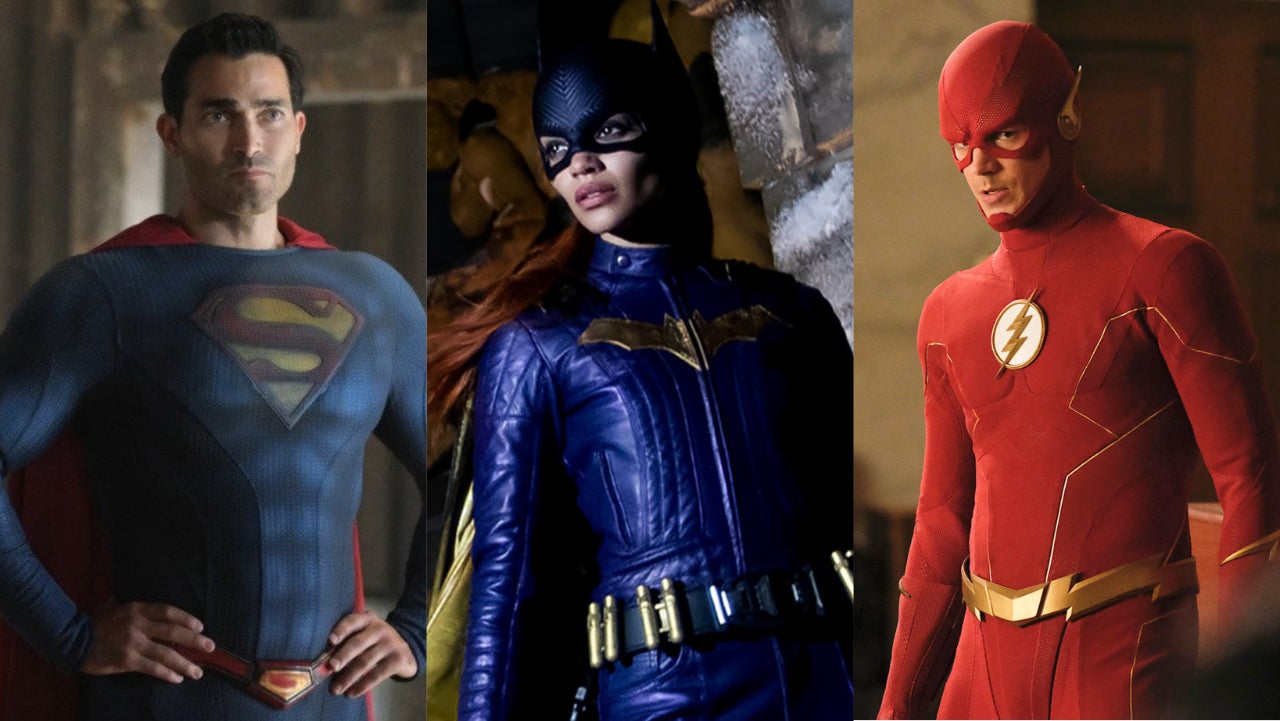
Instead, it became a tax write off and a symbol of how ruthlessly Hollywood now treats its own creations.
For many viewers, Batgirl itself had barely entered their awareness before it was gone. But for the people who spent months building that world, the cancellation is not just about a single movie. It is a warning sign about an industry that increasingly sees stories less as films and more as financial instruments that can be shuffled, erased, or sacrificed when a spreadsheet says so.
Brendan Fraser’s Firefly and the film we will not see
Brendan Fraser has been candid about how much he enjoyed working on Batgirl. The production transformed parts of Glasgow into Gotham, with several floors of sets, workshops, and art departments filled with detail fans will never get to study frame by frame. Fraser has talked about sneaking into the art department just to geek out over the craftsmanship, the kind of enthusiasm that usually translates into passionate press tours and convention stories, not post mortems for a buried project.
For him, the loss is not only professional. Fraser has also underlined the cultural cost. Batgirl would have given a generation of young girls a street level Gotham hero who did not look like the usual billionaire vigilante, someone they could look at and think, that could be me. Whether viewers ended up loving or hating the finished movie, that chance at connection has been erased in advance.
Yet his criticism goes deeper than representation. Fraser points to a blunt reality: in an era of corporate mergers and aggressive cost cutting, some projects are now literally worth more dead than alive. When the accounting math says scrapping a film brings more value than trying it in the marketplace, art becomes collateral damage. The film is reduced to what he wryly calls content, something that can be burned down for financial benefit instead of being allowed to succeed, fail, or perhaps slowly grow into something loved.
Studio spin versus fan suspicion
When Batgirl was cancelled, the official explanation was framed as a tough but necessary business move. New leadership was restructuring, cutting costs, and redefining the future of DC on screen. Later, DC Studios co chief Peter Safran insisted that the film simply was not releasable and that putting it out would have damaged the brand. In other words, the studio presented the decision as creative quality control rather than pure accounting.
Among fans and commentators, the reaction has been sharply divided. Some viewers argue that given the uneven track record of the pre James Gunn DC era, Batgirl was probably another messy entry in a long line of misfires, the sort of straight to video style project that once would have quietly landed on a shelf at the back of a rental store. Others feel that if a studio is willing to eat tens of millions of dollars instead of releasing a superhero movie in a content hungry world, it must have been truly disastrous.
But there is a large group in the middle with a different concern: whether Batgirl was brilliant, terrible, or just fine should have been for audiences to decide. History is full of films that tested poorly, underperformed on release, and then slowly became cult classics. Crime dramas like The Shawshank Redemption, offbeat comedies like Office Space, and even deliberately ridiculous movies like Zoolander all stumbled at the box office before finding passionate fanbases over time. Killing a film before the public ever sees it removes the possibility of that second life.
When movies become numbers on a balance sheet
The Batgirl decision did not happen in a vacuum. Warner Bros. Discovery later shelved Coyote vs. Acme as well, another completed or nearly completed project that suddenly became a line item instead of a release date. That film at least escaped the vault after a public outcry, eventually landing a new distributor for a planned theatrical launch. The contrast is revealing: in theory, both projects could have been quietly written off. In practice, one was granted a future, the other remains a ghost.
What these moves highlight is a broader shift in how major studios operate in the streaming era. When companies own vast libraries and multiple platforms, they can treat films not as individual events but as pieces in a giant corporate puzzle. Content can be produced to fill a quarter, sacrificed to stabilize a balance sheet, or hidden to avoid confusing a rebrand. Creative risk is filtered through algorithms and tax codes long before it reaches an audience.
For some fans, this is simply the logical end point of blockbuster culture. If studios spent years milking superhero brands with increasingly safe and formulaic stories, it is not surprising that they now feel comfortable discarding experiments that do not fit a new masterplan. Others see something more troubling: a future where mid budget, character driven, or unconventional comic book projects are the first to die when executives panic.
Between superhero fatigue and genuine curiosity
There is also a blunt skepticism running through the discourse. A vocal slice of the audience is exhausted by superhero spinoffs in general and uneasy about yet another film centred on a petite hero tossing around muscle bound villains like cardboard. For them, Batgirl looked like a relic from a tired era of DC storytelling, a pre Gunn project from a continuity many viewers had already mentally abandoned. In that context, the cancellation feels less like a tragedy and more like overdue spring cleaning.
At the same time, curiosity stubbornly lingers. Even people who freely admit they were not excited for the movie now say that the studio’s determination to bury it has made them want to see it more. Was it truly worse than other recent comic book misfires that still got full marketing campaigns and theatrical runs? Was it really beneath films that stumbled critically yet were released anyway, from clumsy franchise reboots to expensive experiments that faded in weeks? Without a public screening, nobody outside the studio and a handful of insiders can answer those questions honestly.
Michael Keaton’s calm and the human side of the story
Michael Keaton’s reaction adds another layer to the story. For fans who grew up with his late eighties and early nineties Batman, his return in The Flash and Batgirl felt like a nostalgic event, a chance to revisit a version of Gotham that still looms large in pop culture memory. Yet Keaton himself has been extremely relaxed about Batgirl’s fate, saying he did not really care either way, though he sympathised with the directors and crew who saw years of work vanish.
His attitude captures a hard truth about Hollywood: for veterans, one cancelled film is another twist in a long career. For crew members, local extras, and young stars hoping for a breakout, it can feel like the rug being pulled out just as they reach the spotlight. Residents in Glasgow still remember seeing their familiar streets turned into Gotham, buses rerouted for stunt work, and kids staring wide eyed at superhero costumes and film equipment. The magic was real for them, even if the finished story never appears on their screens.
What Batgirl’s disappearance says about the future
In the end, the real significance of Batgirl may lie less in the film itself and more in what its absence represents. Brendan Fraser’s warning about a kind of cultural blight is not just poetic frustration. If studios normalise the idea that entire films can be sacrificed after they are essentially complete, creators will think differently about what they sign on for, and audiences will trust big brands a little less.
The Batgirl saga crystallises several anxieties at once: superhero fatigue, the fragility of representation when it depends on corporate goodwill, and the creeping sense that the word content has swallowed the word film. Are studios still stewards of stories, or just managers of intellectual property portfolios? Can a comic book movie be allowed to be messy, personal, or experimental, or must it always be a perfectly aligned piece in a larger cinematic universe?
We may never know whether Batgirl was a hidden gem, a cult classic in waiting, or just another forgettable entry in a crowded genre. What we do know is that a finished story has been locked away not because audiences rejected it, but because a company chose not to let them try. In an industry built on shared dreams flickering on a screen, that choice might be the most unsettling plot twist of all.
1 comment
I get what Fraser is saying about it being a blight. When a finished film is literally worth more dead than alive, that feels grim as hell for anyone who actually loves movies