Once in a while a watch appears that feels less like a simple new reference and more like a thesis about where high end horology should go next. The Breguet Expérimentale 1 sits squarely in that category. It is not merely a tourbillon or a technical showpiece, but a mechanical thought experiment on the wrist that quietly poses a huge question to the industry: if Abraham Louis Breguet were designing today with silicon wafers, CAD and LIGA micro parts instead of candlelight and files, what problem would he choose to solve and how wild would the result look.
For many enthusiasts the watch also taps into a very specific nostalgia. 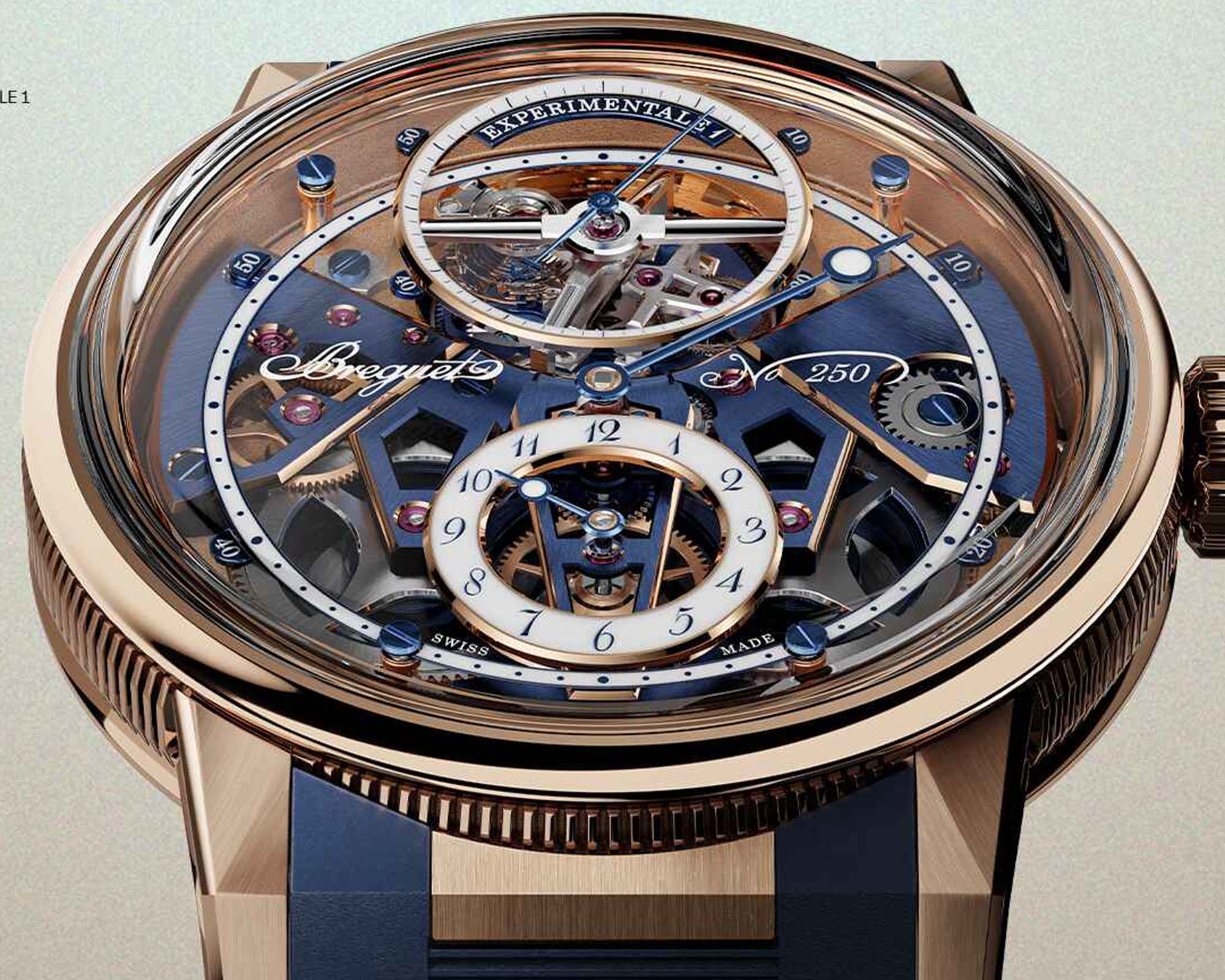
In the late two thousands and early twenty tens, a certain type of dramatic watch video ruled the internet: slow motion footage of cages and levers, macro shots of polished anglage, synth soundtracks building to a crescendo as some absurd complication came to life. Those short films worked because the underlying pieces were genuinely outrageous. The Expérimentale 1 feels like a direct descendant of that era, not because it mimics the styling, but because it is unapologetically excessive in its technology and its visuals.
On the spec sheet the pitch is almost brutally simple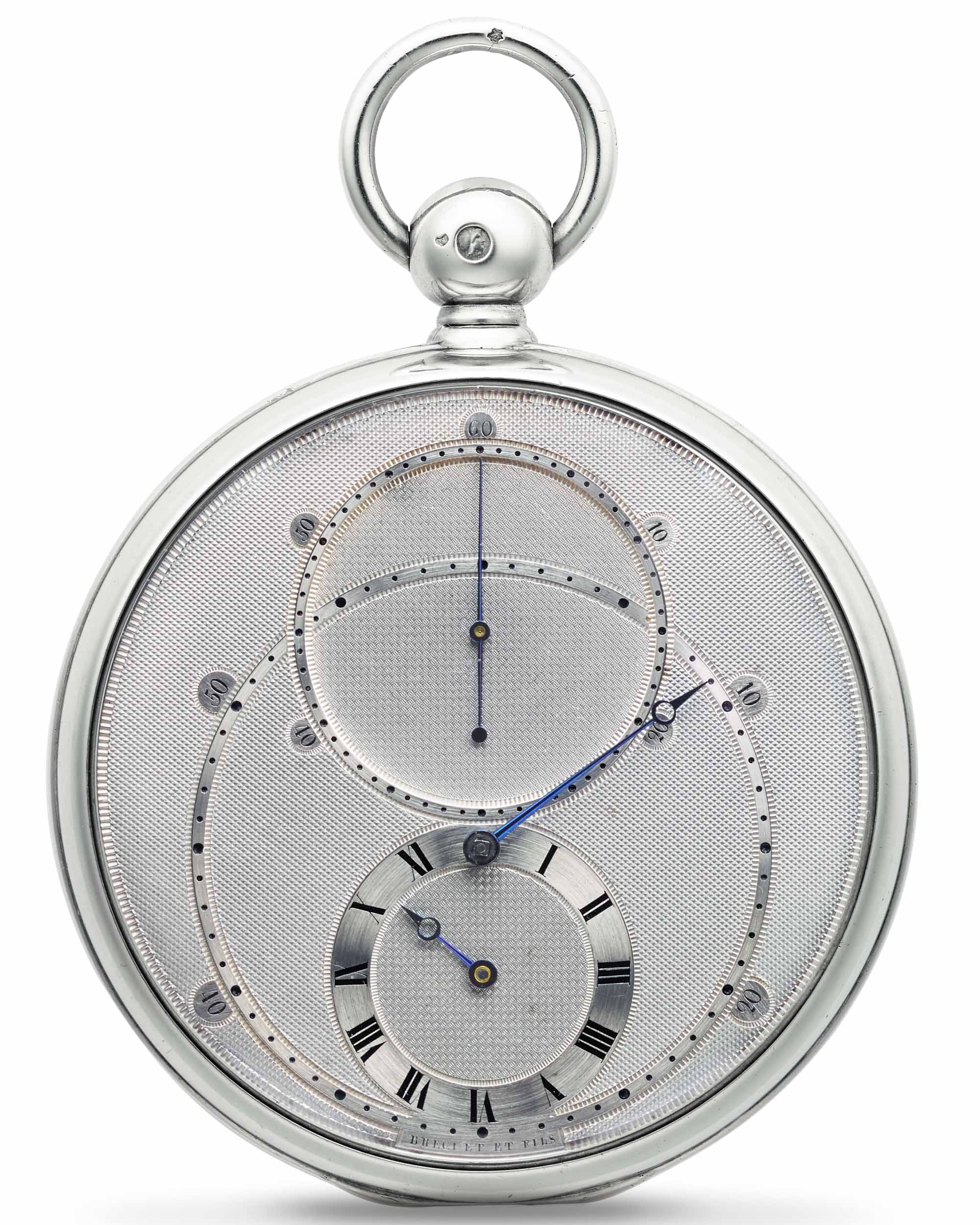
. Take Breguet’s proprietary magnetic pivot escapement, refine it into a constant force system, then bolt that into a ten hertz tourbillon that is robust enough to live in a wristwatch case. In reality the project intersects with more than two centuries of history, several important pocket watches, a regulator style display and a design language that some will call thrilling and others will call a complete mess. Expérimentale 1 is not a polite heritage piece; it is a loud reminder that this maison was built on risky ideas rather than safe retreads.
A watch grown from Breguet’s experimental roots
To understand what Breguet is trying to say with this watch you have to zoom out a little from the whirling cage and look at its lineage. Officially the piece carries the reference E001BH, or E001BH/S9/5ZV for those who enjoy full reference codes. The brand positions it as a spiritual successor to the Breguet number 1252 demonstrator timekeeper, sold in eighteen fourteen to the Prince Regent of England. That pocket watch was an engineering showcase first and a status object second, a rolling advertisement for what Breguet could do when the shackles came off. Expérimentale 1 clearly wants to inherit that attitude.
Another pillar in the family tree is reference 3448 from eighteen twenty. That pocket watch used a regulator layout with separate indications for hours, minutes and seconds, optimised for precision work in the workshop. Breguet lifts both the concept and the spirit of that piece. The idea behind a regulator is simple: seconds are king, minutes support them and hours are a background player. The arrangement makes it easy for a watchmaker, or regleur, to compare the running watch against a master clock. Expérimentale 1 borrows this architecture and turns it into the face of a radically modern, magnet powered tourbillon.
Fast forward to nineteen ninety seven and you hit reference 1747, created to celebrate the two hundred and fiftieth anniversary of Abraham Louis Breguet’s birth. That watch brought the regulator language into the brand’s modern era. Expérimentale 1 marks a different milestone: the two hundred and fiftieth anniversary of the manufacture itself. Once again the regulator becomes a framework for experimentation rather than a nostalgia trip. Breguet knows exactly how to play to the hardcore crowd here. The communication around the watch leans heavily on scans of original technical drawings, layouts of historic tourbillon patents and archive imagery that many collectors find almost as addictive as the watch itself. The message is clear: this piece is not weird for the sake of it, it stands on a set of historic experiments in display and precision.
Asking the uncomfortable question of the founder
The name Breguet carries a heavy reputation. 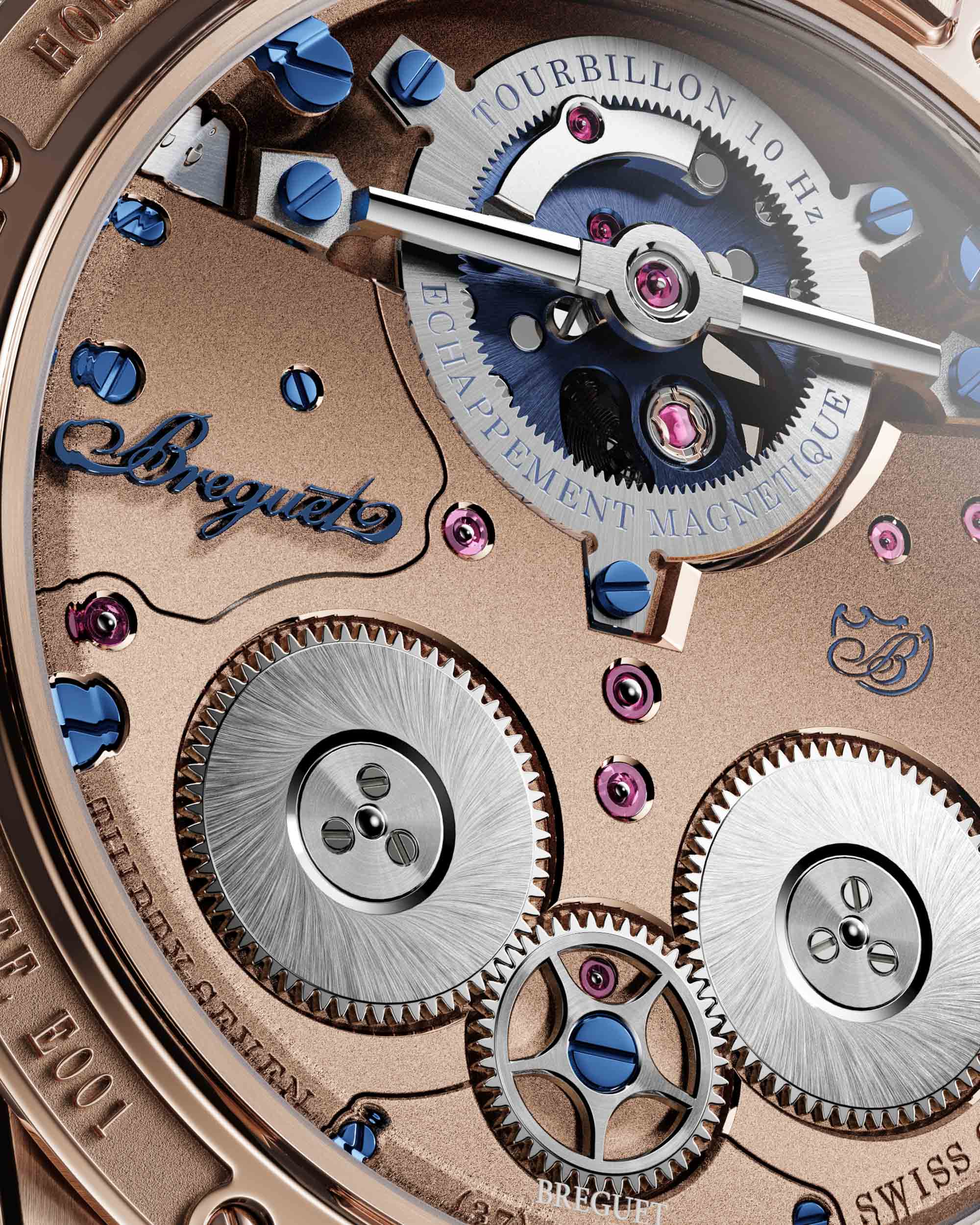
The original Abraham Louis was not just a gifted stylist; he was a pragmatic problem solver. Shock protection, chronometric stability, portable timekeeping – he attacked each with inventions like the tourbillon, the pare chute system and new approaches to production. For a modern brand trading on that story, the obvious question becomes almost painful: if the founder were alive today, would he be content with tasteful dress watches, or would he be wrestling with the biggest unsolved issues in contemporary watchmaking.
If you treat that question seriously the answer cannot be another guilloché dial in a familiar case. The real bottlenecks today are things like rate consistency in the real world, stability under magnetism and shocks, and the ability to industrialise new escapement geometries without bankrupting the company. This is where Expérimentale 1 wants to stake its claim. It is not only an object for wrist shots, it is a platform for pushing Breguet’s magnetic escapement out of the lab, where it has lived for more than a decade, and into something closer to an ongoing family of movements.
From reference 7225 to a fully fledged experiment
The path to Expérimentale 1 did not start from nowhere. Recently the brand introduced the so called Incredible Magnetic ten hertz Breguet 7225, a watch that quietly announced the return of the magnetic pivot escapement. That technology first appeared in the Type XXII 3880 back in twenty ten and then largely vanished from the catalogue. In the 7225 the concept came back cleaner and more mature, and for many observers it felt like a test balloon for more serious projects.
Expérimentale 1 is that more serious project. It takes the same basic idea – a balance supported and driven with the help of magnetic fields – and applies it to a tourbillon which not only runs at ten hertz but is also fed by a constant force mechanism. Breguet describes this combination as a first: a high frequency tourbillon using a magnetic escapement that delivers steady torque to the balance. For once the marketing line reflects a genuine technical jump. High beat tourbillons already sit at the extreme end of energy demand; adding constant force into the equation raises the difficulty by another order of magnitude.
This context also explains why so few brands move beyond the century old Swiss lever escapement. Experiments by Girard Perregaux with its constant escapement, TAG Heuer with exotic hairsprings or Frederique Constant with its monolithic oscillator proved how fragile the path can be. Ideas that worked brilliantly in prototypes often proved painful to industrialise when real customers started wearing the watches. Against that background Breguet’s decision to double down on its own magnetic system feels both brave and slightly stubborn, in the best possible way.
The magnetic pivot and constant force architecture
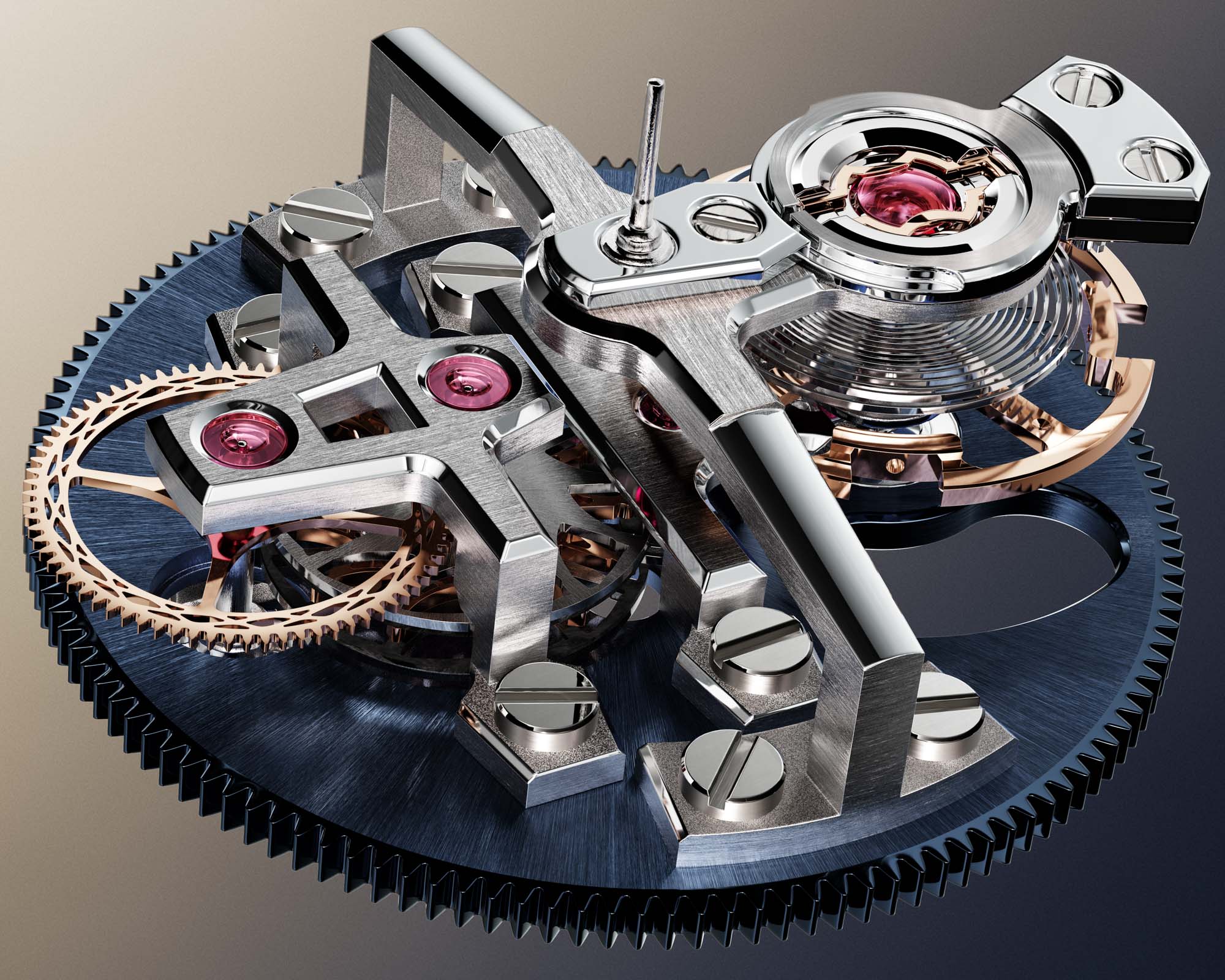
Inside the Expérimentale 1 beats what Breguet calls a regulateur à pivot magnétique, essentially a regulating organ whose critical pivot points are supported by magnetic fields rather than only by physical contact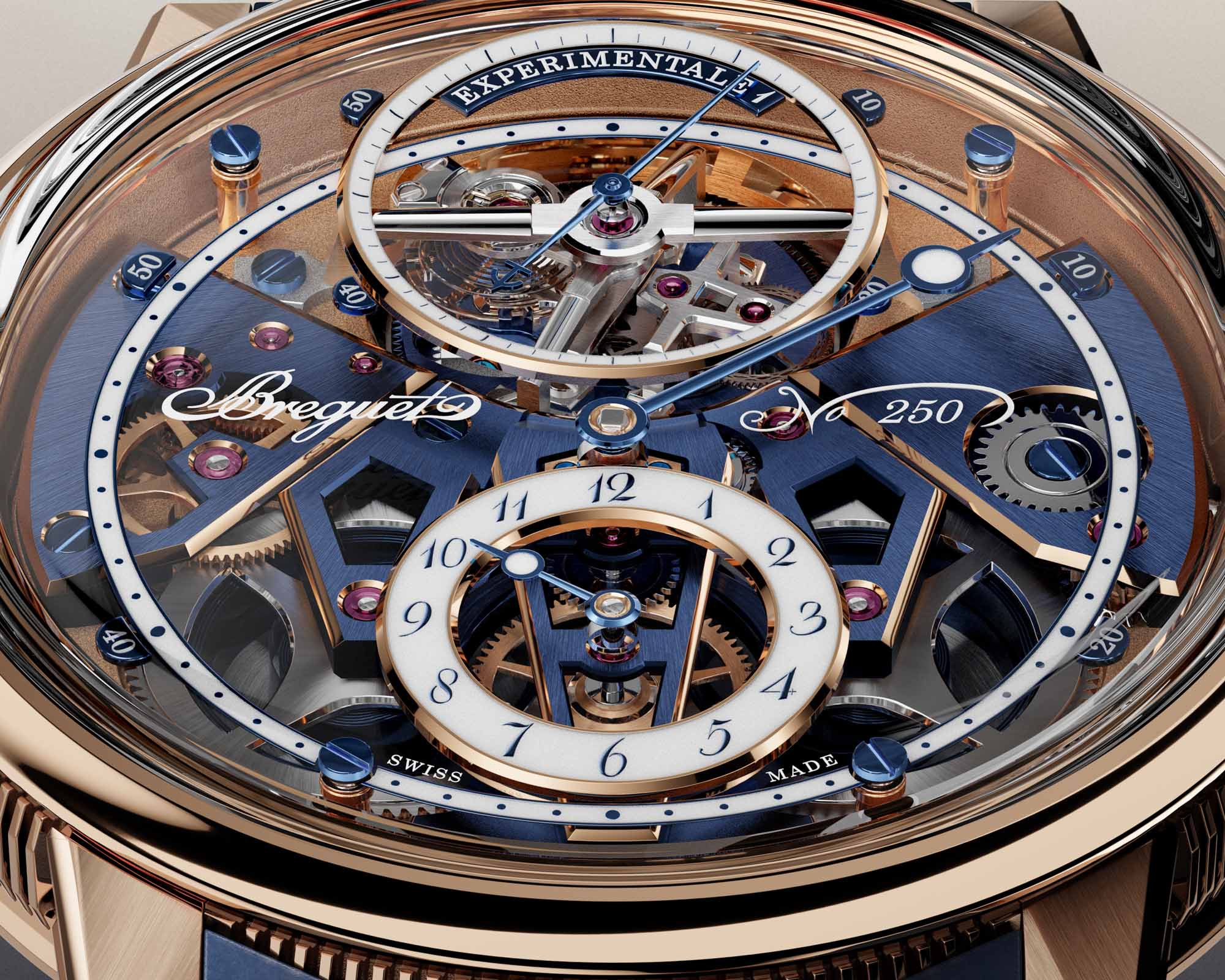
. Two escape wheels sit on either side of the balance, each carrying a magnetic track. Between them an intermediate stop wheel manages the locking and unlocking of the system so that energy is handed over in precisely controlled packets instead of chaotic jolts. The goal is to reduce friction, keep amplitude stable and make sure the balance receives a remarkably steady diet of torque throughout the power reserve.
Materials tell the rest of the story. The balance spring is cut from silicon, a choice that brings excellent resistance to magnetism along with incredible geometric precision. The fixed fourth wheel is made using LIGA technology in a nickel phosphorus alloy known as NiP12. Other key components are built from titanium and nivagauss, chosen for their non magnetic and light weight properties. Taken together these decisions read like a very twenty first century answer to the same headaches that Breguet fought in brass and steel: wear, friction, and unpredictable behaviour when the watch is knocked around or exposed to stray fields.
Overlaying all of this is the Breguet Hallmark. 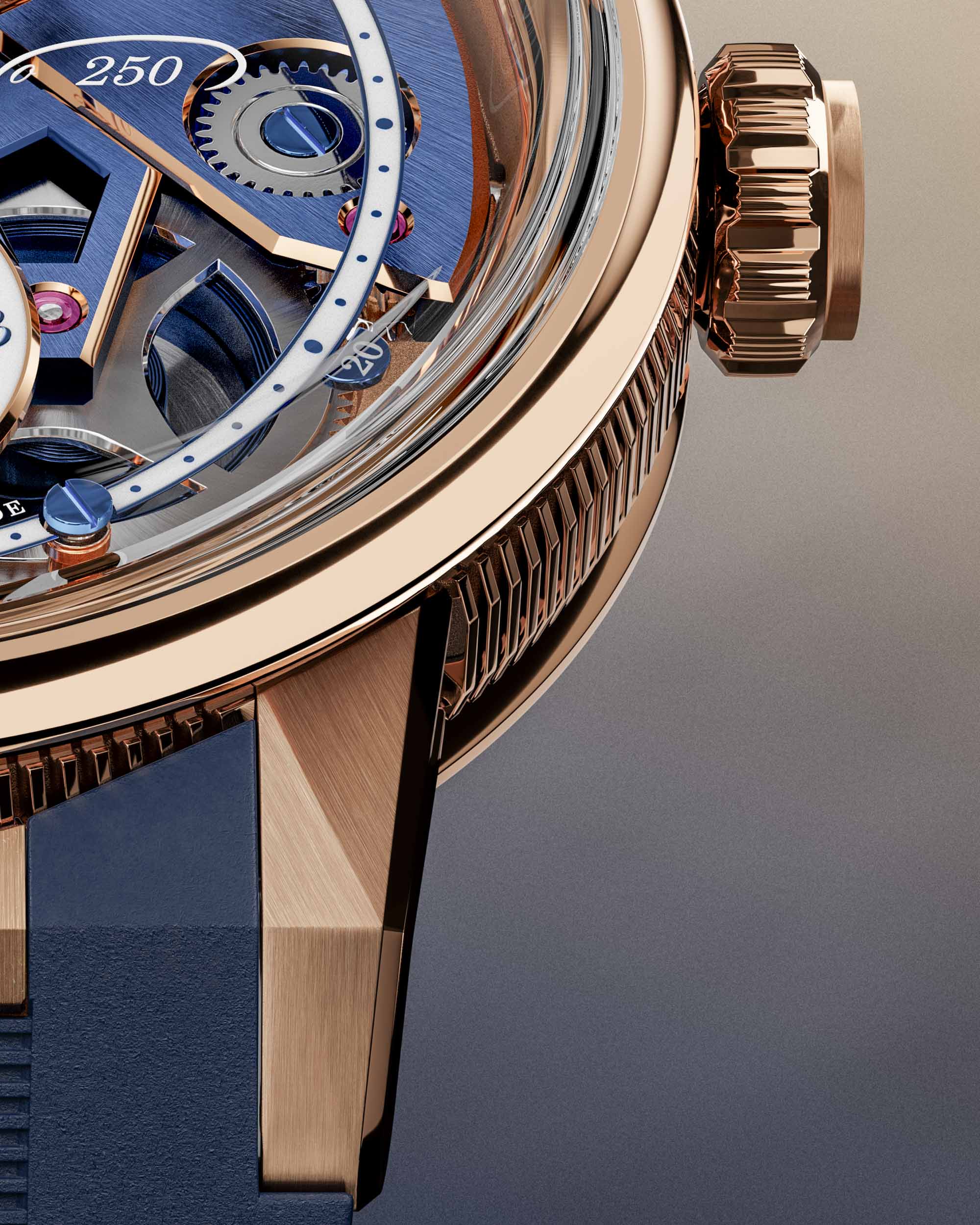
Expérimentale 1 is certified under a category the brand calls Scientific, which promises a deviation of plus or minus one second over twenty four hours. On paper that is a surprisingly strict claim for such an exotic machine. The complication is that the Hallmark itself is still young and opaque to many collectors. For this standard to matter, Breguet will need to do more than drop the term into a press release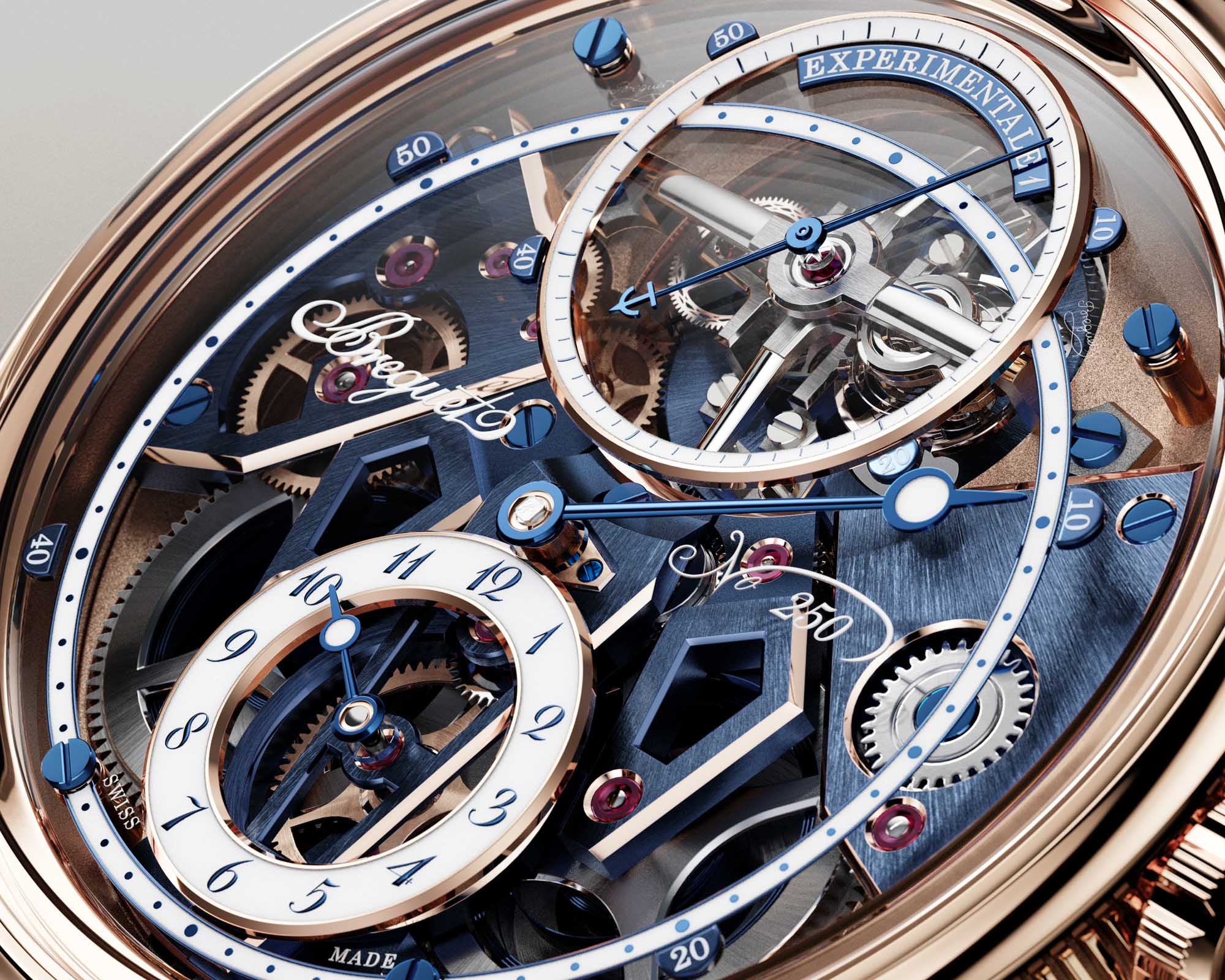
. Clearer explanations of testing protocols, perhaps even third party verification, would help ensure that Scientific is read as a real promise and not just another pair of air quotes wrapped around a marketing phrase.
Why ten hertz changes the personality of a tourbillon
The other headline number on the spec sheet is the frequency. Most tourbillons oscillate at a relaxed two and a half hertz. A handful run at four hertz and already count as energetic outliers. Expérimentale 1 jumps all the way to ten hertz, which means the balance swings ten times per second and the escapement locks and unlocks at a dizzying pace. The tourbillon cage has to dance to that rhythm, and the result is a motion that finally lives up to the literal meaning of the word whirlwind.
The advantages are not only visual. A higher frequency effectively increases the number of samples the movement takes of the balance position each second. Small positional errors are averaged out more quickly, and the watch becomes better at shrugging off minor shocks and disturbances. The trade off is brutal energy demand. Pushing a tourbillon at ten hertz through a conventional escapement would waste a huge amount of power as heat and friction. This is where the magnetic pivot and constant force ideas become more than party tricks. By cutting contact, managing torque and using light materials, Breguet is trying to make a very fast tourbillon behave with the calm consistency of a slow one.
On the wrist this should translate into a watch that feels more alive than the average tourbillon. Instead of a stately cage gliding slowly around its axis, you get a whirl of fine, tightly spaced jumps that nearly blend into a fluid rotation when you stare at them. Many owners will probably lose track of time simply by watching time being measured, the same way early high beat chronograph fans used to hypnotise themselves by following the seconds hand around the dial. Whether that experience is worth three hundred and twenty thousand Swiss francs is a personal discussion between collector and banker, but at least the behaviour is genuinely different.
Dial side drama, legibility and deliberate chaos
All of this engineering would already make for an interesting watch, but the dial side is where Expérimentale 1 becomes truly divisive. In truth there is hardly a dial at all. Most of what you see is movement, layered under a sapphire disc that carries printed scales, luminous elements and a discreet signature for Expérimentale 1 in blue ALD coating. Breguet has pushed transparency about as far as the brand ever has, building a mechanical landscape in full view rather than hiding it behind guilloché.
The display itself follows a seconds minutes hours sequence, mirroring historical regulator clocks that prioritized seconds for precision. The seconds scale enjoys a full uninterrupted track, while the minute markers are sacrificed wherever they clash with the tourbillon infrastructure. Conceptually this fits the story of a scientifically minded regulator. In daily use it means that the supposedly clearer regulator layout is actually harder to read than the pocket watches that inspired it. What was once the most legible tool in the room has turned into a cluster of rings, bridges and screws that demands a moment of concentration to decode.
The hands are at the centre of this argument. Breguet has chosen ultra thin blued steel hands for all three indications. On macro photographs they look elegant and perfectly classical; on the actual watch they have a habit of visually melting into the machinery behind them. Depending on how light hits the crystal you can genuinely lose the minute hand for a second or two. Some enthusiasts see this as part of the charm, a reminder that this object is closer to kinetic sculpture than to an instrument. Others are far less forgiving, calling the watch technically outstanding but visually messy, an example of brilliant engineering slightly sabotaged by basic ergonomics. Breguet has built its reputation on fine hands for over two centuries, yet here many eyes would welcome bolder shapes or at least contrasting tips.
Case, lugs and the question of wearability
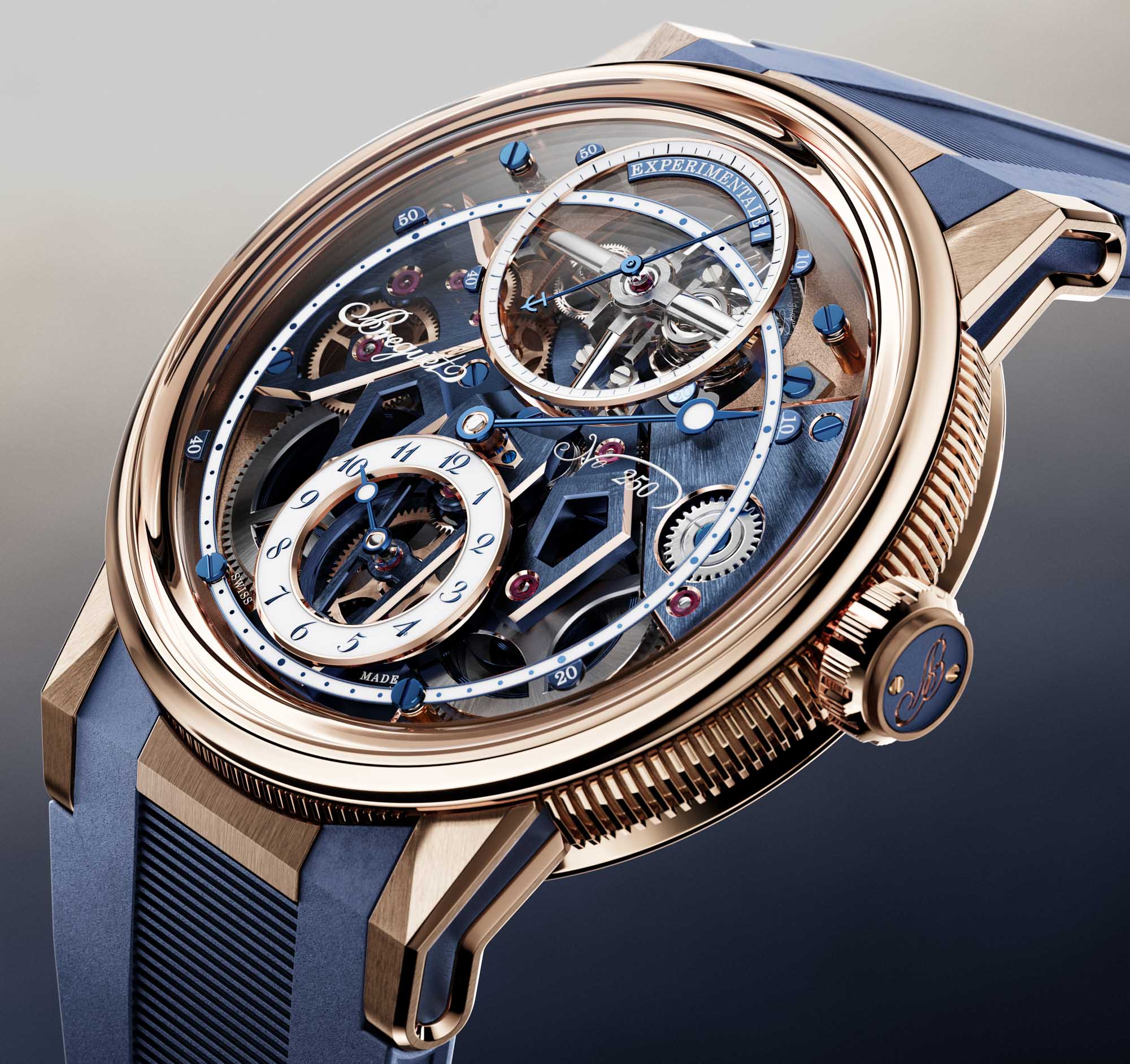
Turn the watch to its profile and the design language becomes more familiar. The case, rendered in eighteen carat Breguet gold, measures forty three and a half millimetres across and just over thirteen millimetres thick. Those numbers are big but not cartoonish for a watch of this mechanical complexity. The double stepped bezel and the fluted caseband are classic Breguet signatures and they remain immensely satisfying in the metal. They also ground the futuristic mechanics in something recognisably tied to the brand’s past. With a water resistance rating of ten bar and an elastomer strap, this is not a fragile safe queen on paper; you could, in theory, take your ten hertz tourbillon into the pool.
The lugs, however, are a lightning rod for opinion. Sharp, long and very clearly broken out from the case, they give the watch a lot of visual authority on the wrist. For some wrists that reads as confident and sculptural; for others it looks like the movement belongs to one watch and the lugs were borrowed from a much bulkier sports model. More than one enthusiast has joked that the calibre is a pure work of art while the lugs are an acquired taste at best. Personally they feel like part of the deliberate excess here. This is not a watch that tries to hide its bulk or its complexity, and the case design refuses to pretend otherwise.
Calibre 7250 under the sapphire
Through the sapphire back you meet calibre 7250, an in house engine that packs an impressive number of tricks into a reasonably compact footprint. The movement spans thirty three point eight millimetres in diameter, roughly fifteen lignes, and rises six point three millimetres in height. The total component count sits at two hundred and sixty six parts, a surprisingly modest number for such an involved tourbillon. No fewer than seventy four of those pieces live inside the tourbillon assembly itself, which weighs a scarcely believable zero point six zero grams in total. Even jaded collectors may pause at that statistic; it shows just how far modern micro engineering has pushed the genre.
Energy comes from two barrels coupled in series, each holding a pair of blue mainsprings. The layout inevitably recalls the Chopard Quattro system from the early two thousands, which used four barrels to deliver both strong torque and long autonomy. In Breguet’s case the aim seems less about headline power reserve numbers and more about feeding the voracious ten hertz escapement with smooth and consistent energy. It fits the overall narrative of the watch: take solutions that are known to work and bend them toward a far more extreme goal than usual.
One specification on the data sheet raises eyebrows. The stated resistance to magnetism is six hundred gauss. That is perfectly respectable for a complicated watch, but it feels conservative when you remember that the escapement itself should shrug off much higher magnetic fields thanks to the silicon, titanium and nivagauss parts. The limit is likely set by the rest of the movement and by the case rather than by the regulating organ. Still, in a world where some everyday sports pieces shout about fifteen thousand gauss ratings, seeing a futuristic Breguet stop at six hundred invites questions. With luck those questions will prompt the brand to share more hard detail on how the movement behaves in real conditions.
Price, audience and the future of Breguet’s experimentation
No discussion of Expérimentale 1 can dodge the price. At three hundred and twenty thousand Swiss francs it sits in rarefied air even by haute horlogerie standards. The previous 7225 reference that reintroduced the magnetic escapement sits around seventy five thousand francs, so the new watch is more than four times more expensive. That jump instantly filters the audience down to a very small pool of collectors who can and will spend this kind of money on an experimental Breguet.
In strategic terms this watch does not aim to be a mainstream halo product. The recently refreshed Type XX line shows what happens when Breguet tries to compete directly in the luxury pilot chronograph space; the results are competent but also a little generic in places. Expérimentale 1 swings the pendulum as far as possible in the opposite direction. Nothing about a ten hertz magnetic tourbillon regulator on an elastomer strap feels like it was conceived in a marketing meeting. It is not chasing trends, and it certainly is not crafted to appeal to the usual crowd of social media driven crypto speculators. While speculative money has often drifted toward independent names like F P Journe, Breguet seems more interested in quietly reminding people that it still knows how to build something only it could sign.
In the end Expérimentale 1 is not a watch designed to win universal approval. It is a little unhinged, openly self indulgent and entirely serious about solving a real technical problem in a dramatic way. If you loathe busy dials, skinny hands and assertive lugs, this reference will simply confirm your prejudices. If you have a soft spot for the brand’s mixture of academic watchmaking, archival romance and theatrical presentation, it reads as a love letter to that side of Breguet’s personality. Most importantly it proves that the question of what the founder would do today still resonates inside the manufacture. Every few years the answer should be something gloriously excessive that spins at ten hertz, and with Expérimentale 1 Breguet has delivered exactly that.
1 comment
Reading your article helped me a lot and I agree with you. But I still have some doubts, can you clarify for me? I’ll keep an eye out for your answers.