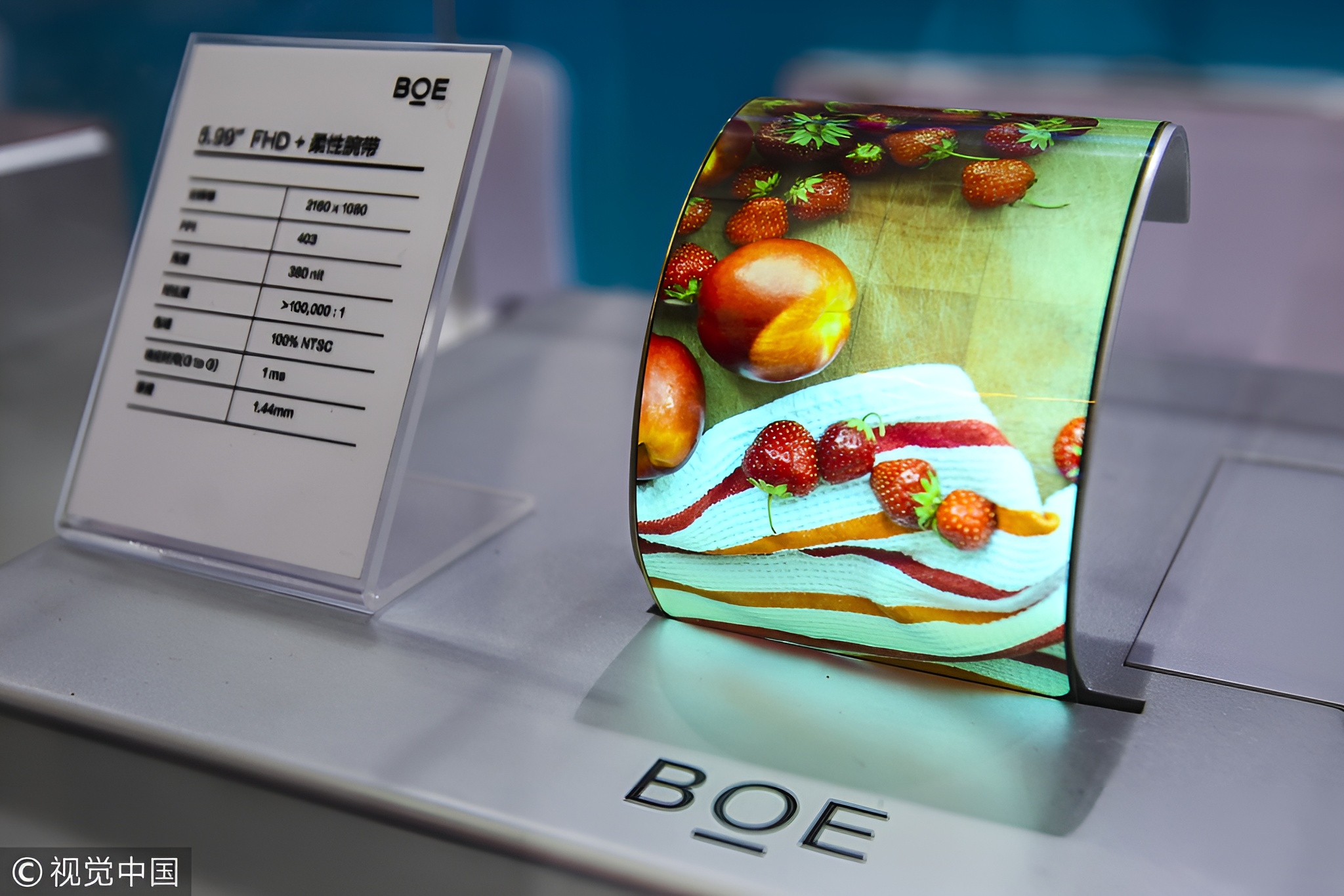
BOE Stumbles On iPhone 17 LTPO OLED Ambitions As Apple Leans Back On Samsung
Apple’s display supply chain was supposed to look a lot more diverse by the time the iPhone 17 family rolled off the line. China’s BOE had positioned itself as the next big name in Cupertino’s ecosystem, pitching advanced LTPO OLED panels and promising tens of millions of units. Instead, the company has once again hit a wall: Apple’s quality bar for iPhone-grade LTPO OLED remains out of reach, and Samsung Display is quietly increasing its grip on the iPhone 17 screen orders.
According to industry reports, Apple initially contracted BOE to deliver around 10 million LTPO OLED panels for the iPhone 17 lineup starting in the third quarter of 2026, with internal projections suggesting that shipments could eventually climb to 40 million units per year if things went smoothly. That would have been a major breakthrough for BOE, which has so far built its reputation around conventional OLED panels for Android flagships rather than Apple’s more demanding LTPO designs.
LTPO – Low-Temperature Polycrystalline Oxide – is not just a buzzword. It is the display backplane technology that allows iPhone Pro models to dynamically shift refresh rates, dropping as low as 1 Hz to save power and ramping up to deliver ultra-smooth scrolling and animations. Engineering this level of control while maintaining color accuracy, brightness, and uniformity on millions of panels is extremely challenging. BOE entered this race with no commercial LTPO track record, which meant it had to solve yield, efficiency, and reliability issues under intense time pressure and under Apple’s microscope.
Those hurdles proved higher than expected. Despite heavy R&D investment, BOE reportedly failed to deliver LTPO OLED panels that consistently met Apple’s strict standards on parameters like brightness consistency, burn-in resistance, and defect rates. As a result, the initial 10 million panel order for the iPhone 17 range has effectively been reallocated. Samsung Display – already Apple’s primary OLED supplier – will now ship roughly 90 million panels instead of its earlier cadence of about 80 million units, widening its lead in the premium OLED space.
The setback is particularly striking because BOE is not a newcomer to high-end OLED. Its X3 panels are already shipping in devices such as the OnePlus 15, which boasts a 6.78-inch display with a fast 165 Hz refresh rate. That success has led some observers to ask why BOE can satisfy demanding Android OEMs yet still fall short of Apple’s requirements. The answer lies in the combination of LTPO complexity and Apple’s famously unforgiving validation regime. Building a fast 165 Hz panel is one thing; building a power-efficient, LTPO-based screen that must behave identically across tens of millions of iPhones is something else entirely.
Layered on top of the technical challenges is a serious legal and political cloud. The US International Trade Commission (ITC) recently ruled that BOE misappropriated Samsung Display’s intellectual property by hiring former Samsung employees and exploiting confidential know-how. As a consequence, BOE’s OLED panels are barred from entering the US market for the next 15 years. That long import ban effectively shuts BOE out of the world’s most profitable premium smartphone segment and gives Samsung and LG Display a relatively unchallenged run in the US for the next decade and a half.
Online, the ruling has triggered cynical commentary. Some tech fans joked that BOE’s difficulties with LTPO stem from the one thing it supposedly has not managed to copy yet: the most advanced parts of Samsung’s LTPO process. Others see the situation as a warning shot for manufacturers that have leaned too heavily on reverse-engineering rather than building a deep, independent R&D base. Whatever the mix of truth and meme, the combination of technical setbacks and legal penalties significantly narrows BOE’s room to maneuver in the short term.
For Apple, the immediate impact is clear: its iPhone 17 lineup will rely even more on long-time partners Samsung Display and, to a lesser extent, LG Display. That reduces the near-term risk of panel shortages but weakens Apple’s bargaining power and keeps display pricing and innovation heavily dependent on Korean suppliers. For consumers, nothing dramatic is likely to change on the surface – the iPhone 17 screens should remain among the best on the market – but a more competitive supply landscape could have delivered faster innovation and potentially better cost dynamics.
As for BOE, the company is unlikely to give up. It still has a robust business supplying OLED panels to Chinese brands and other Android manufacturers, and it will continue chasing LTPO yields that can match Apple’s demands. However, between the 15-year US import ban and the lost iPhone 17 opportunity, the path to becoming a true peer to Samsung and LG in the premium OLED arena has become longer, steeper, and far more public.
2 comments
ngl that 15 year US ban is insane, BOE basically deleted from the iPhone game in the biggest market
Feels like Apple is stuck between trusting Samsung forever and waiting for BOE to finally stop tripping over LTPO