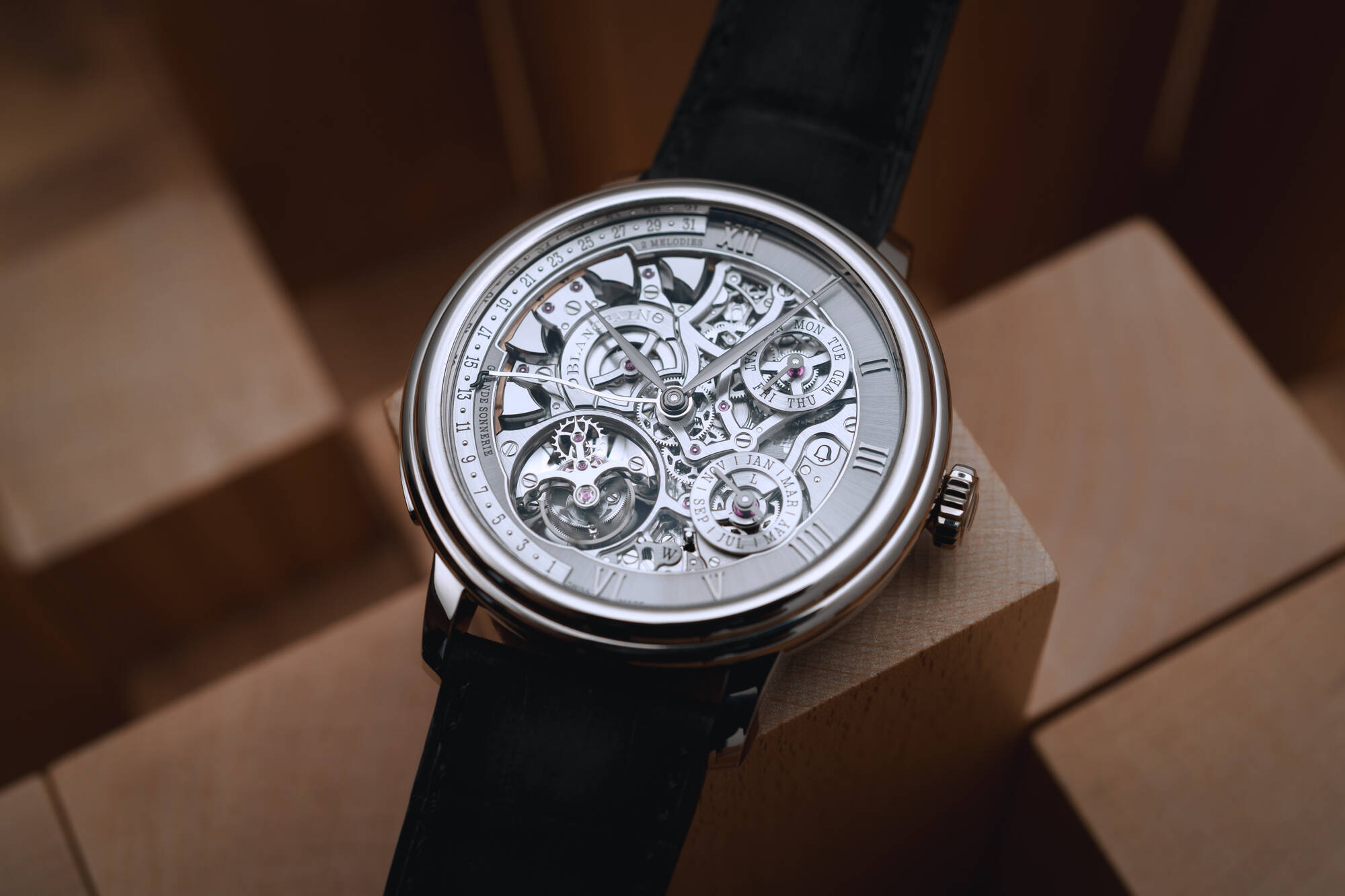
Blancpain Grande Double Sonnerie: When A Grand Complication Learns To Sing In Two Voices
Every so often, a watch appears that feels less like a product and more like a statement. The Blancpain Grande Double Sonnerie is exactly that kind of watch – a 1.7 million CHF, two-per-year symphony on the wrist that exists at the absolute edge of what mechanical watchmaking can do. Even in the rarefied universe of grand complications, Blancpain is not a newcomer, yet this piece quietly resets expectations about what a chiming wristwatch can be.
Blancpain’s history with ultra-complicated watches really gained modern momentum in 1991 with the Blancpain 1735, at the time the world’s most complicated automatic watch. That reference packed in a perpetual calendar with moon phase, tourbillon, split-seconds chronograph, and minute repeater into an ultra-thin movement – each of those elements already a serious flex on its own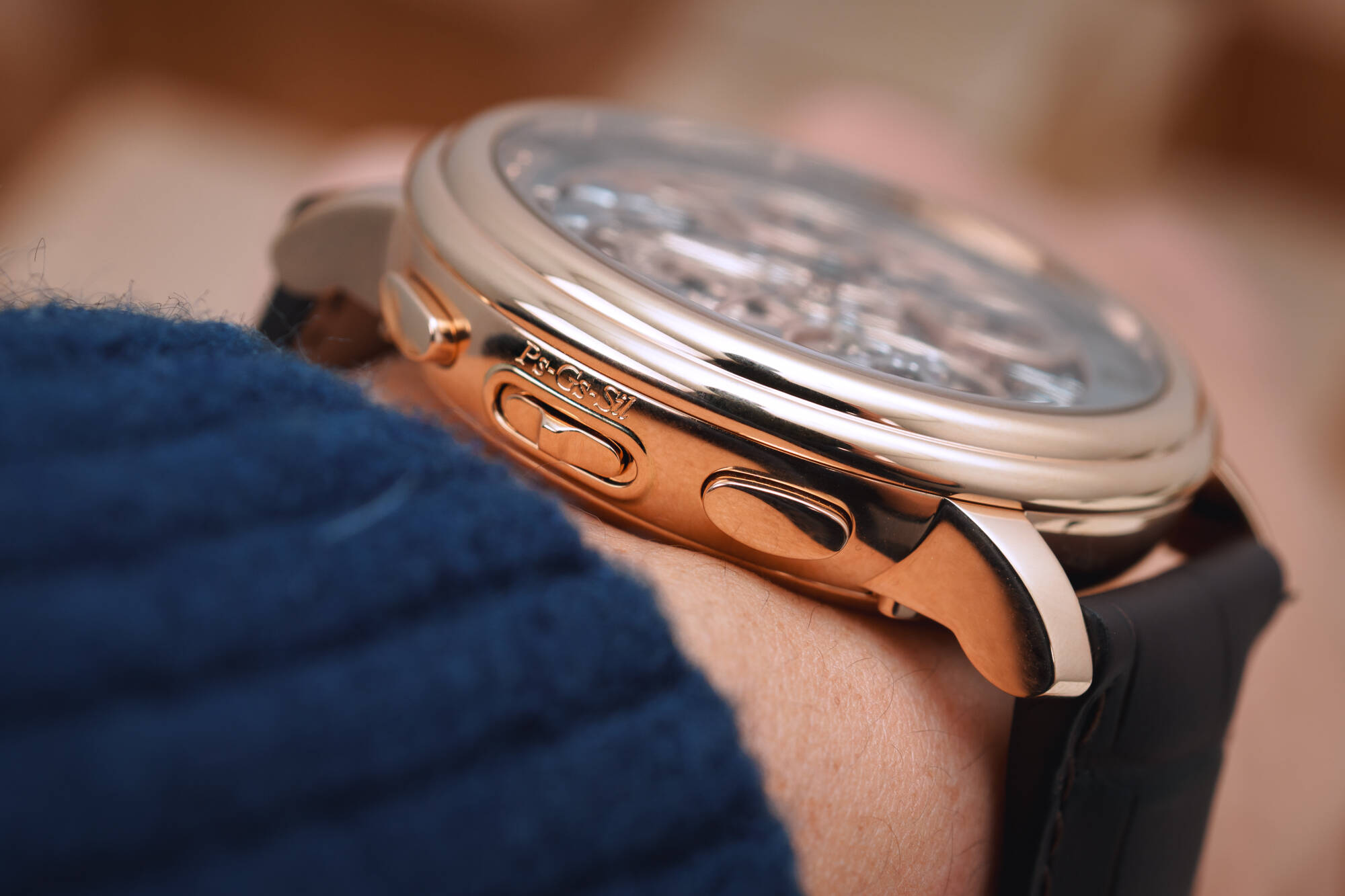
. Traditionally, a grand complication combines at least three different complication families: timekeeping, chiming, and calendar. The 1735 didn’t merely tick the boxes; it doubled them, with six major complications woven into a single, elegant mechanism.
And yet, there was one summit Blancpain had never attempted: the grand sonnerie. Within the already niche world of chiming watches, the grand sonnerie is considered one of the most difficult complications of all, both mechanically and acoustically. With the launch of the Blancpain Grande Double Sonnerie, the brand finally claims that peak – and then immediately builds a higher one.
What Makes A Grand Sonnerie So Grand?
To understand why this watch matters, it helps to decode what “grand sonnerie” actually means. A grand sonnerie is a chiming complication that automatically strikes the hours and quarter hours as they pass, without any intervention from the wearer. At the top of each hour, the watch chimes the number of hours (say, six chimes at 6:00). At each quarter hour, it repeats the hours and then adds a distinct pattern of chimes to indicate the quarter (for 6:30, you’d hear six hour chimes followed by the pattern for the second quarter).
A petite sonnerie simplifies things: on the hour, it still counts out the hours, but at the quarter hours it only plays the quarter indication and omits the hour count. Same idea, simpler sequence, slightly less mechanical chaos happening under the dial. A minute repeater, on the other hand, doesn’t chime automatically; you trigger it on demand via a pusher or slide. 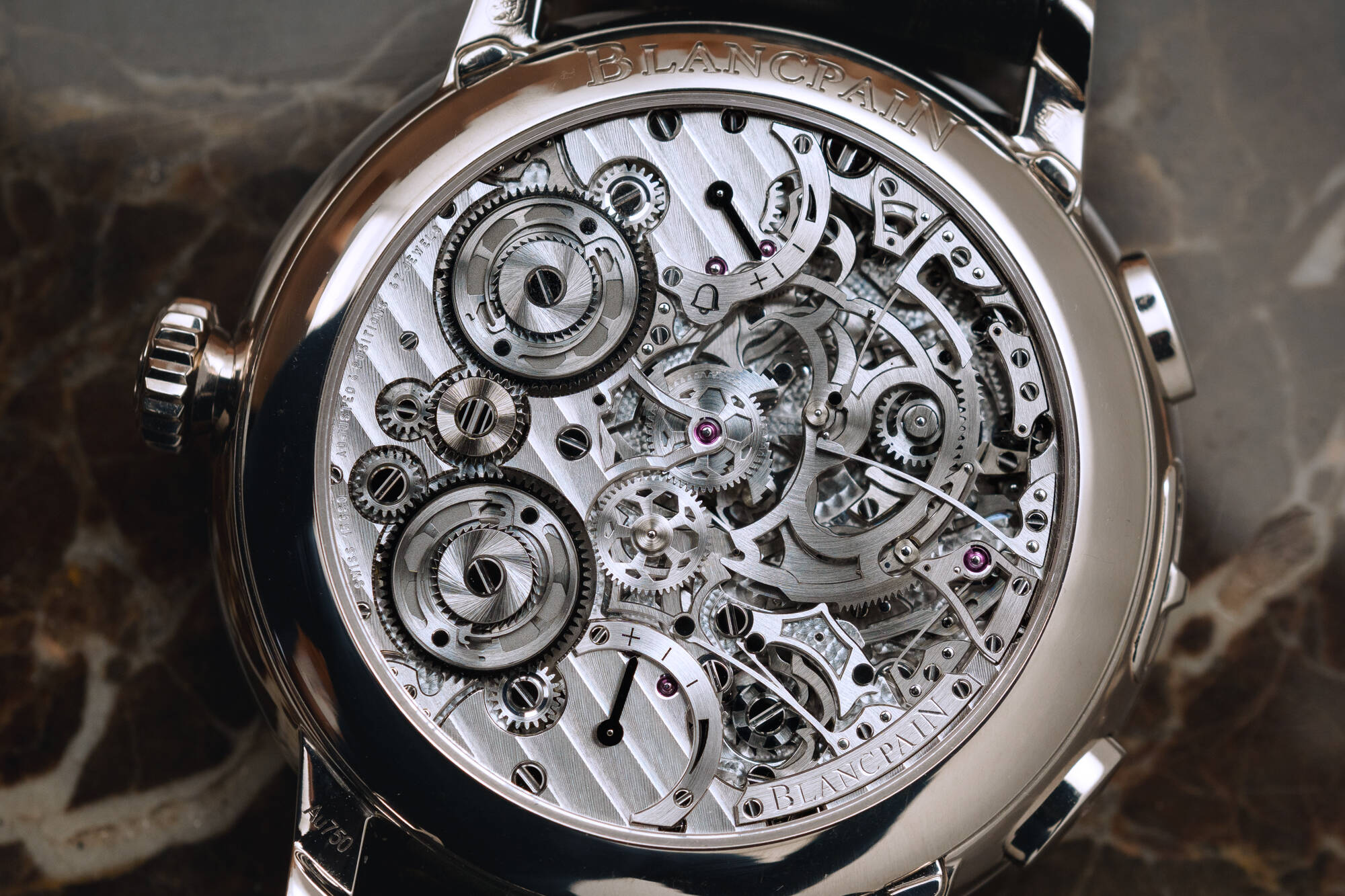
It will then sound the hours, quarters, and additional minutes with a combination of low, high, and sometimes combined strikes. The crucial difference is that a grand or petite sonnerie runs autonomously, while a minute repeater is a performance you choose to start.
On the Blancpain Grande Double Sonnerie, the on-demand minute repeater is activated by a pusher at the upper left of the case. A slide on the same flank lets you choose between grand sonnerie, petite sonnerie, or full silence. It’s a bit like choosing between full orchestral performance, chamber music, or muting the band entirely for those very serious meetings where a chiming gold watch would be… misunderstood.
From Two Notes To Two Melodies
In its most basic form, a grand sonnerie only needs two different tones – one to represent the hours and another for the quarters. That alone is complicated enough, but many high-end sonneries go further and encode a melody into the quarter chimes. The most famous example is the Westminster Quarters, the four-part tune you associate with Big Ben at the Palace of Westminster in London and countless chiming clock towers around the world.
The Blancpain Grande Double Sonnerie uses the Westminster Quarters as its first melodic voice. But Blancpain CEO Marc A. Hayek wanted more than just technical completeness. His brief was surprisingly emotional: he wanted a watch that would make you smile every time it chimed, something that didn’t just tell the time but created a small moment of theatre.
The solution was audacious: why not give the watch two selectable melodies? For the second motif, Hayek turned to a close friend – Eric Singer, noted watch enthusiast and former drummer of the rock band KISS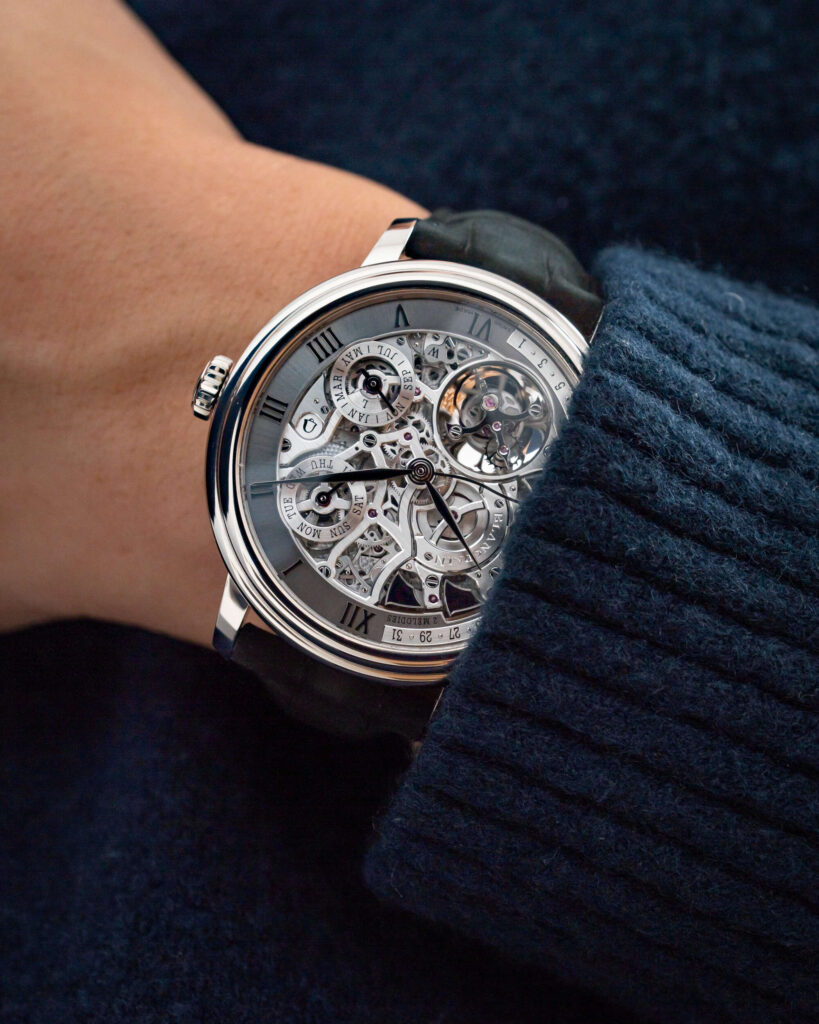
. The musical constraints were strict: the new motif had to use the same set of four notes and the same tempo as the Westminster sequence, so the physical gongs and their acoustic setup could stay identical. Within that framework, however, the order and phrasing of the notes were fair game.
After multiple iterations, Singer and Blancpain arrived at a clean, instantly recognizable sequence that the brand now simply calls the “Blancpain melody.” Where Westminster feels dignified and ceremonial, the Blancpain motif is a little more playful – still stately enough for a 47mm gold behemoth, but with just enough modern swagger that it feels like a flex rather than a museum piece. It’s not hard to imagine owners joking that they’ll need a three-day training course just to remember what each sequence of chimes means.
Designing A Watch Around Its Music
Adding a grand sonnerie and minute repeater to a wristwatch already pushes mechanical complexity to an absurd level. Adding two interchangeable melodies and then layering on a perpetual calendar and flying tourbillon starts to sound almost mischievous. Many brands would have stacked these complications using modules, essentially placing a perpetual calendar plate over the base movement. It’s a practical approach, but it tends to increase thickness, and it hides much of the mechanical ballet that makes enthusiasts fall in love.
Blancpain chose a much more difficult path: an integrated retrograde perpetual calendar that still leaves the movement visually open. On the dial side, the main calendar indications are pushed to the right, while the retrograde date scale arcs along the left half of the chapter ring. At the end of each month, the date hand snaps back to “1,” automatically accounting for different month lengths and leap years – the sort of silent, patient intelligence that makes perpetual calendars so satisfying.
Uniquely to Blancpain, all calendar settings are adjusted via correctors hidden under the lugs. 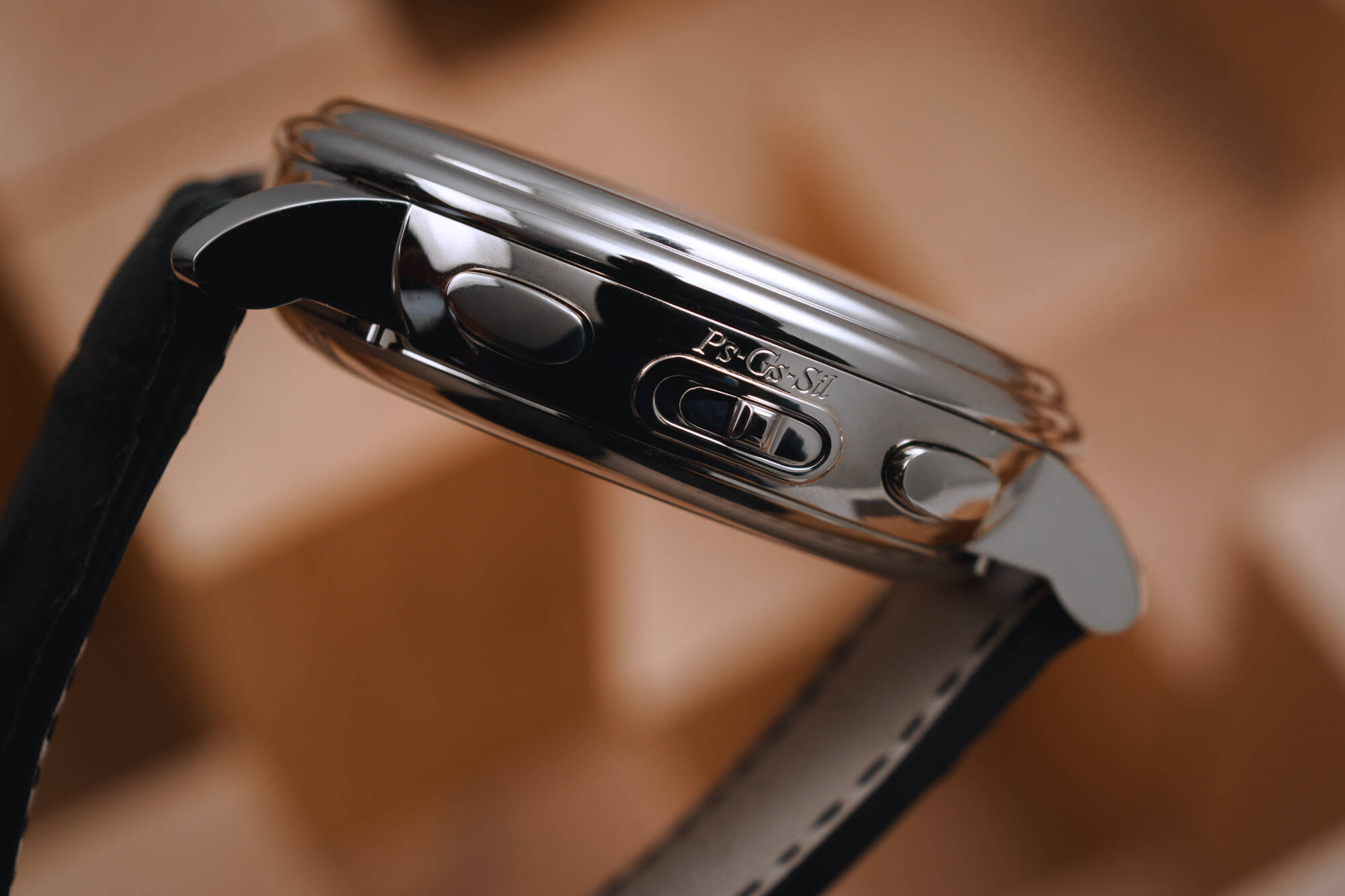
Rather than dotting the gold case with visible pushers or requiring a small tool, you can use your fingertip to advance the indications. It’s a neat blend of pure horology and everyday practicality – assuming, of course, your idea of “everyday practicality” includes a seven-figure grand complication.
With so much going on under the sapphire crystal, you might worry the dial would become unreadable. Blancpain leans into the openworked look, but the hands are given a contrasting color and strong shape so they stand out clearly against the dense forest of gears, levers, and bridges. It’s a small detail, but one that many enthusiasts have learned to appreciate: a watch can be as complicated as it wants, but if you can’t read the time at a glance, the magic wears off quickly.
Gold, Gongs, And The Science Of Beautiful Noise
Creating a melody in a mechanical watch is not just about programming the order of the chimes. Every note has to be in tune, every strike must have the right duration, and the sound must be loud and clear enough to be appreciated on the wrist. Blancpain experimented with 11 different gong materials – from bronze and copper to steel and even metallic glass – before ultimately deciding that gold delivered the ideal balance of warmth, clarity, and sustain.
That choice had consequences. To optimize sound transmission, Blancpain built not just the gongs, but the case, mainplate, and bridges in gold as well, allowing vibrations to travel through a consistent medium. From there, the micro-engineering becomes almost obsessive: each gong’s length and thickness, its cross-sectional shape, and the exact impact point of the hammer are fine-tuned so that every note lands precisely where it should on the musical scale.
Even after the physical geometry is set, there is still the matter of refinement. Blancpain uses lasers to fine-tune the gongs’ frequencies, shaving away minuscule amounts of material until the notes lock into harmony. To ensure the sound doesn’t die inside the case, a patented gold membrane beneath the crystal acts as an acoustic amplifier, helping project the chimes outward in a clear, bell-like voice.
Mastering Tempo: Microns, Teeth, And Magnetic Regulation
Melody is only half the story; tempo is the other. A chiming sequence that rushes or drags sounds wrong, even if every note is technically accurate. In the Grande Double Sonnerie, the quarter hours are driven by finely toothed components that sequentially engage levers attached to the hammers. As the wheels rotate, teeth lift and release the levers, causing the hammers to strike the gongs in the programmed rhythm.
Because these teeth initiate each strike, their geometry directly affects how quickly the sequence unfolds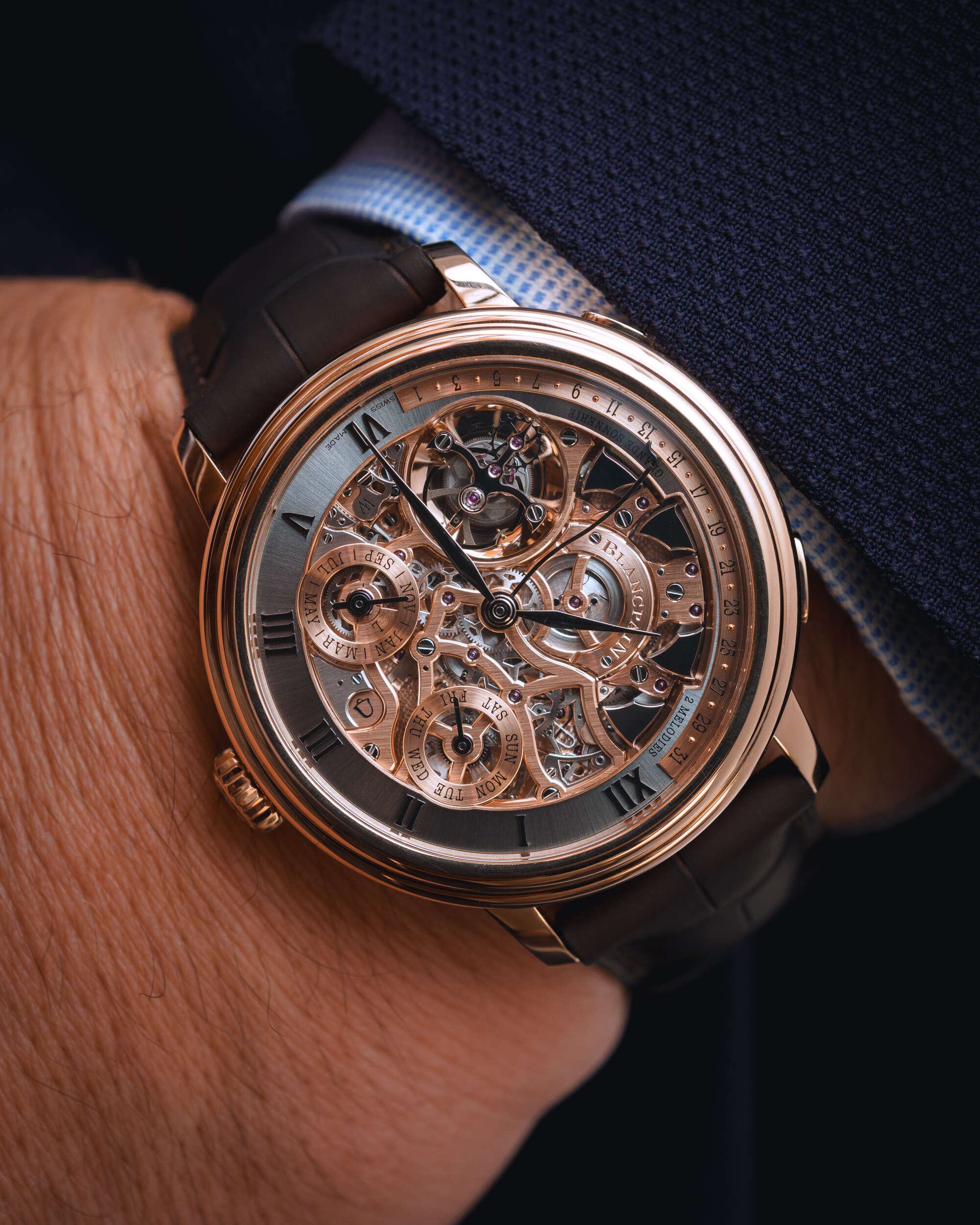
. If the gear is even slightly off, the chime can feel hurried or sluggish. The solution is a painstaking cycle of fitting, testing, and microscopic adjustment. Watchmakers remove the gear, shave microns from the teeth, reinstall it, and test again, repeating the process until the rhythm feels exactly right to both ear and timing instruments.
To keep the flow of power to the sonnerie stable, Blancpain employs a patented magnetic regulator. Functionally, it works like a kind of constant-force mechanism dedicated to the chiming system, smoothing out the energy delivered from the barrel so each note is struck with consistent strength. For a watch that can play long, complex sequences multiple times per hour, this sort of regulation is essential.
Switching Between Westminster And Blancpain
Inside the movement, each of the two melodies is built on its own mechanical “track,” with dedicated components governing the order in which the hammers hit the gongs. The two assemblies are arranged on a shared horizontal plane, then stacked. Selection happens via a column wheel system linked to a pusher at the lower left of the case. Press it once, and the mechanism engages the Westminster melody. Press it again, and the watch switches to the Blancpain motif.
A small aperture at the base of the dial reveals which tune is currently active. A “W” indicates Westminster, while a “B” stands for Blancpain. For safety, a clutch system prevents you from switching melodies mid-chime – the mechanical equivalent of disabling the track-skip button while a record is playing. You may be paying supercar money for this watch, but the movement inside is still treated with the same caution you would give to a priceless instrument.
The Flying Tourbillon: Tradition, Revisited
Blancpain has a long relationship with the tourbillon – in 1989, the brand introduced the first flying tourbillon in a wristwatch. In the Grande Double Sonnerie, the tourbillon once again plays a starring role, but it’s integrated in a way that complements the chiming complication rather than competing with it.
A traditional tourbillon cage is supported by bridges both above and below, creating a kind of mechanical arch. 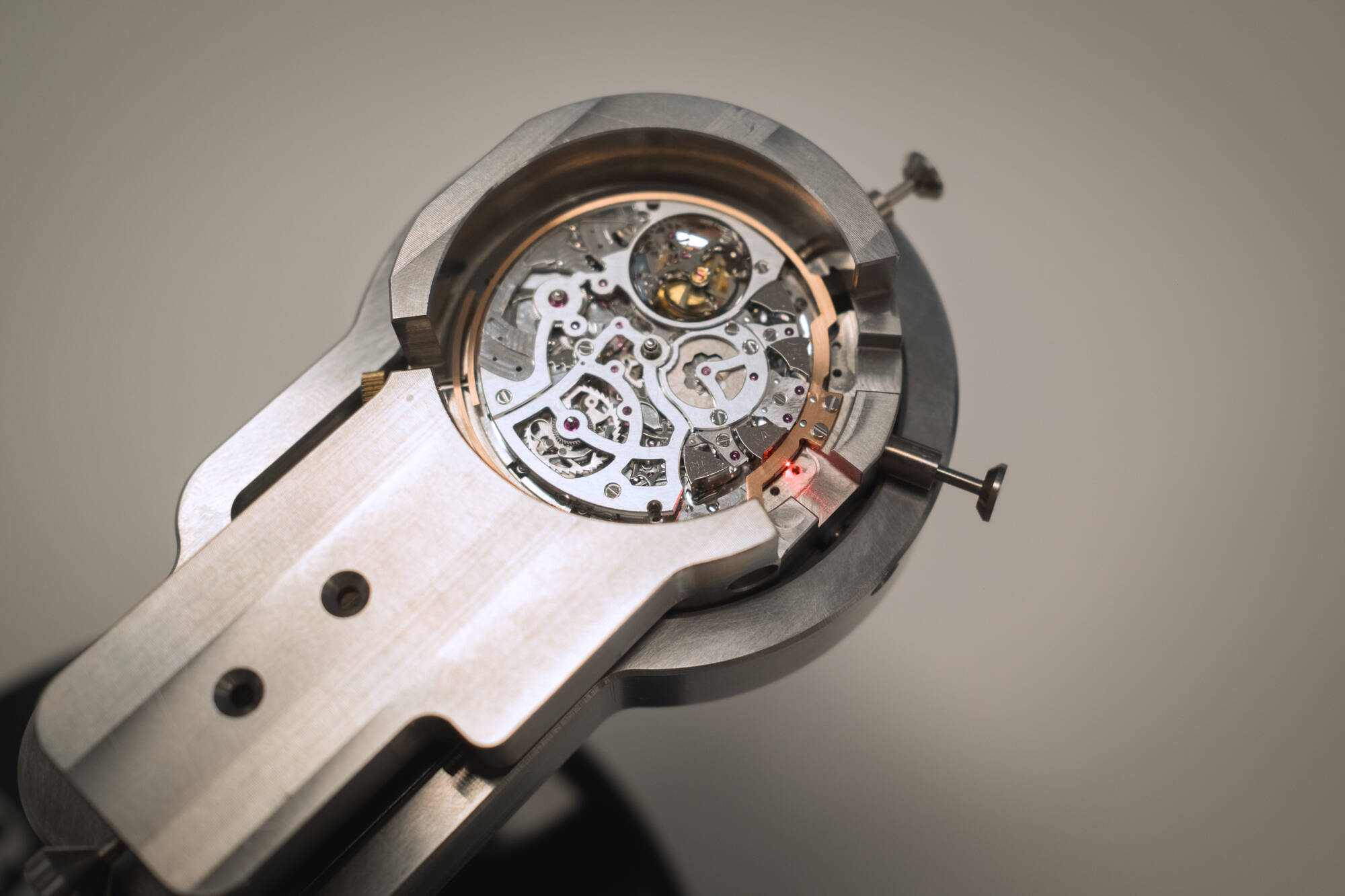
A flying tourbillon removes the upper bridge, leaving the cage seemingly suspended in space under the crystal. Here, the effect is particularly dramatic: the balance oscillates in full view, floating over the architectural landscape of the sonnerie mechanism.
The tourbillon beats at 4Hz (an upgrade over the more classical 3Hz), and it uses a silicon hairspring to resist magnetism – a quiet nod to modern materials science in an otherwise profoundly old-school construction. Around it, the movement is finished to the standard you’d demand in this price segment: angled and polished edges, Côtes de Genève, perlage, and deep black polishing on key steel components.
Caliber 15GSQ: Power, Presence, And Wearability
Driving all this is the manually wound caliber 15GSQ, which relies on two mainspring barrels. One barrel primarily handles timekeeping and offers up to 96 hours of power reserve, while dedicated energy is allocated to the grand and petite sonnerie functions, providing between 12 and 14 hours of chiming autonomy, depending on the chosen mode and how frequently the watch is allowed to sing.
Given the complexity and the gold construction, the watch is no shrinking violet on the wrist. At 47mm in diameter and 54.6mm lug-to-lug, it has real presence. The thickness, however, is a surprisingly wearable 14.5mm – fat for a dress watch, but downright svelte for something that contains a double-melody grand sonnerie, minute repeater, retrograde perpetual calendar, and flying tourbillon. On a wrist around 6.75 inches, it’s large but not absurd. Comfort, as always, is personal – your wrist might be willing to carry it every day, even if your bank account absolutely is not.
How It Stacks Up Against Other Heavy Hitters
Inevitably, any modern grand sonnerie is going to be compared to other recent ultra-complicated chiming watches. One obvious foil is Chopard’s L.U.C Grand Strike, another technically dazzling sonnerie that wowed enthusiasts with its crystal gongs and architectural dial. From a purely “CHF per cog” perspective, some will argue that Chopard delivers more obvious value, especially when you consider the price segment we’re talking about.
The Blancpain, however, aims for a slightly different emotional target. Where the Chopard Grand Strike feels like a hyper-engineered showcase of acoustic innovation, the Grande Double Sonnerie leans more into the poetic side of watchmaking: two melodies, a hidden watchmaker’s signature engraved on the underside of the Blancpain plate, a chiming system conceived to trigger emotion before it triggers awe. It’s a staggering creation either way, and if you prefer one over the other, that preference probably says more about your taste than about any objective hierarchy.
At the opposite end of the spectrum, it’s almost amusing to think of something like the Omega X-33 – a modern, quartz-driven pilot’s tool – and wonder whether its loud digital alarm could ever be reprogrammed to chime the time in a musical sequence. Technically, you could approximate the function in a digital watch. But that comparison only serves to underline why grand sonneries remain such an enduring obsession for collectors: it’s not about necessity; it’s about the ridiculous, beautiful insistence on doing something the hard way, purely because it can be done.
Living With A Mechanical Symphony
For the handful of people who will ever own a Blancpain Grande Double Sonnerie, the relationship with the watch will likely feel less like ownership and more like stewardship. Each piece is assembled start to finish by one of only two watchmakers at Blancpain, a process that reportedly takes a full year per watch. On the back of the dial, the reverse side of the “Blancpain” plate carries that watchmaker’s name, engraved where only those disassembling the watch will ever see it. It’s an invisible signature, a quiet pact between creator, creation, and future restorers.
That kind of detail has no effect on timekeeping, and it doesn’t change the chime one bit. But it says everything about how the brand views this watch: not as a product cycle, but as a masterwork that will need care for generations. Whether the owner chooses the Westminster melody or the Blancpain motif on any given day, the watch is always performing at the edge of what is mechanically possible in a wrist-sized format.
On a more down-to-earth level, there’s also the humorous reality of living with such a machine. The case is big, the movement is intricate, and the functions are numerous enough that a new owner might indeed feel like they need a multi-day crash course just to remember which pusher does what, how to safely set the calendar, and when to avoid switching modes. You don’t buy a Grande Double Sonnerie because it’s the easiest watch to operate; you buy it because mastering it becomes part of the fun.
A Watch That Exists To Push The Limits
At 1.7 million CHF and limited to two pieces per year, the Blancpain Grande Double Sonnerie is not a rational purchase. It is, unapologetically, a flex – but a deeply thoughtful one. It is a reminder that in a world where your smartphone can tell perfect time and play any sound on demand, there is still something uniquely powerful about a small, hand-wound machine that can strike the passing hours in a carefully tuned, fully mechanical melody.
Blancpain has spent decades building its credibility in high complications, from the 1735 to its early flying tourbillon, and this latest creation feels like a culmination of that experience. It is a grand sonnerie that doesn’t just chime; it sings with two distinct voices, invites comparison with the most advanced chiming watches on the market, and dares you not to smile when it plays its tune.
Most of us will never see one outside a watch show or a private collection. But in a way, that’s beside the point. The Grande Double Sonnerie exists to show what happens when a brand decides that “complicated enough” is not enough, and then quietly adds another melody on top. For the tiny group of clients who will actually own it – and for everyone else who simply loves mechanical watchmaking from afar – this is one of those rare creations that makes you look at your wrist, listen for the chime, and remember why you fell in love with watches in the first place.
2 comments
1.7 mil for something that literally sings to you… both my ears and my bank account are crying rn
This thing is such an insane flex 😂 I feel like you need a 3 day training just to remember what all those pushers do